


Story-at-a-Glance
- Amazon social proof directly influences buyer trust, conversion rates, and organic rankings
- Customer reviews, star ratings, badges, and UGC are the most powerful trust signals on Amazon
- Ethical Amazon social proof strategies outperform shortcuts like fake reviews or manipulation
- Leveraging Amazon customer reviews helps uncover CRO insights and ranking opportunities
- Brands that combine on-Amazon trust signals with off-Amazon validation convert faster and scale sustainably
- Offer solutions and remain empathetic to negative reviews.
- Utilize negative reviews to identify pain points of your customers.

Amazon Social Proof: The Hidden Driver of Conversions and Trust
Amazon is no longer just a marketplace. It’s a trust engine. With countless competing products, shoppers rely on Amazon social proof, including reviews, ratings, badges, and influencer mentions, to decide what’s credible and worth buying. For sellers, effective Amazon social proof strategies directly influence visibility, rankings, and trust, and play a measurable role in improving overall Amazon conversion rate. This guide explains how social proof works on Amazon and how to leverage Amazon customer reviews to drive sustainable revenue.
What Is Social Proof on Amazon?
Social proof on Amazon is the psychological effect that causes shoppers to rely on other customers’ actions, opinions, and experiences when making purchasing decisions, especially when they can’t physically evaluate a product.
On Amazon, social proof is built into the shopping experience through clear trust signals that reduce uncertainty and speed up decision-making:
- Reviews and star ratings that signal product quality and satisfaction
- Badges and engagement metrics that indicate popularity and performance
- Customer interactions that help validate unfamiliar or new brands
Research shows that over 93% of online shoppers read reviews before purchasing, and most buyers evaluate 6 to 10 customer reviews before feeling confident enough to convert. On Amazon, these trust signals influence not only buying behavior but also how the algorithm evaluates relevance and visibility.
With that foundation in place, it’s easier to understand which types of social proof have the greatest impact on Amazon shoppers.
Types of Social Proof That Influence Amazon Shoppers

Amazon social proof works as a layered system. Each trust signal contributes to buyer confidence and performance metrics in a different way, ultimately affecting visibility and sales.
Customer Reviews and Star Ratings – Importance and Amazon’s Weighting
Customer reviews and star ratings are the strongest form of social proof on Amazon. They act as both a conversion driver and a ranking signal.
Listings with higher ratings and consistent review velocity tend to:
- Convert at higher rates
- Rank more competitively in search results
- Achieve stronger PPC efficiency
Because conversion rate is a core ranking signal, reviews directly support efforts to improve your Amazon product ranking. Amazon’s algorithm favors products that consistently convert well, making reviews critical for long-term visibility.
beBOLD Digital Expert Tip: Aim for credible consistency, not perfection. A mix of honest reviews with thoughtful responses builds more trust than a flawless but suspicious rating profile.
Verified Purchase Badges – Credibility and Authenticity
Verified Purchase reviews confirm that feedback comes from real Amazon transactions. These reviews carry greater credibility and are prioritized by shoppers scanning for authenticity.
Verified reviews:
- Increase buyer trust
- Reduce skepticism
- Are harder to manipulate
beBOLD Digital Expert Tip: Sustainable sales velocity, not giveaways, is the safest way to grow verified reviews while staying policy compliant. This starts with listing products correctly and following Amazon best practices when learning how to list products on Amazon.
Bestseller and Amazon’s Choice Badges – What Triggers Them
Badges act as instant trust shortcuts. While Amazon doesn’t publicly disclose exact criteria, these labels are influenced by sales velocity, conversion rates, availability, and customer satisfaction.
Products that earn these badges typically combine strong demand with effective positioning, often backed by solid Amazon product research and category-level competition analysis.
Q&A and Customer Images/Videos – Real-Life Validation
User-generated images, videos, and Q&A interactions provide visual and experiential proof that reduces hesitation.
Listings that incorporate authentic visuals, especially customer-submitted photos and videos, consistently outperform those with brand-only imagery. This type of content aligns closely with proven Amazon UGC strategies and helps:
- Address buyer objections
- Improve time on page
- Set realistic expectations
beBOLD Digital Expert Tip: Encourage organic engagement through clear product instructions and strong post-purchase experiences without violating Amazon communication policies.
Off-Amazon Proof (TikTok, Influencers, PR Mentions)
Social proof extends beyond Amazon. Influencer content, press features, and social media buzz build familiarity before shoppers ever reach your listing.
When buyers arrive already aware of your brand, conversion rates rise significantly, creating a compounding effect across SEO, PPC, and organic discovery. Off-Amazon awareness also supports long-term strategies for brands researching how to find products to sell on Amazon.
beBOLD Digital Expert Tip: Build a loop. Off-Amazon exposure drives Amazon searches, which drive conversions, which fuel reviews and future content.

5 Powerful Ways to Strengthen Social Proof on Your Amazon Storefront
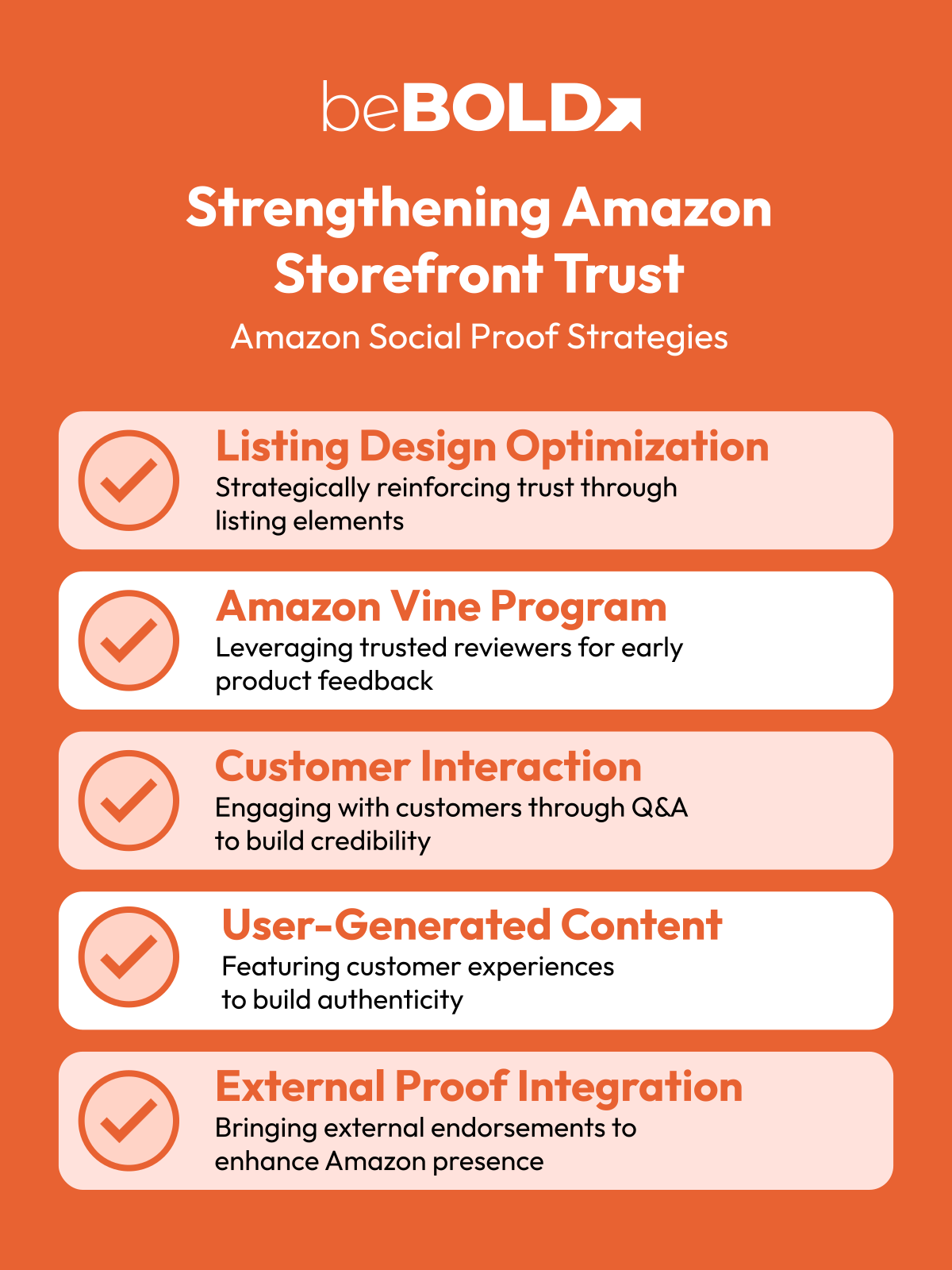
Once you understand the core trust signals, the next step is execution. These Amazon social proof strategies focus on scalable, ethical growth that supports both short-term conversions and long-term rankings.
1. Highlight User-Generated Content (UGC)
UGC builds trust faster than brand claims. Feature customer language, visuals, and experiences in your listing, especially within A+ Content, to reinforce authenticity at key decision points.
Client scenario: A mid-sized beauty brand integrated real customer before-and-after photos into its A+ Content, resulting in higher engagement and improved shopper confidence within weeks of launch.
Social proof is a key part of retail readiness for beauty brands, especially when shoppers compare reviews, ratings, UGC, and product claims before purchasing.
2. Activate the Amazon Vine Program
Amazon Vine enables trusted reviewers to leave early feedback on eligible products. While reviews are not guaranteed to be positive, Vine accelerates review velocity for new or relaunched ASINs.
Client scenario: A pet supplement brand used Vine to seed initial reviews for a new SKU, helping the product gain traction faster and compete organically in a crowded category.
3. Showcase “Social Proof Signals” in Your Listing Design
Strategically reinforce trust throughout your listing by:
- Referencing review volume naturally
- Emphasizing benefits customers repeat in reviews
- Structuring A+ Content around objections and proof
These optimizations directly support higher Amazon conversion rates.
Client scenario: An electronics accessory brand redesigned its bullet points around recurring review language, leading to a noticeable lift in conversion rate without increasing ad spend.
4. Encourage Customer Questions and Interactions
An active Q&A section signals transparency and responsiveness. Answering questions publicly helps guide undecided shoppers toward conversion while reinforcing credibility.
Client scenario: A home goods seller proactively answered common sizing and compatibility questions, reducing buyer hesitation and lowering return-related complaints.
5. Build External Proof and Bring It to Amazon
Influencer campaigns, press mentions, and brand storytelling prime buyers before they land on Amazon, making on-platform conversion easier and supporting broader visibility initiatives.
Client scenario: A wellness brand paired TikTok influencer content with Amazon storefront traffic, resulting in warmer audiences and stronger initial conversion performance.
How Social Proof Impacts Amazon SEO
Social proof doesn’t just influence buyer behavior. It directly affects how Amazon’s algorithm evaluates and ranks your products. Amazon rewards listings that shoppers trust, engage with, and ultimately convert on, making social proof a foundational SEO lever.
Here’s how social proof impacts Amazon SEO at multiple levels:
- CTR → Conversion → Relevance Score: Listings with strong star ratings, compelling reviews, and visible trust signals earn higher click-through rates and better conversion performance. Amazon interprets this as relevance, increasing your visibility for competitive keywords.
- Organic Ranking: Consistent conversion supported by social proof helps products climb organic search results, reinforcing efforts to improve discoverability over time.
- Buy Box Eligibility: Trust signals like positive reviews, responsive seller behavior, and customer satisfaction contribute to Buy Box wins, especially in competitive categories.
- PPC ROI Efficiency: Ads pointing to high-trust listings convert more efficiently, lowering cost per acquisition and improving ROAS.
- Brand Credibility and Longevity: Strong social proof compounds over time, making it harder for competitors to displace established products.
When paired with strong keyword targeting and proper product selection, social proof becomes a force multiplier, especially for sellers refining their Amazon product research process.
Common Mistakes That Hurt Your Social Proof
Even strong products can struggle if social proof is mishandled. These common mistakes often undermine trust and suppress performance.
Buying Fake Reviews or Manipulation
Attempting to buy reviews or manipulate feedback violates Amazon policy and frequently results in suppressed listings, lost Buy Box eligibility, or full account suspension. Beyond compliance risks, shoppers are increasingly skilled at spotting inauthentic reviews.
Ignoring Negative Feedback
Negative reviews left unanswered signal indifference. Over time, this erodes trust and lowers conversion rates, even if the majority of reviews are positive.
Not Responding to Customer Q&A
The Q&A section is often the final checkpoint before purchase. Failing to respond leaves objections unresolved and pushes buyers toward competing listings.
Neglecting Off-Amazon Mentions
Brands that rely solely on Amazon miss scalable trust-building opportunities. Social buzz, influencer validation, and press mentions all reinforce credibility once shoppers land on your product page.
How Do You Handle Negative Amazon Reviews?
Negative reviews are inevitable but manageable with the right approach. How you respond often matters more than the review itself.
- Offer solutions such as troubleshooting guidance, refunds, or replacements through Amazon’s system
- Maintain a professional, empathetic tone that reflects strong customer service values
Handled correctly, negative reviews can actually strengthen trust, reassure hesitant buyers, and protect long-term conversion performance.
How to Use Reviews for Listing Optimization?
Customer reviews are one of the most valuable sources of conversion data available to Amazon sellers. They reveal exactly what customers care about and where friction exists.
- Identify Pain Points: Address recurring complaints directly in bullet points, images, or FAQs to remove purchase barriers.
- Highlight Strengths: Reinforce commonly praised benefits in your listing copy and A+ Content to align with buyer language.
- Feature Requests: Use customer suggestions to inform product updates, bundling strategies, or future variations.
These insights often inform broader optimization efforts, including decisions tied to how to improve your Amazon product ranking.
beBOLD Digital Expert Tip: Treat reviews as ongoing CRO audits, not reputation management tasks.
Ready to Turn Amazon Social Proof Into Revenue?
At beBOLD Digital, we don’t just help you collect reviews. We help you turn Amazon social proof into measurable revenue growth. Our team works with Amazon brands to build trust at every touchpoint, from ethical review acceleration and conversion-focused listing optimization to influencer-driven demand and long-term Amazon SEO strategies.
If your product has traffic but isn’t converting, or reviews but isn’t ranking, we bridge the gap between credibility and performance.
Ready to strengthen your Amazon social proof and increase conversions? Partner with beBOLD Digital to turn customer trust into scalable sales growth.
Frequently Asked Questions
How does Amazon use social proof?
Amazon uses social proof signals such as customer reviews, star ratings, badges, and engagement metrics to influence buyer trust and determine algorithmic ranking and visibility.
What is a social proof example?
A common example of social proof is customer reviews, bestseller badges, or influencer endorsements that signal popularity and credibility to shoppers.
How to create social proof?
Brands create social proof by delivering quality products, encouraging ethical and compliant customer reviews, engaging with buyers, and amplifying positive feedback across channels.
Is the Amazon influencer program real?
Yes, the Amazon Influencer Program is a legitimate initiative that allows approved creators to earn commissions through curated storefronts and social-driven traffic.
Why does Amazon ask for my SSN?
Amazon asks for your SSN to comply with tax reporting requirements and to verify seller or influencer identities.
What is an example of social proof bias?
An example of social proof bias is when a shopper chooses a product primarily because many others have purchased or positively reviewed it, even without comparing alternatives.







Comments