


What Is AI UGC for TikTok?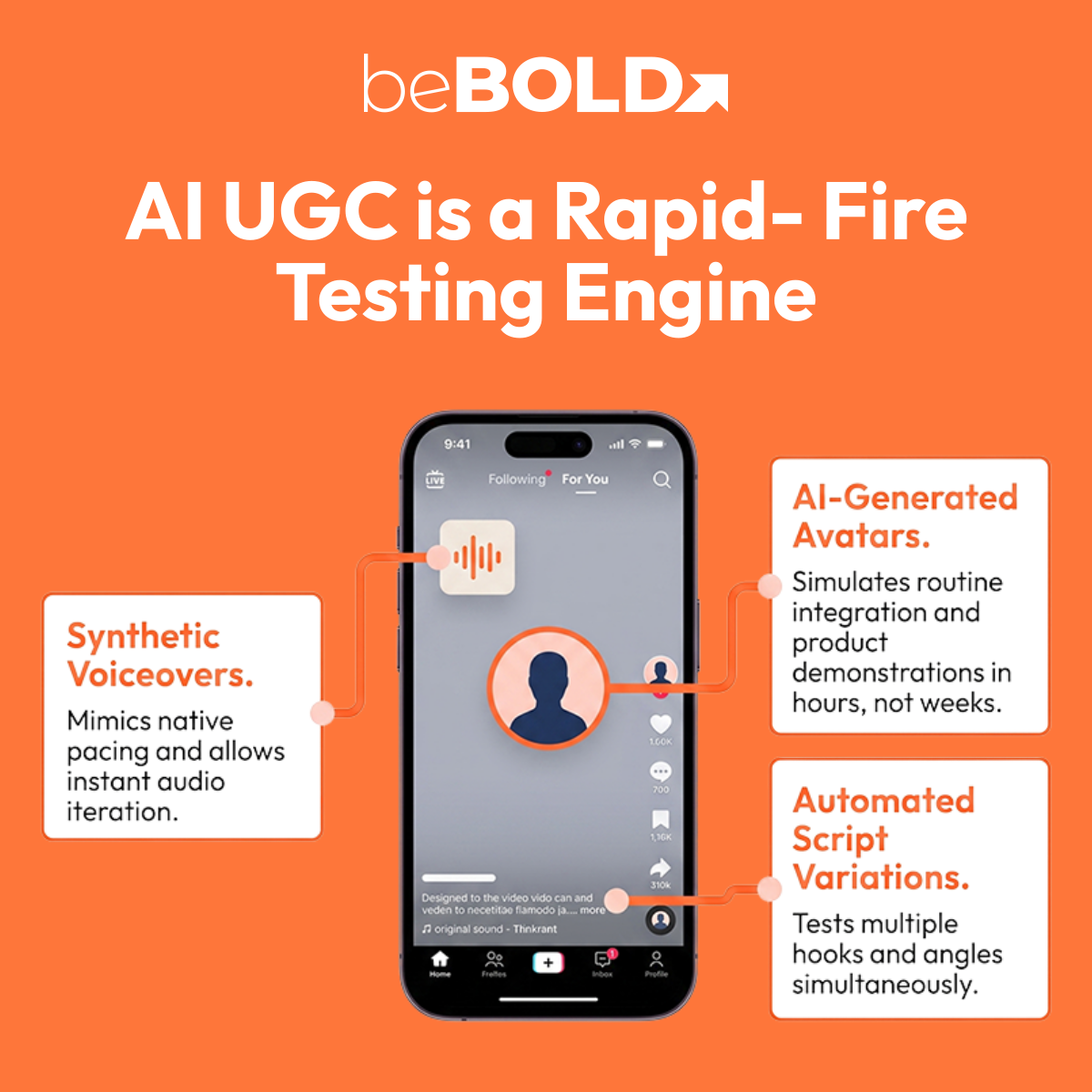
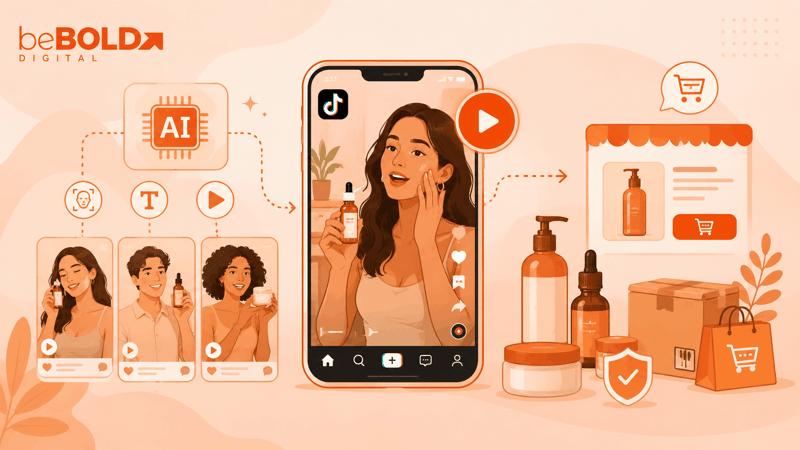
AI UGC refers to a short-form video ad creative that uses artificial intelligence to simulate or assist with creator-style content. It can involve AI-generated avatars, synthetic voice-overs, automated script variations, product visuals, captions, and hooks designed to mimic the organic feel of user-generated content on TikTok. The output isn’t a human creator holding your product; it’s a system assembling elements that look and sound like a real person’s review, unboxing, or routine integration.
Done well, AI UGC functions as a rapid-fire testing engine that lets ecommerce teams validate angles before committing a creator budget. Done poorly, it triggers the uncanny valley and signals inauthenticity instantly.
Want to turn AI creative into real marketplace sales? Our TikTok Shop Agency helps brands build scalable creative strategies, optimize storefronts, and connect TikTok performance with measurable revenue. Learn more about our TikTok Shop Agency services.
AI UGC vs. Traditional UGC vs. Polished Brand Ads
|
Factor |
Traditional UGC |
AI UGC |
Polished Brand Ads |
|
Speed to produce |
Moderate (days to weeks) |
Fast (hours) |
Slow (weeks) |
|
Perceived authenticity |
High |
Variable, depends on quality |
Low to medium |
|
Cost per asset |
Medium |
Low to moderate |
High |
|
Creative control |
Lower, creator-driven |
High, brand-driven |
Highest |
|
Scalability |
Limited by creator availability |
Highly scalable |
Limited by production resources |
|
Risk of audience distrust |
Low, if genuine |
Medium, especially without disclosure |
Low, but may feel too salesy |
Where AI UGC Fits in a TikTok Ad Strategy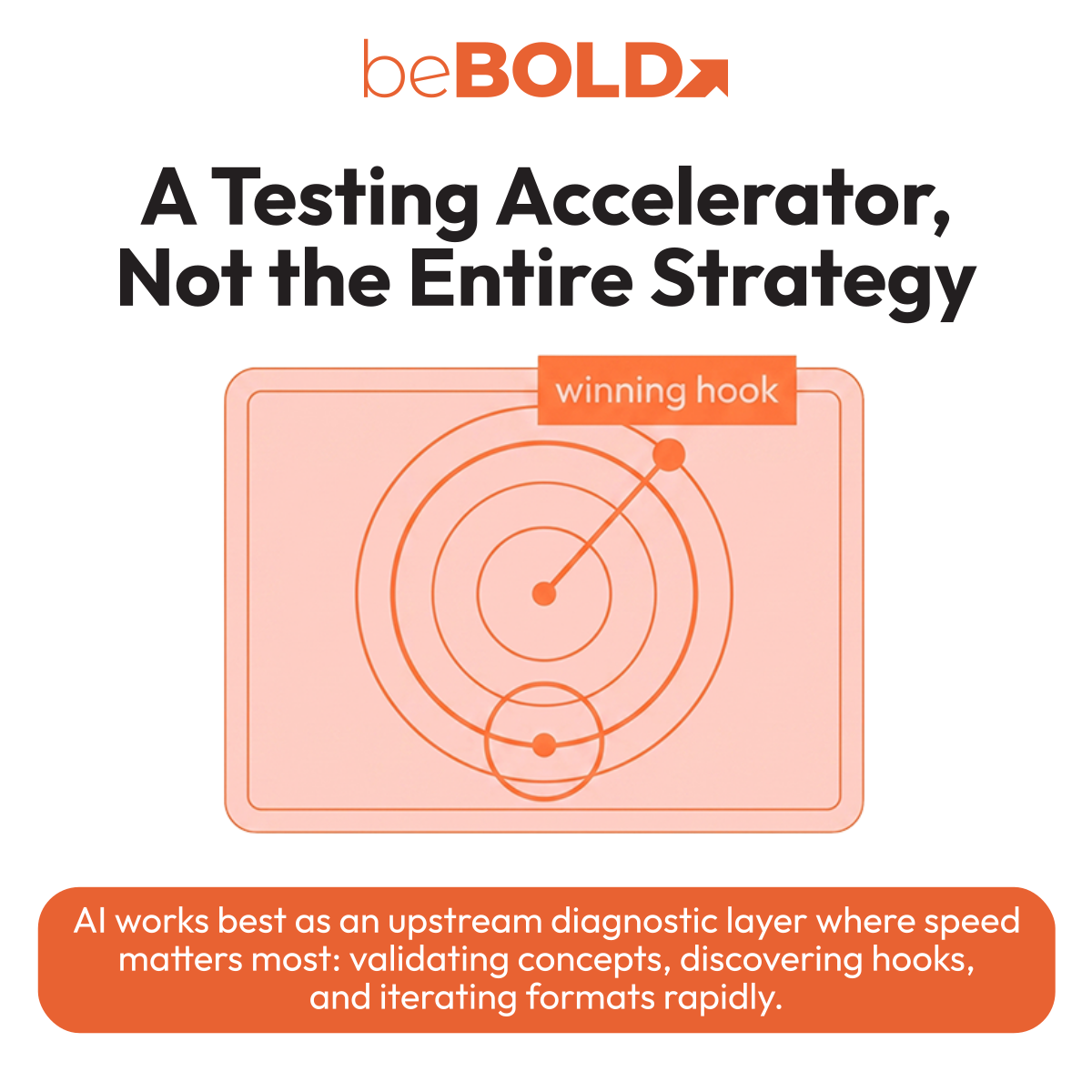
AI-generated creative is a testing accelerator, not the entire brand strategy. It works best as an upstream layer where speed matters most: concept validation, hook discovery, and rapid format iteration. The strongest campaigns still need human judgment around brand positioning, offer structure, creator alignment, and performance interpretation.
beBOLD Expert Tip: Treat every AI-generated script as a rough hypothesis, not a final asset. Run a quick relevance check against your brand voice and product claims before hitting publish. AI tools accelerate production, but quality control before launch remains entirely a human responsibility.
Best Use Cases for E-commerce Brands
-
Product demo variations that show the item in use across multiple use cases
-
Problem-solution hooks tailored to different customer pain points
-
Unboxing-style ads that recreate the first-impression experience
-
Before-and-after concepts for visual transformations
-
Testimonial-style ads using avatar narration over b-roll
-
TikTok Shop product launches needing rapid creative variety
-
Spark Ad testing with multiple angle variations from the same base script
-
Seasonal offer tests and creative refreshes for ads with declining performance
For a barrier-repair moisturizer, a brand could generate three AI-driven hooks: a “I destroyed my skin barrier, and this fixed it” problem-solution angle, a “my winter skincare routine” integration angle, and a myth-busting “slugging is not the only way” comparison angle. A pet brand might use a problem-solution demo for a detangling grooming spray, showing matted fur before and a smooth brush-through after, all narrated by a lifelike AI avatar.
When Not to Use AI UGC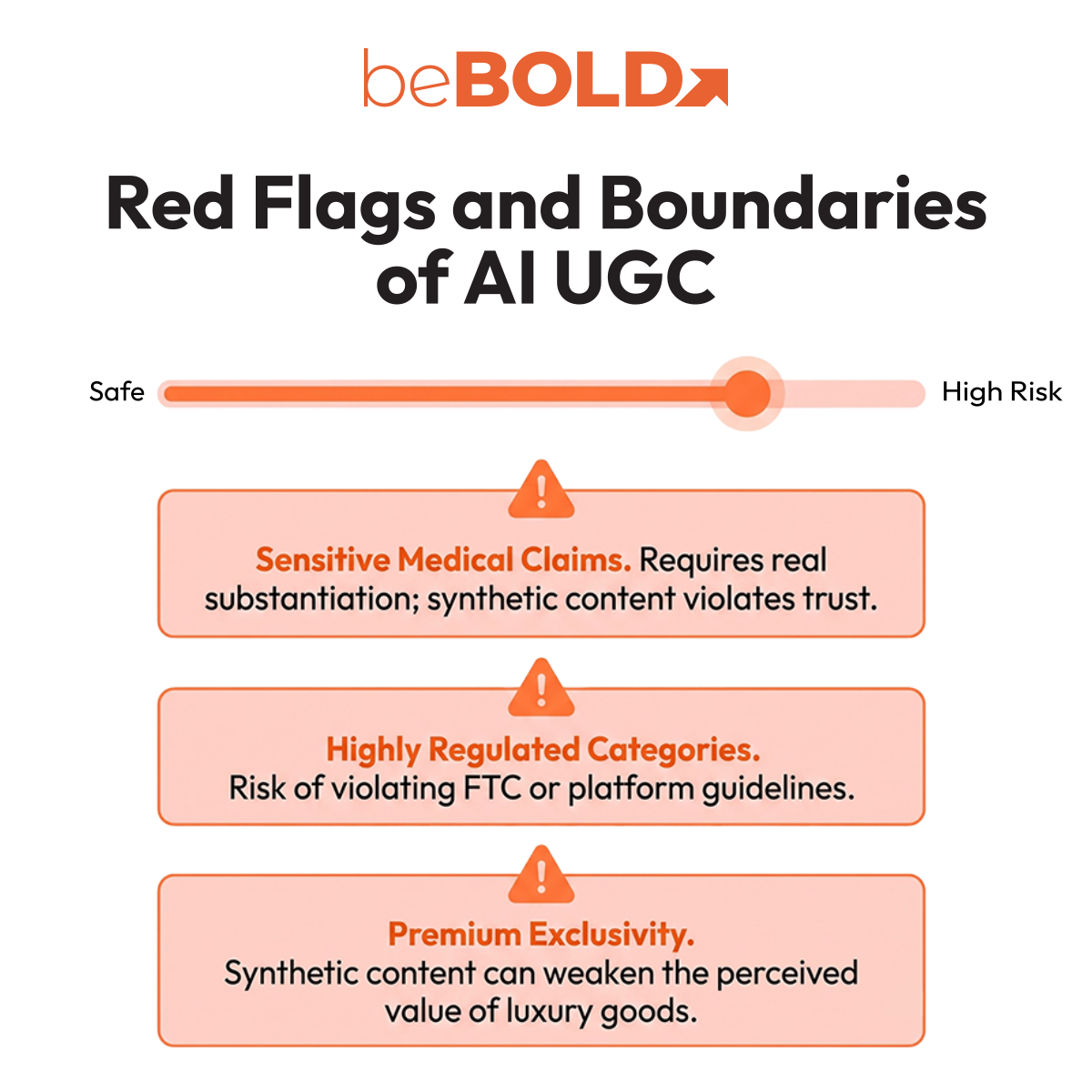
-
Sensitive health or medical claims that require substantiation and real testimonial proof
-
Highly regulated product categories where synthetic content could violate platform or FTC guidelines
-
Before-and-after claims that imply results without genuine documentation
-
Creator endorsements that suggest real user experience
-
Premium or luxury products where synthetic content can weaken perceived exclusivity and trust
How to Build an AI UGC TikTok Ad That Does Not Feel Generic
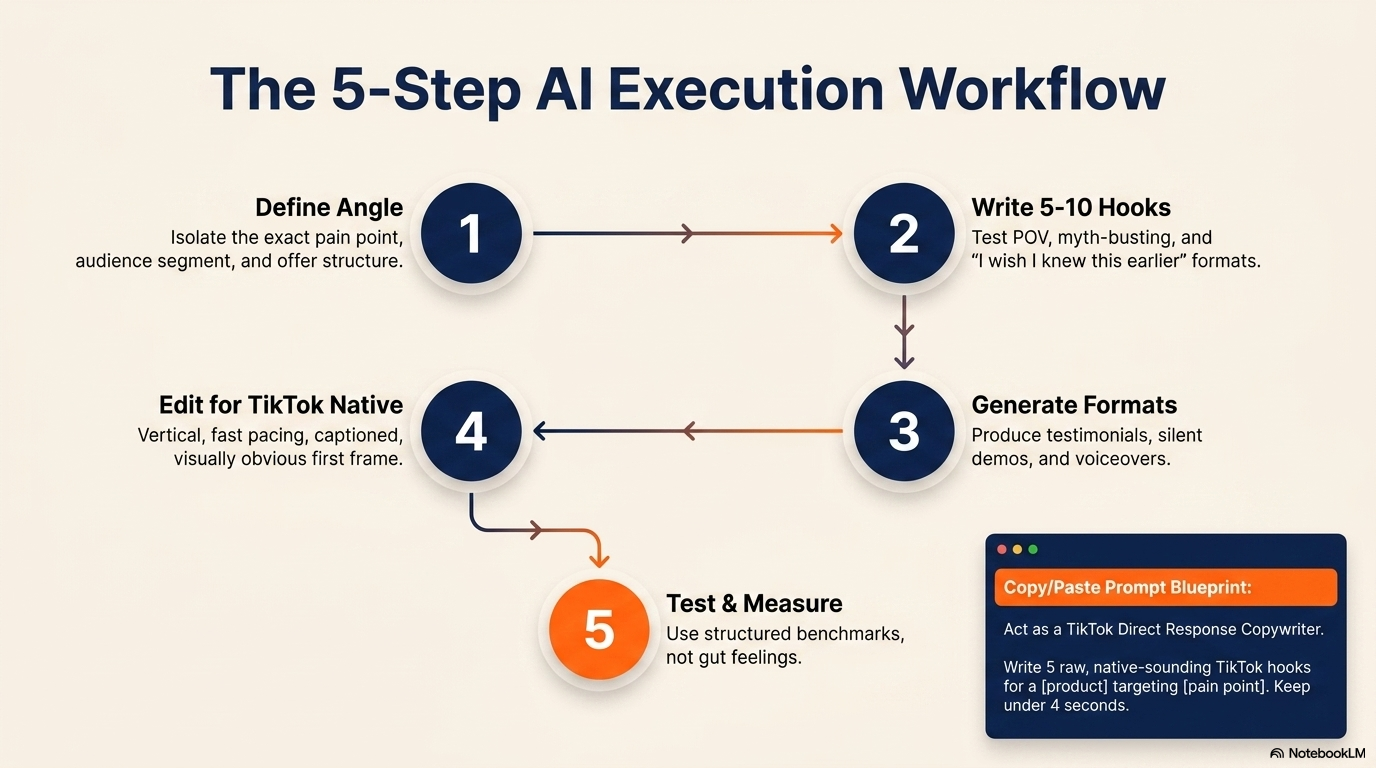
A generic workflow says “generate and test.” The better approach adds strategic quality control before any ad reaches a live audience. The following process ensures that a TikTok AI video doesn’t just exist but actually sells.
Step 1: Start With the Product Angle, Not the Tool
Define the exact pain point, the specific audience segment, the product’s proof points, a reason to believe, and the offer structure. If you cannot articulate why a customer should care, no TikTok AI video generator will fix that.
Step 2: Write 5 to 10 Hook Variations
Test problem hooks, POV hooks (“POV: your retinol barrier is wrecked”), myth-busting hooks, routine integration hooks, comparison hooks, first-impression hooks, and “I wish I knew this earlier” hooks.
Copy/Paste AI Prompt Blueprint:
“Act as a TikTok Direct Response Copywriter. Write 5 raw, native-sounding TikTok hooks for a [barrier-repair moisturizer] targeting [skin stinging after using retinol]. Use formats like POV, ‘I wish I knew this earlier,’ and myth-busting. Keep them under 4 seconds.”
Step 3: Generate Multiple Creative Formats
Produce avatar testimonials, silent product demos with text overlay, voiceover review styles, unboxing sequences, routine integrations, founder-style explanations, and objection-handling scripts.
Step 4: Edit for TikTok-Native Pacing
Keep the ad vertical, fast-moving, captioned, and easy to understand without sound. Remove dead air, make the first frame visually obvious, and skip overly polished brand intros that slow down retention.
Step 5: Test, Measure, and Refresh
Use a structured measurement approach rather than relying on gut feel.
|
Metric |
What It Signals |
Target Benchmark (E-Commerce) |
|
Thumbstop rate |
Hook strength |
25% – 35%+ |
|
2-second view rate |
Immediate retention |
50%+ |
|
6-second view rate |
Content relevance |
15% – 20% |
|
CTR |
Interest to action |
1.2% – 2%+ |
|
Conversion rate (TikTok Shop) |
Offer and page match |
3% – 5%+ (depending on price point) |
|
Watch time |
Engagement depth |
Context-dependent |
|
Add-to-cart |
Purchase intent |
Varies by price point |
|
CPA |
Efficiency |
Category benchmark essential |
|
ROAS |
Profitability signal |
1.5x – 3x+ typical |
|
Comment sentiment |
Authenticity and trust |
Qualitative; look for objections |
beBOLD Client Success: A skincare brand approached us looking to test TikTok AI video ads for a new barrier cream. Instead of guessing what would resonate, we mined real TikTok comments and Amazon customer Q&A for phrases like “stinging after retinoids” and “no moisturizer helps.” Those raw customer language seeds were fed into a TikTok AI video generator to build seven distinct hook variations. Only the top two performers moved into live budget, saving the brand thousands in production waste and identifying an angle that later scaled successfully with a real dermatologist creator.
AI UGC Risks Brands Should Watch Before Running TikTok Ads
-
Fake authenticity that viewers detect within the first two seconds
-
Weak product proof because the AI-generated script lacks hands-on experience
-
Inaccurate claims that slip through without human claim review
-
Uncanny avatars that hurt trust rather than build it
-
Poor voice matching creates a disconnect between mouth movements and audio
-
Duplicated scripts that appear across multiple brands and trigger audience fatigue
-
Platform disclosure requirements that, when ignored, lead to ad rejection or account flags
-
Creator backlash when audiences perceive brands are replacing human talent
-
Compliance risk for categories with elevated regulatory scrutiny
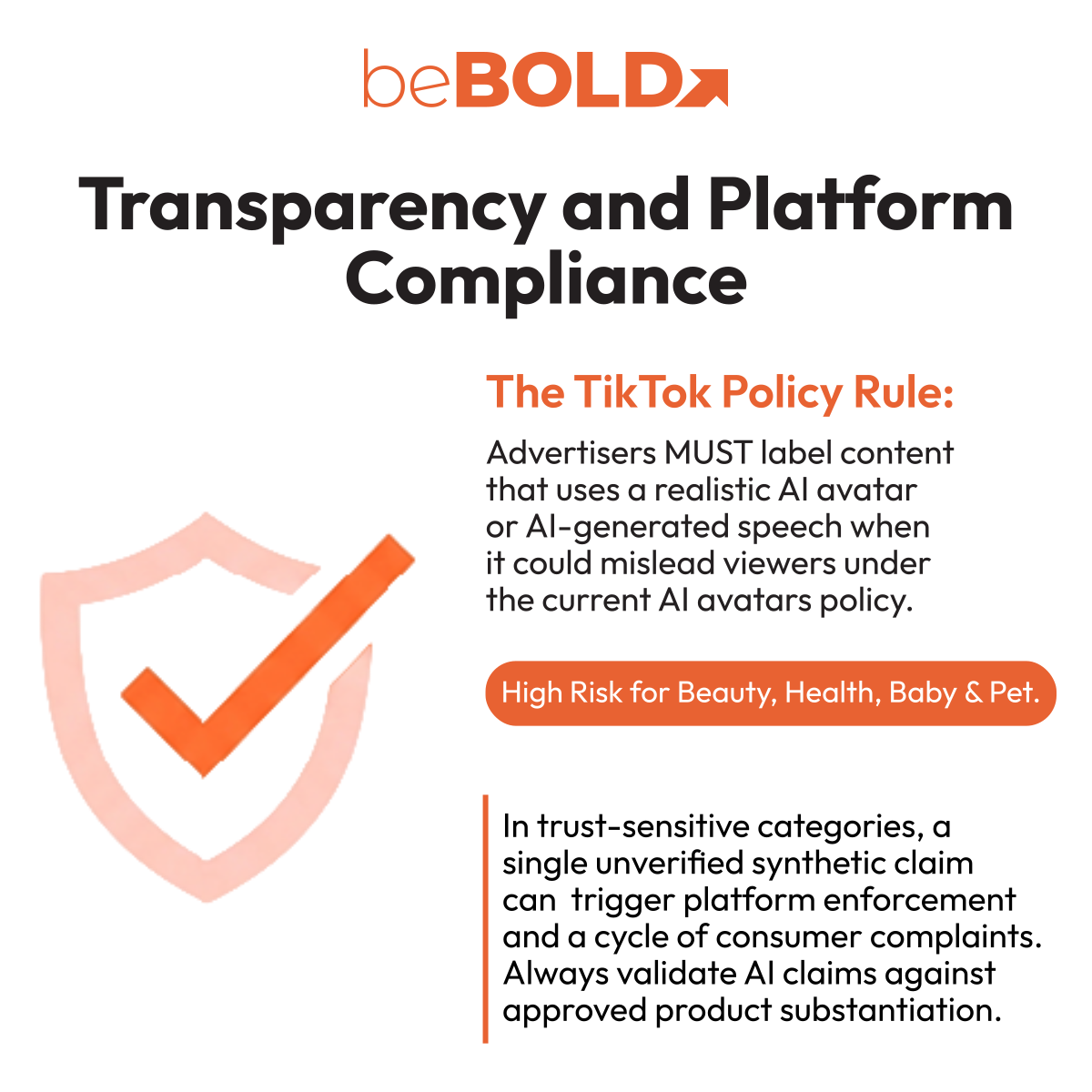
The Verge reported concerns around AI-generated ads appearing on TikTok without clear labeling, and the platform has since pushed stronger disclosure tools. Under the current TikTok UGC videos AI avatars policy, advertisers must label content that uses a realistic AI avatar or AI-generated speech when it could mislead viewers.
Disclosure and Trust Matter More in Beauty, Health, Baby, and Pet Categories
Categories involving skin, wellness, children, pets, or household safety require stricter review because trust, proof, and claims accuracy directly affect conversion and long-term brand reputation. A synthetic avatar claiming to have “sensitive skin” or “a newborn” can backfire the moment a viewer questions the experience behind the statement.
beBOLD Expert Tip: Treat every AI-generated script as a rough hypothesis, not a final asset. Run a quick relevance check against your brand voice and product claims before hitting publish. AI tools accelerate production, but quality control before launch remains entirely a human responsibility.
AI UGC vs. Real Creator Content: Which Should Brands Use?
|
Use AI UGC When… |
Use Real Creators When… |
|
Testing initial hooks and concepts |
You need lived experience and authentic trust |
|
Producing low-risk product demos |
Community, personality, or niche credibility matters |
|
Creating rapid localization versions |
The creator’s own audience is part of the strategy |
|
Refreshing creative for fatigued ads |
High-stakes claims or sensitive categories are involved |
|
Scaling volume without creator logistics |
The brand is building long-term ambassador relationships |
A hybrid workflow consistently outperforms an all-AI or all-creator approach. Use how to make AI videos for TikTok to test concepts quickly and cheaply, then hand winning hooks and angles to real creators or activate them as Spark Ads. TikTok has been expanding advertiser tools around AI insights and its Content Suite, making it easier for brands to turn organic user content into official ads with permission. When evaluating AI-generated avatars vs real UGC TikTok ads, the debate isn’t about replacing one with the other; it’s about sequencing them correctly.
For brands ready to build that hybrid machine, understanding how to set up a shop foundation ensures that AI-tested creative actually converts into attributable sales. When the backend is solid, creative testing stops being a guessing game.
How Amazon-First Brands Should Think About TikTok AI UGC
Amazon sellers can turn TikTok creative data into a marketplace advantage when they approach how to scale TikTok-style UGC ads using AI as an insights pipeline, not just an ad channel.
-
Use TikTok comments as voice-of-customer research and feed the language into Amazon bullets and A+ Content.
-
Test product benefit claims through AI UGC on TikTok before committing to permanent PDP creative updates.
-
Compare TikTok Shop conversion signals with Amazon sales lift to understand cross-channel incrementality.
-
Repurpose winning TikTok angles inside Amazon Brand Story videos and product image carousels.
Successfully selling Amazon products on TikTok requires clarity on how the platforms complement each other. A deep understanding of the TikTok Shop vs Amazon comparison helps brands allocate creative testing budget where it will drive the most total marketplace growth. For brands adding live shopping as an amplification layer, grasping TikTok live shopping dynamics can multiply the impact of winning creative angles.
Want those insights to improve your Amazon listings too? Our Amazon Listing Optimization service transforms customer language from TikTok into high-converting product pages that perform across marketplaces.
Quick Checklist Before Launching AI TikTok Ads
-
Product claim checked against approved substantiation
-
AI disclosure reviewed and correctly applied
-
Creator-style hook tested in at least three variations
-
Captions added for sound-off viewing
-
Offer clear and visible within the first three seconds
-
Landing path chosen: TikTok Shop destination ready with correct product listings and fee structure understood, including how to add products to TikTok Shop
-
Amazon destination prepared if driving off-platform traffic
-
Tracking and pixel/event setup verified
-
Comments monitored for trust signals and objection language
-
Refresh cadence planned based on performance drop thresholds
For a deeper dive into turning ads into consistent revenue, explore our guide on TikTok Shop ads mastery and learn how to make money on TikTok without sacrificing brand trust.
Ready to bridge the gap between rapid creative testing and actual marketplace revenue?
At beBOLD Digital, we help ecommerce brands seamlessly align TikTok Shop scaling with Amazon operations. Book a Strategy Consultation with the beBOLD Team today to dominate your category.

FAQs About AI UGC for TikTok
Is AI UGC allowed on TikTok ads?
Yes, but advertisers must follow TikTok’s ad policies and disclosure requirements. When content uses a realistic AI avatar or synthetic voice that could mislead viewers, TikTok requires clear labeling. For TikTok Shop sellers, maintaining account standing also means understanding the platform’s safety rules for both shoppers and brands.
Do AI UGC ads perform better than real creator ads?
Not automatically. AI UGC is faster and cheaper for testing hooks and concepts, but real creators typically drive stronger trust, personality, and audience connection. The highest-performing strategies use AI to find winning angles and real creators to scale them.
What products are best for AI UGC TikTok ads?
Simple, visual, demonstration-friendly products with clear before-and-after, routine, problem-solution, or impulse-purchase angles work well. Beauty, pet, household, and wellness items that show a visible effect or solve a relatable problem tend to perform best.
Should Amazon brands use AI UGC for TikTok Shop?
Yes, as a testing layer. The most effective approach ties AI-tested creative back to TikTok Shop data and Amazon listing performance so that creative insights improve marketplace conversion across both channels.
How often should TikTok AI UGC ads be refreshed?
Refresh when thumbstop rate, watch time, CTR, or CPA starts degrading. For active campaigns, plan a steady creative testing cadence rather than waiting for performance to collapse. Many brands find that refreshing hooks every one to two weeks during scaling periods prevents audience fatigue

Comments