

Story at a glance:
- The Amazon SIPP program allows eligible FBA products to ship in their own packaging, eliminating extra Amazon boxes while meeting strict durability and testing standards 📦
- Ship in Product Packaging helps sellers lower fulfillment costs, reduce packaging waste, and improve operational efficiency at scale 💰
- Amazon Ship in Own Container (SIOC) and Frustration-Free Packaging were replaced by SIPP, introducing clearer certification rules and performance-based fee incentives 🔄
- Sellers must weigh the benefits, requirements, and potential risks of SIPP to determine whether specific ASINs are truly a good fit ⚙️
- beBOLD Digital helps brands navigate SIPP changes strategically, minimizing risk while unlocking cost savings and stronger brand presentation 🚀
Amazon continues to push efficiency and sustainability across its fulfillment network. The Amazon SIPP program is a major part of that strategy. Short for Ships in Product Packaging, SIPP allows eligible products to ship to customers in their own packaging without an extra Amazon box. For sellers, this creates opportunities to reduce fulfillment costs, strengthen branding, and align with Amazon’s long-term sustainability goals.
In this guide, we’ll break down what the Amazon SIPP program is, how it replaced Amazon Ship in Own Container (SIOC), and how brands can use SIPP strategically without risking damaged inventory or poor customer experiences.

What Is Amazon SIPP? (And How It Replaced SIOC)

Source: Pexels
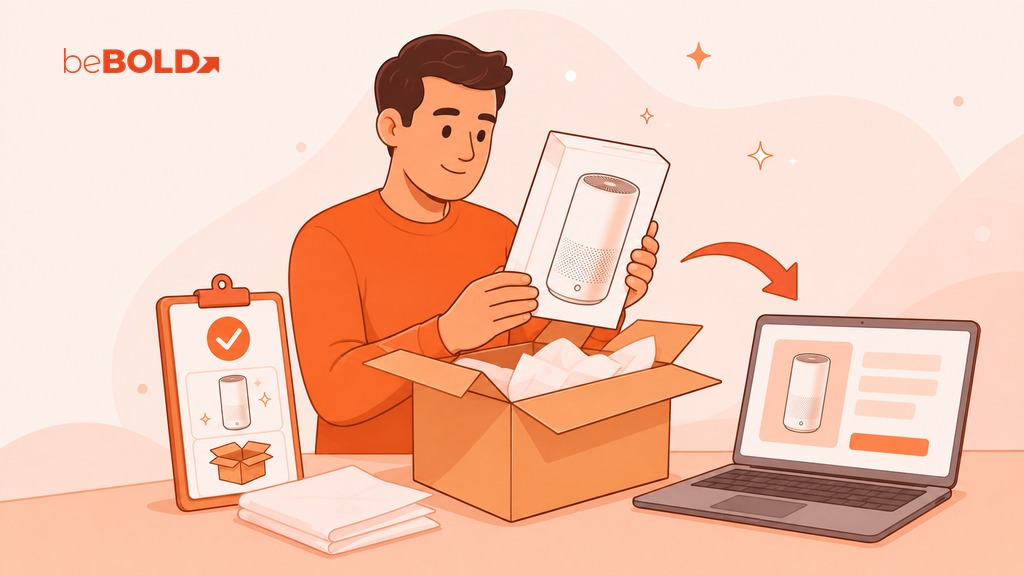
At its core, the Amazon SIPP program enables Fulfillment by Amazon (FBA) sellers to ship products directly in their own retail or branded packaging, so long as that packaging can withstand Amazon’s fulfillment and last‑mile delivery process. In practical terms, ship in product packaging means:
- Amazon applies the shipping label directly to the product box or mailer
- No additional Amazon box, void fill, or secondary packaging is used
- Products may still be overboxed only if they are shipped with other items
Amazon introduced SIPP to reduce waste, improve fulfillment efficiency, and lower operational costs across its logistics network, especially as sellers work to minimize issues like unexpected fulfillment bottlenecks and Amazon shipping delays. According to Amazon sustainability reporting, the company has reduced average package weight per shipment by more than 40% since 2015, with programs like SIPP playing a direct role in that progress.
SIPP also replaces earlier initiatives such as Amazon Ship in Own Container (SIOC) and the Frustration‑Free Packaging (FFP) program. Compared to Amazon ship in own container, SIPP:
- Introduces stricter packaging durability and testing requirements
- Provides clearer certification and enrollment standards
- Ties fulfillment fee incentives directly to compliance
As a result, SIPP is no longer just a packaging preference. It’s a performance‑based program designed to balance cost savings, sustainability goals, and the customer experience.
What Are the Key Aspects of Amazon SIPP?

Source: Pexels
Understanding how SIPP impacts operations requires looking beyond packaging alone.
Sustainability Impact
SIPP directly supports Amazon’s Climate Pledge by reducing corrugated use, plastic fillers, and transportation inefficiencies. Industry studies estimate that eliminating one outer shipping box can reduce packaging material usage by up to 30% per unit, depending on product size.
beBOLD Digital Expert Tip: Brands in beauty, pet, and wellness categories often qualify for SIPP faster because many already use sturdy retail packaging designed for shelf display and shipping.
Cost Savings for Sellers
Amazon offers discounted FBA fulfillment fees for eligible SIPP-certified units under 20 lbs. While per-unit savings vary by size tier, sellers shipping at scale can see meaningful margin improvements over time.
Branding & Visibility
With SIPP, your packaging becomes the first and only thing customers see at delivery. This gives brands full control over the unboxing experience, visual identity, and messaging.
Certification & Testing Standards
To qualify, products must pass Amazon-approved packaging tests. These include drop tests, compression tests, and durability checks aligned with ISTA 6 standards or Amazon self-certification pathways for non-fragile items.
Customer Experience & Unboxing
Contrary to early concerns, SIPP often improves customer satisfaction by reducing waste and frustration. Fewer boxes mean faster access to the product and less cleanup.
How Does Amazon SIPP Work? A Step-by-Step Guide

Transitioning into SIPP is a structured process that requires upfront planning and coordination across packaging, testing, and Seller Central enrollment. Understanding each step ahead of time helps sellers avoid delays, failed certifications, and costly post-launch issues.
1. Seller Designs SIPP-Ready Packaging
Packaging must be six-sided (for rigid boxes), securely sealed, and strong enough to protect the product throughout Amazon’s fulfillment network, including handling inside Amazon fulfillment centers.
2. Packaging Testing & Certification
Depending on product type, sellers either self-test or use third-party labs to validate packaging performance. Documentation and images are submitted through Seller Central.
3. Amazon Fulfillment & Shipping
Once approved, Amazon ships the product with the label applied directly to the packaging. The ASIN remains monitored for damage rates and customer feedback.
As fulfillment policies continue to evolve, Amazon Commingling Program Ending outlines how inventory handling changes may impact labeling and tracking requirements.

What Are the Requirements and How Do You Join the SIPP Program?

To keep it simple:
- Product packaging must meet Amazon durability standards – Packaging must be strong enough to withstand drops, compression, and handling throughout Amazon’s fulfillment and last-mile delivery process.
- Packaging must accommodate standard shipping labels – Your packaging needs sufficient flat surface area and material quality to securely hold Amazon’s shipping labels without obscuring branding or barcodes.
- Testing documentation must be submitted – Sellers are required to provide proof of successful self-testing or third-party lab testing to demonstrate compliance with SIPP requirements.
- ASINs must be enrolled individually via Seller Central – Each product is reviewed and approved on its own, allowing Amazon to monitor performance and damage rates at the ASIN level.
Approval is ASIN-specific, not account-wide, which means some products may qualify for SIPP while others remain in traditional FBA packaging.
How Do Amazon Sellers Benefit from SIPP?
For sellers evaluating whether SIPP is worth the operational shift, the benefits extend well beyond packaging alone. When implemented correctly, the Amazon SIPP program can improve margins, streamline fulfillment workflows, and strengthen brand perception at the moment of delivery.
Lower Fulfillment Costs at Scale
Savings compound quickly for high-volume SKUs, especially in oversize or heavy categories.
Improved Operational Efficiency
Less prep, fewer materials, and simplified inbound workflows reduce friction across fulfillment operations, which is an increasingly important advantage as sellers navigate tighter Amazon restock limits in 2026.
Stronger Brand Presentation at Delivery
SIPP turns every shipment into a branded touchpoint, which is especially valuable for brands expanding into new marketplaces or learning how to sell internationally on Amazon.
Sustainability as a Competitive Advantage
Eco-conscious consumers increasingly favor brands that reduce packaging waste, and SIPP supports that narrative.
SIPP vs Traditional FBA Packaging
Choosing between SIPP and traditional FBA packaging can have a direct impact on fulfillment costs, branding, and sustainability outcomes. The table below highlights the key differences sellers should consider when evaluating whether the Amazon SIPP program is the right fit for their ASINs.
|
Feature |
SIPP |
Traditional FBA Packaging |
|
Extra Amazon box |
No |
Yes |
|
Packaging waste |
Lower |
Higher |
|
Branding visibility |
High |
Low |
|
Fulfillment fees |
Discounted (eligible SKUs) |
Standard |
|
Testing required |
Yes |
No |
beBOLD Digital's SIPP Readiness Framework

Our approach ensures brands benefit from SIPP without unnecessary risk by aligning packaging decisions with profitability, compliance, and long-term brand goals.
ASIN-Level Eligibility Evaluation
We assess which SKUs are worth enrolling based on margins, sales velocity, product dimensions, and fragility. This ensures brands focus SIPP efforts on ASINs where fee savings and operational efficiencies meaningfully outweigh testing or redesign costs.
Packaging Durability + Compliance Review
Our team reviews structural integrity, materials, seals, and label placement against Amazon’s SIPP certification standards. This step helps identify weak points that could lead to failed testing, damage claims, or post-enrollment removal from the program.
Testing Strategy Recommendations
We guide brands on whether self-testing or third-party lab testing is the most efficient path based on product risk level and category requirements. This prevents over-investing in unnecessary testing while still meeting Amazon’s compliance expectations.
Risk Mitigation Before Enrollment
Damage rate modeling, return analysis, and customer experience considerations are evaluated before enrollment. These safeguards help brands avoid higher return rates, suppressed listings, or unexpected fulfillment issues after going live with SIPP.
Want to learn more about how beBOLD Digital has helped clients navigate packaging changes? Here are a few experiences we've had with some of our now top-ranking clients:
Beauty Brand Facing Packaging Failures
A fast-growing beauty brand approached beBOLD Digital after multiple ASINs failed initial SIPP testing due to crushed cartons and leaking inner components. Our team identified weak points in the box structure and internal supports, recommended targeted packaging reinforcements, and guided the brand through re-testing—allowing the products to pass SIPP certification without a full packaging redesign.
Pet Brand Balancing Cost Savings and Damage Risk
A pet products brand wanted to enroll its best-selling supplements into SIPP but was concerned about damage rates during peak shipping seasons. beBOLD Digital conducted ASIN-level risk modeling, advised selective SIPP enrollment for specific SKUs, and implemented monitoring thresholds post-launch, helping the brand unlock fee savings while maintaining healthy return and defect rates.
How beBOLD Digital Can Help
Navigating the shift into the Amazon SIPP program can feel straightforward on paper—but costly if executed incorrectly. If you’re unsure whether your packaging, ASIN mix, or fulfillment strategy is truly SIPP-ready, beBOLD Digital can help you make the transition with confidence.
Schedule a call with us today and we’ll help you evaluate SIPP eligibility, model potential fee savings, reduce risk before enrollment, and manage the full certification process inside Seller Central, while also advising on broader decisions like Amazon FBA vs FBM fulfillment strategies and Amazon order management best practices. Whether you’re proactively preparing for SIPP changes or reacting to rising fulfillment costs and upcoming Amazon fee changes in 2026, we’re here to help you turn SIPP into a controlled, profitable move, not a trial-and-error exercise.

FAQs
What are risks, trade-offs, and when SIPP is not the right fit?
Highly fragile, liquid, or irregularly shaped products may face higher testing costs or damage risks.
How much can sellers save per unit with SIPP?
Savings vary by size tier, but high-volume sellers often see meaningful per-unit reductions over time.
Are all products eligible for SIPP?
No. Eligibility depends on packaging durability and compliance.
What happens if my product gets damaged in transit?
Amazon may remove SIPP status if damage rates exceed thresholds.
How does SIPP affect parcel returns?
Returns function normally, but damaged packaging may increase resale limitations.
Is there a difference between SIPP and SIOC?
Yes. SIPP replaces SIOC with stricter standards and fee incentives.
Are customers notified that their product will ship in product packaging?
In some cases, Amazon displays a notice during checkout, depending on marketplace and product type.





Comments