


Selling organic products on Amazon presents a major growth opportunity for brands. According to the Organic Farmers Association, U.S. organic sales surpassed $67 billion, with eCommerce playing an increasingly important role in category growth. However, success depends on strict compliance with USDA and Amazon requirements. This guide breaks down how to sell organic products on Amazon safely and effectively, covering certification, listing optimization, visibility strategies, and best practices to scale without risking suppressions or account health issues.
Story-at-a-Glance
- Selling organic products on Amazon offers strong growth potential, but only for brands that follow strict USDA and Amazon compliance rules 🌱
- Amazon treats “organic” as a regulated claim, requiring verified certification before it can appear in titles, images, or product content 📋
- Proper setup in Seller Central, including documentation uploads and attribute verification, is essential to avoid listing suppression or removal 🔍
- High-performing organic listings combine compliant messaging with trust-building assets like USDA seals, A+ Content, and transparent sourcing 📦
- Brands that pair certification with sustainability programs and strong storytelling can unlock premium pricing and long-term customer loyalty 🚀
How to Sell Organic Products on Amazon
Understanding Amazon’s definition of “organic” is essential. In the U.S., organic claims are regulated by the USDA National Organic Program, and any product labeled organic must be certified by a USDA-accredited body. Amazon actively enforces these rules, so sellers must secure certification, verify documentation in Seller Central, and build compliant listings before focusing on growth.
At a high level, how to sell organic products on Amazon involves:
- Get Certified: Securing valid USDA organic certification
- Gather Documents: Collect necessary certificate and compliant product labelsUploading and verifying documentation in Seller Central
- Apply: Request approval to sell via Seller Central
- Upload: Building compliant, conversion-optimized listings
- Optimize: Leveraging Amazon's sustainability and discovery programs
These are especially important for 3P or Amazon Seller Central users since Amazon closely monitors the certifications you have before allowing you to sell gated or restricted categories. To know more about the difference between Amazon Seller Central and Seller Central and why sellers are shifting, read more about it here: The Great Amazon Shift: Why More Brands Are Moving from Vendor Central to Seller Central
What is Amazon’s Definition of “Organic”?
Understanding Amazon’s definition of “organic” is essential. In the U.S., organic claims are regulated by the USDA National Organic Program, and any product labeled organic must be certified by a USDA-accredited body.
How to Get the Organic Certification Seal on Amazon Seller Central

Before using the word “organic” anywhere on your listing, Amazon requires sellers to verify certification at the account or ASIN level.
To get approved, sellers must:
- Gather USDA organic certification and supporting product documentation
- Verify accurate backend attributes such as category, intended use, and organic claim fields
- Upload certification during category approval or Seller Performance reviews
- Complete a final QA check to ensure images, bullets, and A+ Content align with certification scope
Completing these steps correctly helps prevent listing delays, rejections, and future suppressions.
Overview of Organic Labeling Guidelines
|
Label Type |
Organic Content |
Can Use “Organic” |
USDA Seal Allowed |
|
100% Organic |
100% |
Yes |
Yes |
|
Organic |
≥95% |
Yes |
Yes |
|
Made with Organic |
≥70% |
Limited |
No |
|
Not Certified / Exempt |
<70% |
No (outside ingredients) |
No |
Understanding these distinctions is critical. Mislabeling is one of the most common causes of listing takedowns.
How to Create a Compliant Listing for Organic Products

Once certification is verified, the focus shifts to building a high-converting listing that communicates trust while staying fully compliant with Amazon and USDA policies. Organic shoppers are highly detail-oriented, and Amazon closely monitors listings for unsupported claims, making precision essential.
A compliant product listing should do three things simultaneously: validate your organic certification, educate shoppers, and remove friction from the purchase decision.
Titles and Bullets
Your product title should include the word “organic” only after certification has been approved in Seller Central. Titles should remain clean, accurate, and shopper-focused. Avoid keyword stuffing or exaggerated claims that could trigger suppression.
Bullet points should reinforce trust and clarity by emphasizing:
- Verified USDA-certified organic status (when applicable)
- Ingredient transparency and sourcing standards
- Functional benefits stated in compliant, non-medical language
beBOLD Tip: For regulated categories like food, supplements, and baby products, bullets should focus on what the product is rather than what it promises to cure or prevent. Clear, compliant bullets not only protect account health but also improve conversion by reducing shopper hesitation.
Images
Images are one of the strongest trust signals for organic shoppers and often the first place buyers look to validate certification. When approved, include the USDA Organic seal directly on product packaging images, supported by clean, professional lifestyle imagery.
Best practices for organic product images include:
- Showing certification clearly without overpowering the product
- Using secondary images to highlight ingredients, sourcing, or sustainability
- Avoiding clutter, unverified claims, or misleading visual callouts
beBOLD Tip: Amazon frequently reviews images for compliance, so accuracy and restraint are just as important as visual appeal.
A+ Content
A+ Content is where organic brands can differentiate without risking policy violations. Instead of making aggressive claims, use A+ modules to educate shoppers on:
- Farming and sourcing practices
- Ingredient quality and traceability
- Sustainability commitments and certifications
beBOLD Tip: Brands that use A+ Content to explain why their product is organic, rather than simply stating it, often see higher conversion rates, lower return rates, and stronger brand trust.
Storefront Structure
Your Amazon Storefront should act as a centralized trust hub for your organic brand. Certification badges, sustainability messaging, and consistent visual language should carry across all collections and categories.
A well-structured storefront helps:
- Reinforce organic positioning at the brand level
- Cross-promote complementary products
- Support repeat purchases and long-term loyalty
beBOLD Tip: When your listings, A+ Content, and Storefront all communicate the same compliant organic message, shoppers are far more likely to convert with confidence.

How to Expand and Maximize Visibility of Your Organic Products on Amazon
With a compliant foundation in place, brands can shift from risk management to scalable growth. Visibility for organic products on Amazon is driven by trust signals, sustainability markers, and brand consistency, all of which influence both shopper behavior and Amazon’s discovery algorithms.
Highlight Sustainability and Eco-Friendly Efforts
Organic shoppers, especially Millennials and Gen Z, expect transparency beyond certification. Clearly communicating sustainability helps build trust and justify premium pricing. These messages should be reinforced through bullets, images, A+ Content, and storefront banners.
Effective ways to communicate this include:
- Eco-friendly or reduced packaging initiatives
- Ethical sourcing and farming practices
- Traceable supply chains and ingredient transparency
- Carbon reduction or waste minimization efforts
beBOLD Digital Client Scenario: Organic Food Brand
A certified organic snack brand partnered with BeBold Digital after struggling to justify higher price points. By restructuring their bullet points to clearly explain ingredient sourcing, adding packaging sustainability callouts in A+ Content, and reinforcing USDA certification visuals, the brand improved shopper trust and saw a measurable lift in conversion rate without discounting.
Join Climate Pledge Friendly
Amazon’s Climate Pledge Friendly (CPF) program is one of the most powerful visibility levers available to eligible organic products. Products that meet Amazon’s sustainability criteria, including certified organic standards, can earn a dedicated badge that appears directly in search results and on product detail pages.
This badge helps:
- Increase click-through rates by signaling verified sustainability
- Differentiate certified organic products from “natural” alternatives
- Align your brand with Amazon’s broader environmental initiatives
For competitive organic categories, CPF participation can be a meaningful advantage when multiple products appear similar at first glance.
beBOLD Digital Client Scenario: Organic Cleaning Brand
An organic household cleaning brand worked with BeBold Digital to qualify for Climate Pledge Friendly. After aligning backend attributes and updating compliant sustainability language, the CPF badge helped the brand stand out in crowded search results, driving higher CTR and incremental organic sales growth.
Build Your Brand Story
Values-driven organic shoppers respond strongly to brand storytelling. Under Amazon’s Seller Dashboard, you’ll be able to use A+ Content and Storefronts to communicate your mission, sourcing standards, and long-term commitment to quality, which supports repeat purchases and brand loyalty.
beBOLD Digital Client Scenario: Organic Beauty Brand
A clean beauty brand selling USDA-certified organic skincare leveraged BeBold Digital to overhaul their A+ Content. By shifting from ingredient lists to a founder-led sourcing story and certification education, the brand improved engagement time on listings and increased repeat purchase rates.
Expand Into Complementary Categories
Once trust is established, expanding into adjacent organic categories, such as snacks, beauty, or pet care, can accelerate growth by leveraging existing brand equity and increasing lifetime value.
beBOLD Digital Client Scenario: Multi-Category Organic Brand
An established organic grocery brand partnered with BeBold Digital to expand into adjacent organic pet products. By leveraging existing brand equity, storefront cross-linking, and consistent certification messaging, the brand accelerated new ASIN adoption and reduced launch-phase ad dependency.
Organic Products You Can Sell on Amazon
Organic demand spans multiple categories, creating opportunities for both emerging and established brands. While certification requirements apply across the board, performance, competition, and operational complexity vary by category. Choosing the right organic category often depends on margins, compliance readiness, and brand differentiation.
Grocery & Gourmet Food
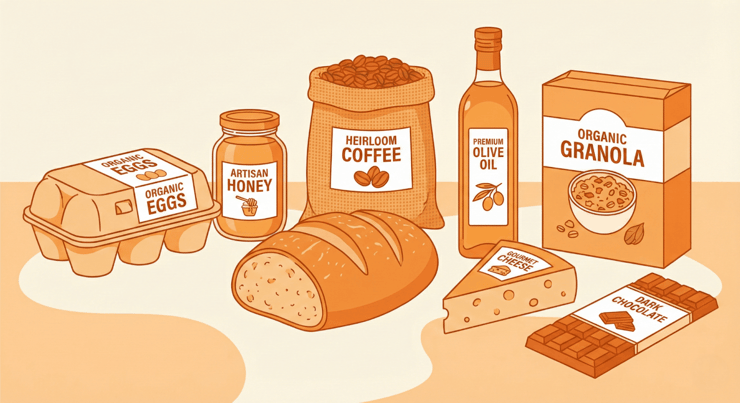
Organic grocery is one of the most mature and competitive organic categories on Amazon. High-performing products typically include shelf-stable pantry items such as snacks, grains, sauces, oils, and packaged meals.
Coffee & Tea

Organic coffee and tea attract premium buyers who care deeply about ethical sourcing, farming practices, and flavor quality.
Organic Baby Food

Organic baby food is one of the most trust-driven categories on Amazon. Parents are highly sensitive to ingredient quality, safety standards, and brand credibility, making certification and transparency essential.
Vitamins & Dietary Supplements
Organic supplements offer strong margins but come with elevated compliance risk. Amazon closely monitors this category for unverified health and medical claims, making precise language and backend accuracy critical.
Amazon Fresh: Organic Produce, Dairy & Meat
Amazon Fresh provides access to high-volume demand for organic produce, dairy, and meat, but only for sellers equipped to handle strict operational and logistical requirements.
Want to know more about Amazon Fresh? Read our article and see how it differs from Whole Foods: Amazon Fresh vs. Whole Foods Market: Key Differences for Consumers and Sellers
Ready to Sell Organic Products on Amazon The Right Way?
Selling organic products on Amazon requires more than demand. It requires expert compliance, strategic optimization, and consistent execution From USDA certification and Seller Central approvals to listing optimization and visibility programs, every step must be handled correctly to protect your brand and unlock sustainable growth.
That’s where beBOLD Digital comes in. As a full-service Amazon agency, we help organic brands navigate certification requirements, build policy-compliant listings, build for SEO success and conversion, and scale visibility through programs like Climate Pledge Friendly and A+ Content.
If you’re serious about selling organic products on Amazon and want to do it without risking suppressions, wasted ad spend, or stalled growth, schedule a call with beBOLD Digital to build a compliant, high-performing organic brand on Amazon.
Frequently Asked Questions
Can I list products as “organic” without USDA certification?
No. In the U.S., any product labeled as organic must be USDA certified or meet exemption criteria.
Where do I upload my organic certificate in Seller Central?
Certificates are typically uploaded during category approval, compliance requests, or via Seller Performance workflows.
Can I put the USDA seal in my main image?
Yes, if certification is approved and seal usage follows USDA design guidelines.
What’s the difference between “organic” and “made with organic ingredients” on Amazon?
“Organic” requires at least 95% organic content, while “made with organic ingredients” applies to products with at least 70% organic content and stricter claim limitations.
Do I need third-party lab tests or COAs for organic claims?
In some categories, yes, especially supplements and ingestibles where Amazon may request additional verification.
How do expiration dates and lot tracking work for FBA?
Organic and perishable products require accurate expiration dates and lot tracking to remain FBA-compliant and avoid inventory removals.


Comments