



To improve Amazon product titles, place the main keyword near the beginning, clearly identify the product, and include key features shoppers care about. Keep titles concise, readable, and compliant with Amazon’s rules. Avoid keyword stuffing, excessive punctuation, and repeated words. Strong titles help shoppers find and understand your product, leading to more clicks and sales.
Title optimization is increasingly important as competition grows. SumTracker reported that Amazon surpassed 9.7 million sellers globally in 2025, making visibility in search results more competitive and increasing the value of even small CTR improvements.
2026 Amazon Product Title Rules Sellers Need to Know
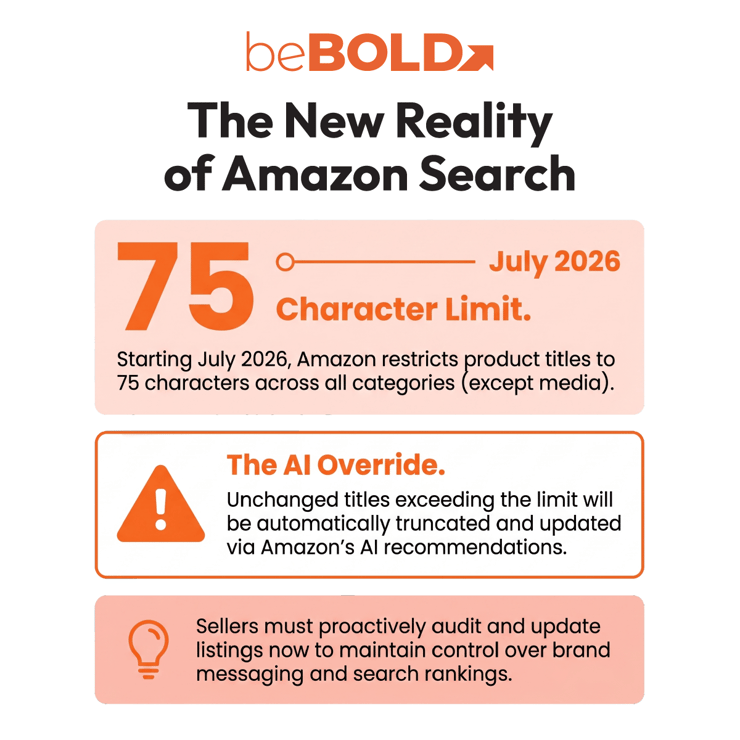
Amazon now has new rules for product titles that focus more on making titles easy to read, consistent, and helpful for shoppers. Starting July 2026, Amazon implemented a new 75-character limit to product titles in all categories, except media. This means that sellers need to update their product limits before the deadline. If product titles are not updated, Amazon will automatically update product titles based on AI recommendations.
For a complete breakdown of the latest changes and requirements, read our breakdown here: Amazon Product Title Update 2026.
These changes align with broader ecommerce trends. According to Vova Even, around 75% of online shoppers rely heavily on three factors: the main image, the title, and customer reviews. Clear, descriptive titles help shoppers evaluate products faster and reduce confusion.
Since Amazon’s title rules keep changing, it’s a good idea to check your listings often to make sure they follow the latest guidelines and keep showing up in search results.
The Best Amazon Product Title Formula
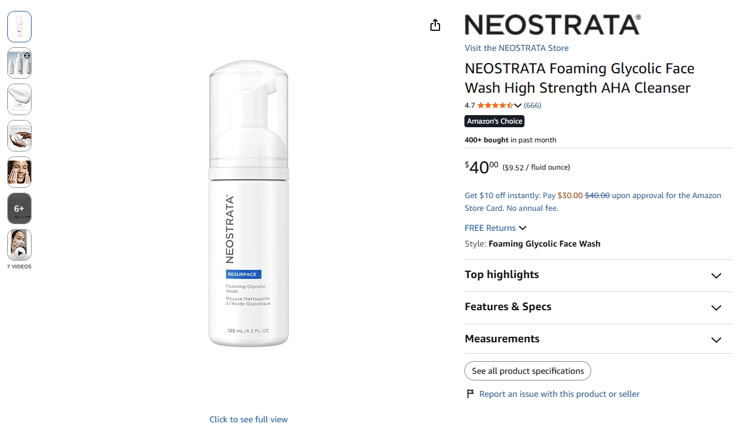 Source: Amazon
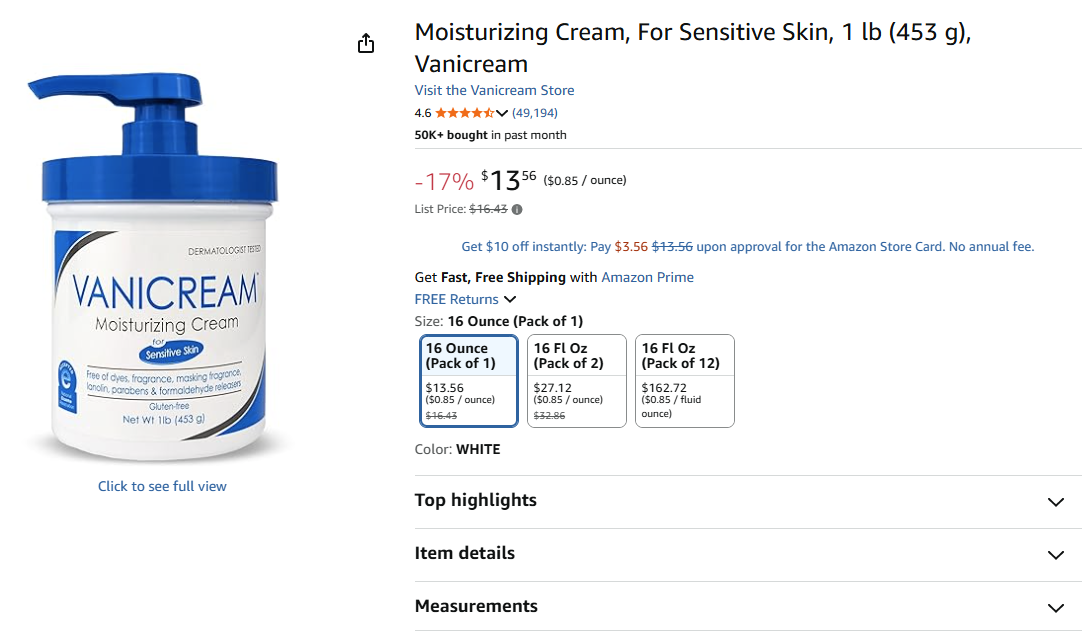
Source: Amazon
If your broader listing needs work beyond the title, review how to boost sales with Amazon listing optimization.
How to Optimize Amazon Product Titles Step by Step: Best Practices
Title optimization should start with shopper behavior, not just keyword volume. The title should connect the product to the search query while remaining clear to shoppers.
1. Start With the Product’s Most Important Search Term
The first part of the title should make the product type obvious. If the product is a vitamin C serum, dog shampoo, baby lotion, or resistance band set, that phrase should appear early.
Quick tips:
- Place the primary keyword within the first 75 characters.
- Avoid opening with low-value descriptors such as “premium,” “best,” or “amazing.”
- Make sure the product type is easy to understand without reading the full title.
- Prioritize the information you want shoppers to see if Amazon generates a shorter AI title.
Good example:
Vitamin C Face Serum by GlowPure, Hyaluronic Acid, 1 fl oz
Bad example:
GlowPure Premium Amazing Skincare Beauty Product for Women with Hydration and Brightening
The good example is clearer because it names the product and main search term immediately.
For stronger keyword planning, use Amazon keyword research tips before rewriting titles.
2. Add the Attributes Shoppers Use to Compare Products
Once the product type is clear, add the details that influence buying decisions. These vary by category.
For beauty and health, shoppers may compare:
- Skin type
- Formula type
- Ingredient positioning
- Size
- Scent
- Pack count
For pets, they may compare breed size, life stage, flavor, use case, or material. For baby products, shoppers often care about age range, sensitivity, safety-related attributes, count, and compatibility.
Good example:
Oatmeal Dog Shampoo for Sensitive Skin, Hypoallergenic Wash, 16 fl oz
Bad example:
Dog Shampoo Dog Wash Pet Shampoo for Dogs Puppy Shampoo Sensitive Skin Shampoo
The bad example targets many terms, but it repeats words unnaturally. The good example gives shoppers useful information while still including the core keyword.
3. Match the Title to the Category and Variation Type
Amazon product titles should reflect how the product is sold. Parent titles should usually stay broad, while child titles can include the specific variation.
For example:
|
Variation Level |
Recommended Approach |
|
Parent title |
Keep the title focused on the product family. |
|
Child title |
Add color, size, scent, flavor, count, or pack variation. |
|
Bundle title |
Clearly explain what is included. |
|
Multipack title |
Include quantity and unit size where relevant. |
A parent title for a face moisturizer does not need every scent or size. A child title can include “Fragrance-Free, 3.4 fl oz” or “Lavender, 2-Pack” if those details define the variation.
This is especially important for beauty brands with shade ranges, pet brands with flavor variations, and baby brands with size or count variations.
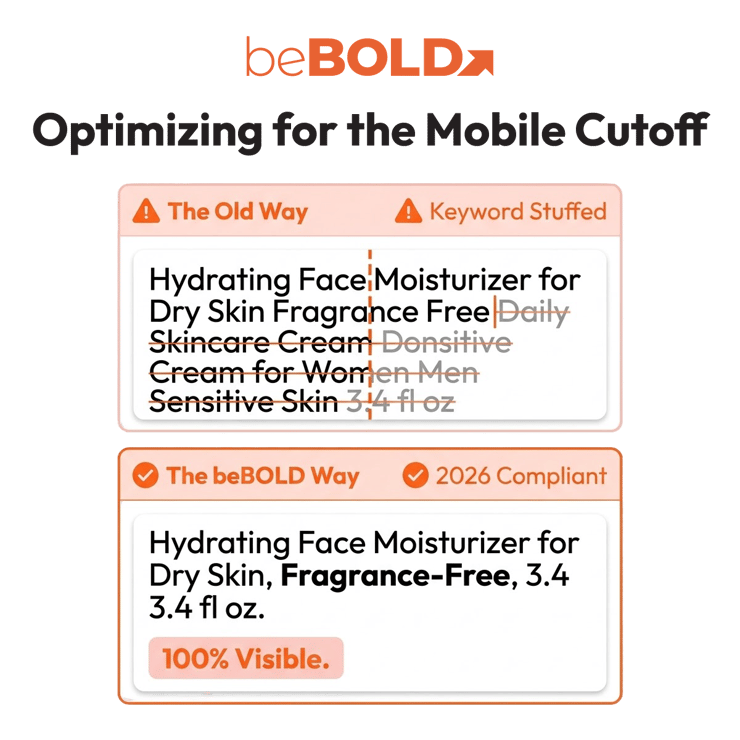
4. Keep the Most Important Information Within the First 75 Characters
Amazon may allow titles longer than 75 characters, but shoppers may not always see the full version. Amazon can generate shorter customer-facing titles when originals exceed 75 characters.
Because of this, the first 75 characters matter most. Include the product type, primary keyword, and key differentiator early.
Good example:
Hydrating Face Moisturizer for Dry Skin, Fragrance-Free, 3.4 fl oz
Bad example:
Hydrating Face Moisturizer for Dry Skin Fragrance Free Daily Skincare Cream for Women Men Sensitive Skin 3.4 fl oz
The shorter version is easier to scan and clearly communicates the product's purpose. It also reduces the risk that Amazon's AI-generated title will omit important details.
For a full-service approach, explore beBOLD Digital’s Amazon listing optimization services.
5. Remove Keyword Stuffing and Repetition
Your Amazon title should sound like a real product label. If you repeat phrases like “dog shampoo,” “pet shampoo,” “puppy shampoo,” and “dog wash” in one title, it might seem optimized, but it actually makes things less clear and could break the rules.
Use your title for the main keyword or phrase. Put other keywords in bullet points, backend fields, A+ Content, or test them in ads.
Here’s a better way to write your titles:
- Choose one primary title keyword.
- Add one or two supporting attributes.
- Remove repeated root words.
- Prioritize critical information within the first 75 characters.
- Check category rules.
- Review how the title looks on mobile.
- Monitor impressions, CTR, conversion rate, and keyword rank after publishing.
This is all part of a bigger Amazon SEO plan, where your titles, bullet points, backend keywords, A+ Content, and ad data all work together.
Amazon Product Title Examples by Category
Amazon’s updated product title requirements are still fairly new, so many brands haven’t fully adjusted to the recommended 75-character limit yet. Because of that, you’ll still come across plenty of listings with longer titles in a wide range of categories.
The examples below show current product titles alongside suggested revisions that follow product title optimization best practices while still helping shoppers find the product and quickly understand what it offers.
Beauty
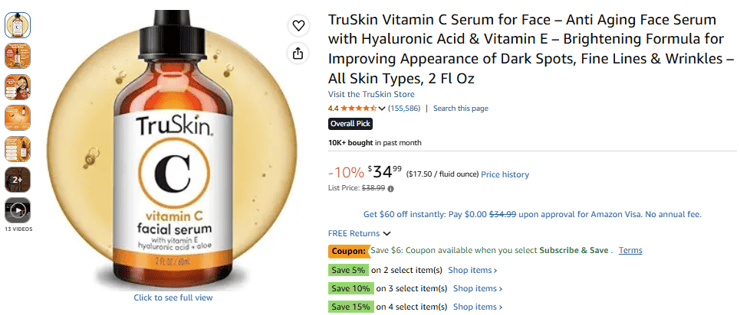
Source: Amazon
Recommended Title Layout
Brand + Product Type + Key Ingredient + Skin Concern + Size
Amazon title example
TruSkin Vitamin C Serum for Face, Facial Serum with Vitamin C, Hyaluronic Acid & Vitamin E, Anti-Aging Skin Care, 1 Fl Oz
Recommended title change (under 75 characters)
TruSkin Vitamin C Face Serum, Hyaluronic Acid, Anti-Aging, 1 Fl Oz
Baby
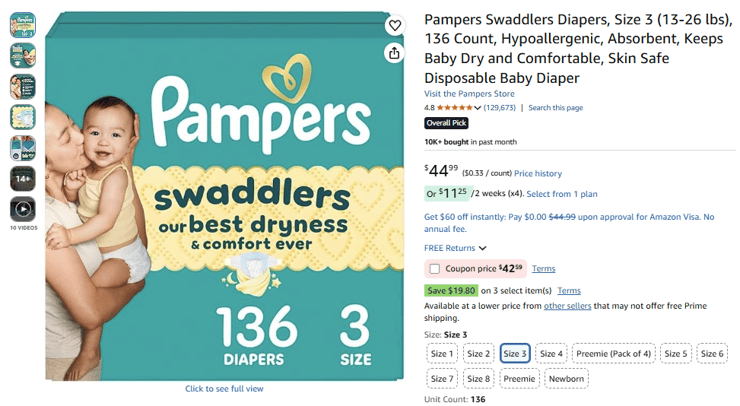
Source: Amazon
Recommended Title Layout
Brand + Product Type + Size + Sensitivity Feature + Count
Amazon title example
Pampers Swaddlers Diapers, Size 3 (13-26 lbs), 136 Count, Hypoallergenic, Absorbent, Keeps Baby Dry and Comfortable, Skin Safe Disposable Baby Diaper
Recommended title change (under 75 characters)
Pampers Swaddlers Diapers, Size 3, Ultra Soft, 168 Count
Pets
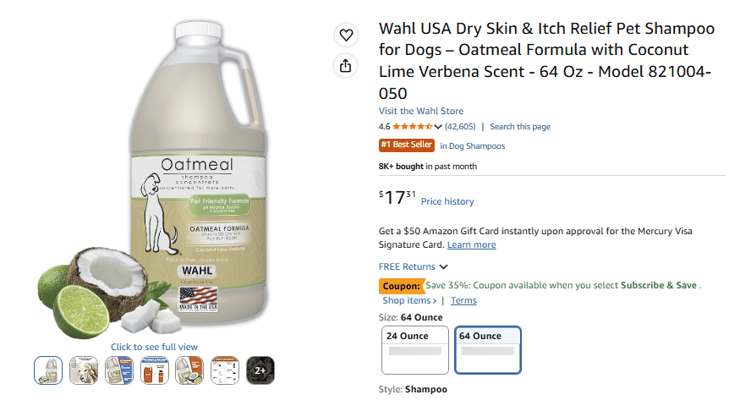
Source: Amazon
Recommended Title Layout
Brand + Product Type + Coat or Skin Need + Size
Amazon title example
Wahl USA Dry Skin & Itch Relief Pet Shampoo for Dogs, Oatmeal Formula, Coconut Lime Verbena, 24 Oz
Recommended title change (under 75 characters)
Wahl Dog Shampoo, Oatmeal Formula, Dry Skin Relief, 24 Oz
Health and Wellness
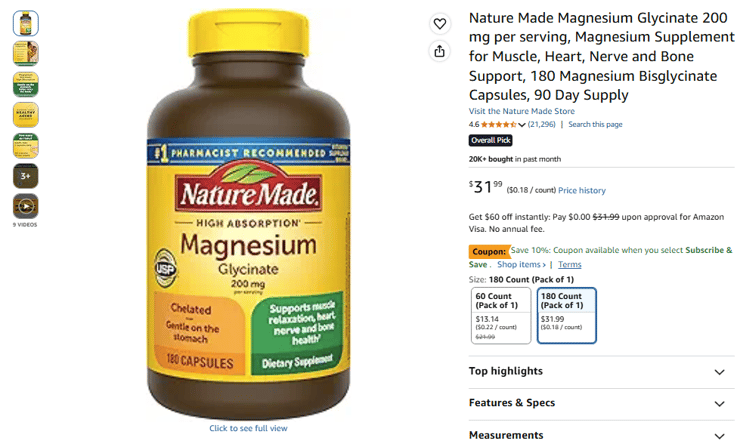
Source: Amazon
Recommended Title Layout
Brand + Supplement Type + Form + Benefit + Count
Amazon title example
Nature Made Magnesium Glycinate 200 mg per serving, Magnesium Supplement for Muscle, Heart, Nerve and Bone Support, 180 Magnesium Bisglycinate Capsules, 90 Day Supply
Recommended title change (under 75 characters)
Nature Made Magnesium Glycinate Capsules, High Absorption, 60 Count
Fashion
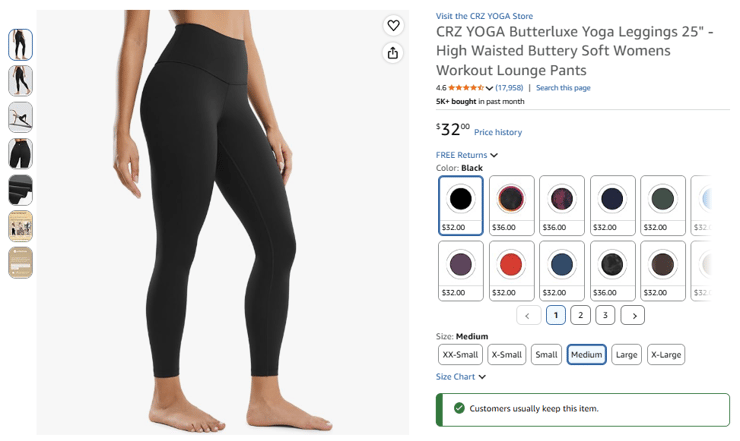
Source: Amazon
Recommended Title Layout
Brand + Product Type + Fit or Style + Material
Amazon title example
CRZ YOGA Butterluxe Yoga Leggings 25" - High Waisted Buttery Soft Womens Workout Lounge Pants
Recommended title change (under 75 characters)
CRZ YOGA Butterluxe High-Waisted Leggings, Women's Yoga Pants
Sports
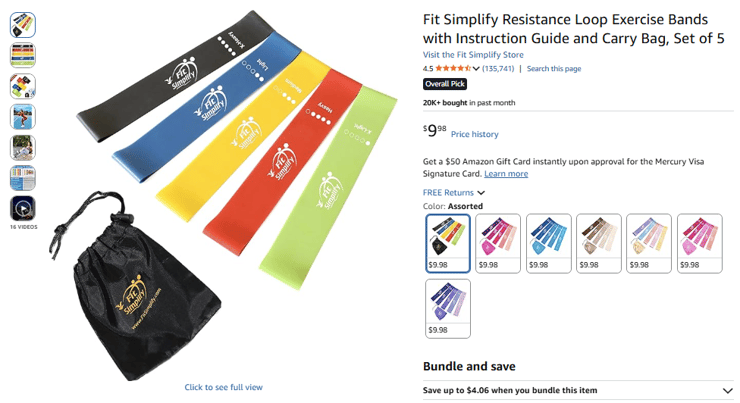
Source: Amazon
Recommended Title Layout
Brand + Product Type + Resistance Level or Feature + Set Count
Amazon title example
Fit Simplify Resistance Loop Exercise Bands with Instruction Guide and Carry Bag, Set of 5
Recommended title change (under 75 characters)
Fit Simplify Resistance Loop Bands, 5 Levels, Carry Bag Included
Household
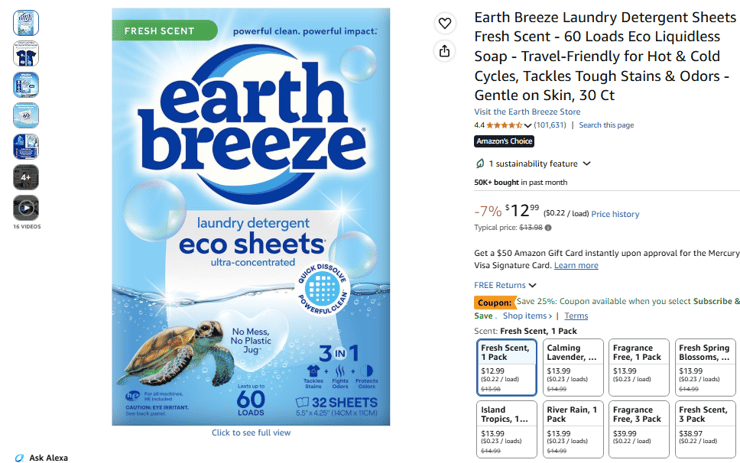
Source: Amazon
Recommended Title Layout
Brand + Product Type + Scent + Load Count or Quantity
Amazon title example
Earth Breeze Laundry Detergent Sheets Fresh Scent - 60 Loads Eco Liquidless Soap - Travel-Friendly for Hot & Cold Cycles, Tackles Tough Stains & Odors - Gentle on Skin, 30 Ct
Recommended title change (under 75 characters)
Earth Breeze Laundry Detergent Sheets, Fresh Scent, 60 Loads
Grocery
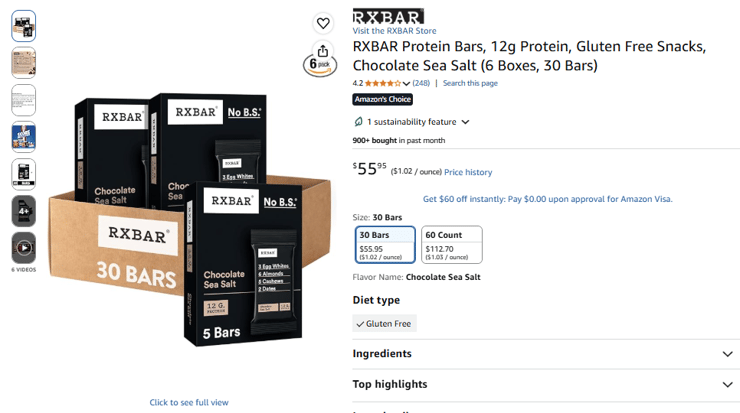
Source: Amazon
Recommended Title Layout
Brand + Product Type + Flavor + Dietary Attribute + Count
Amazon title example
RXBAR Protein Bars, 12g Protein, Gluten Free Snacks, Chocolate Sea Salt (6 Boxes, 30 Bars)
Recommended title change (under 75 characters)
RXBAR Protein Bars, Chocolate Sea Salt, Gluten-Free, 12 Count
Don’t copy these examples exactly. They’re here to show how each category needs its own mix of product type, keywords, and details for shoppers.
Side-by-Side Comparison of Compliant vs. Non-Compliant Amazon Product Titles
To help you better compare what a compliant product title is, here’s a side-by-side comparison of what product title best practices look like compared to non-compliant titles:
|
Guideline |
Compliant Example |
Non-Compliant Example |
Explanation |
|
Length: Keep titles concise, with a maximum of 75 characters. |
“CeraVe Daily Moisturizing Lotion, Fragrance Free, 12 oz” |
“CeraVe Daily Moisturizing Lotion for Dry Skin with Hyaluronic Acid and Ceramides, Dermatologist Recommended, Fragrance Free, Large 12 Ounce Bottle” |
Long titles can be truncated on mobile and may be harder for shoppers to scan quickly. |
|
Redundancy: Avoid repeating the same words or information. |
“Purina Pro Plan Adult Dog Food, Chicken & Rice, 18 lb” |
“Purina Pro Plan Dog Food Adult Dog Food Chicken Dog Food Rice Dog Food” |
The non-compliant title repeats “Dog Food” unnecessarily and creates a cluttered shopper experience. |
|
Special characters: Avoid excessive or decorative symbols. |
“Canon PIXMA Wireless Inkjet Printer, TS3520” |
“Canon PIXMA ★ Wireless Inkjet Printer ★ TS3520 ★ BEST DEAL ★” |
Decorative symbols and promotional-looking formatting should not be used in product titles. |
|
Information order: Lead with brand, product type, key attribute, color, size, pack count, or model number. |
“Aveeno Calm + Restore Oat Cleanser, Fragrance Free, 7.8 oz” |
“Fragrance Free 7.8 oz Oat Cleanser Calm + Restore Aveeno Face Wash” |
The compliant example places the brand and product type first, making the title easier to understand in search results. |
|
Parent/child variations: Include size and color only in child ASIN titles. |
Parent: “Hanes Cotton Crewneck T-Shirt” Child: “Hanes Cotton Crewneck T-Shirt, Navy, Large” |
Parent: “Hanes Cotton Crewneck T-Shirt, Multiple Colors and Sizes” Child: Same as parent |
Parent titles should stay general, while child titles should identify the specific variation. |
|
Numbers: Use numerals instead of spelling out numbers. |
“3-Pack Bamboo Baby Washcloths, 10 x 10 in” |
“Three-Pack Bamboo Baby Washcloths, Ten by Ten Inches” |
Numerals are easier to scan and help keep titles shorter. |
|
Subjective commentary: Do not use subjective or promotional phrases. |
“Anker USB-C Wall Charger, 30W, White” |
“Anker HOT ITEM USB-C Wall Charger, 30W, BEST SELLER!!!” |
Phrases like “Hot Item” and “Best Seller” are subjective and promotional. |
|
Capitalization: Do not use all caps or all lowercase. |
“Melissa & Doug Wooden Shape Sorting Cube” |
“MELISSA & DOUG WOODEN SHAPE SORTING CUBE” or “melissa & doug wooden shape sorting cube” |
Use title-style capitalization instead of all caps or all lowercase formatting. |
|
Abbreviations: Measurement units can be abbreviated. |
“Simplehuman Trash Bags, Code H, 60 ct, 8 gal” |
“Simplehuman Trash Bags, Code H, Sixty Count, Eight Gallon” |
Common measurement abbreviations such as “ct,” “gal,” “oz,” “in,” and “lb” keep titles concise. |
|
Model numbers: Include model numbers when relevant for the category. |
“Dyson V8 Cordless Vacuum Cleaner, 400473-01” |
“Dyson Cordless Vacuum Cleaner, Silver” |
Model numbers can help shoppers identify exact products, especially in electronics, appliances, and replacement-part categories. |

AI Prompt Template for Amazon Product Title
Use AI to help draft your titles, but always have a person review them to make sure they follow the rules, fit the category, and make sense for shoppers.
Prompt template:
Act as an Amazon SEO copywriter. Create 5 optimized Amazon product title options for this product: [insert product]. Use the primary keyword: [insert keyword]. Use secondary keywords only if they fit naturally: [insert keywords]. Follow Amazon title best practices by keeping the title clear, compliant, readable, and focused on shopper decision-making. Avoid keyword stuffing, unsupported claims, promotional wording, and repeated words. Include the product type, key attribute, use case, size, count, or variation where relevant. Keep the strongest option under 75 characters if possible, and provide one longer version under 150 characters for categories that need more detail.
This type of prompt can support fast draft creation, but it should be paired with keyword data, competitor review, and performance testing.
How beBOLD Digital Helped a Beauty Brand Improve Product Titles
A beauty brand working with beBOLD Digital had long Amazon product titles that repeated ingredient keywords and pushed the product type too far back. beBOLD Digital streamlined the titles around the main search term, product format, skin concern, and size, then moved secondary keywords into bullets and backend fields.
This helped the listings become easier to scan, better aligned with Amazon title rules, and more consistent with the brand’s full listing strategy.
Need Help Optimizing Amazon Product Titles?
If you want product titles that work for Amazon SEO, follow the rules, and help boost sales, beBOLD Digital can help. We support brands with everything from title strategy to full catalog optimization. Our team handles keyword research, A+ Content, and ongoing monitoring to make your listings easier to find, easier to understand, and more appealing to shoppers. Contact us today and let us help you bring your brand to life.
FAQ About Optimizing Amazon Product Titles
How long should an Amazon product title be?
Previously, most Amazon product titles were limited to 200 characters. However, with the July 2026 update, Amazon is now implementing a 75-character title limit for better visibility on their mobile platform. Titles exceeding the limit will be changed by Amazon.
What should I include in an Amazon product title?
Add the brand, product type, main keyword, important features, size, quantity, and any variations if they matter. Your title should help shoppers quickly see what the product is and compare it to others.
Can I repeat keywords in an Amazon title?
Avoid repeating the same word more than twice unless it is an article, conjunction, or preposition. Instead of repeating keyword variations, use the strongest phrase in the title and place secondary terms elsewhere in the listing.
Do Amazon product titles affect PPC performance?
Yes, product titles can affect how well your ads perform because shoppers see the title in Sponsored Products. A clear title can help you get more clicks from the right people.
Should I use AI to write Amazon product titles?
Yes, AI can help you come up with draft titles and different options. But always have a person check each title to make sure it follows Amazon’s rules, uses keywords correctly, fits the category, and is clear for shoppers before you publish.



Comments