


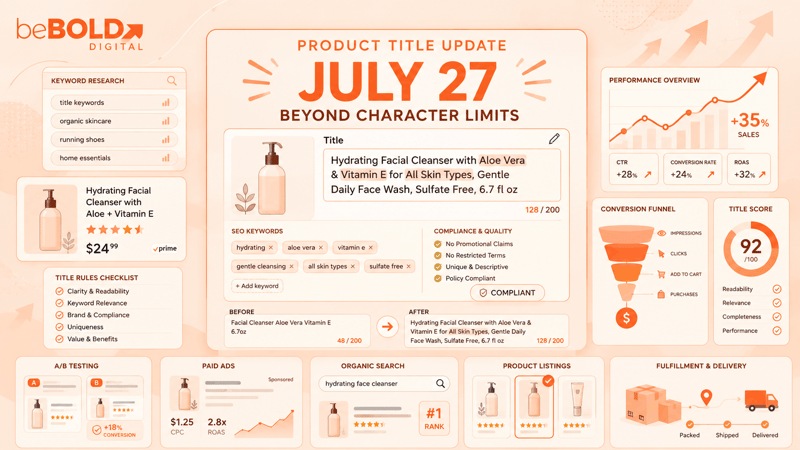
Amazon’s new product title requirements took effect on July 27, 2026. Product titles in all categories except media must now contain 75 characters or fewer, including spaces.
Titles that remain over the limit are being updated gradually using Amazon’s AI-generated recommendations. Amazon has also introduced Item Highlights, which gives sellers an additional 125 characters to communicate information such as materials, recommended uses, and key product benefits.
Listings will remain active while these changes are rolled out, and sellers can continue editing their titles and Item Highlights at any time. When Amazon recommends a change to a listing, brand owners receive a 14-day window to review, modify, or approve the recommendation before it is implemented.
The main point is that long, keyword-stuffed titles are now being phased out. Sellers must adjust to a shorter title format and more direct involvement from Amazon in managing product catalog content.
What Changed and Why It Matters
Amazon wants shorter, clearer titles that look good on all devices, especially on mobile. Instead of packing titles with every keyword, material, size, and benefit, sellers should keep titles focused and use Item Highlights for extra details.
The emphasis on mobile readability is significant. According to Statista, mobile devices accounted for approximately 64% of global web traffic, highlighting why marketplaces like Amazon are prioritizing content that is easier to scan on smaller screens.
A practical title structure may look like:
Brand + Product Type + Core Feature + Key Variant
For example, details like materials, uses, and extra benefits that used to be in the title can now go into Item Highlights.
For a deeper breakdown of title structure, sellers can revisit beBOLD Digital’s guide to how to optimize Amazon product titles.
Amazon says the main goal is to make titles easier to read on mobile, but this also helps standardize product data and makes it easier for shoppers to compare products. For SEO, titles are still important, but there is less room for mistakes. Sellers should focus on the most important keywords and product details instead of trying to fit every search term into a long title.
This makes choosing the right keywords more important than ever. Use search volume, conversion data, PPC search term reports, and competitor research to decide which keywords should go in the title.
Seller Concerns and the AI Factor
Sellers have had mixed reactions, and many of those concerns remain relevant now that implementation is underway. Sellers were particularly concerned about Amazon’s AI-generated recommendations, the limited preparation period, and the possibility that automatic changes could negatively affect listing performance.
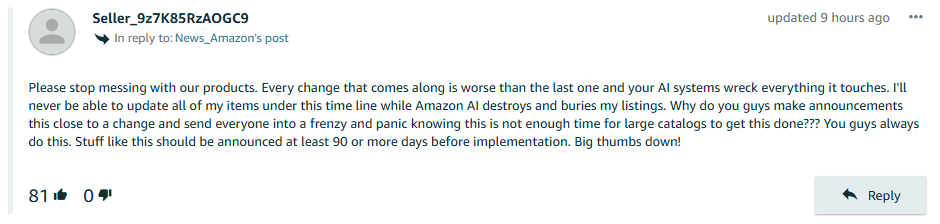
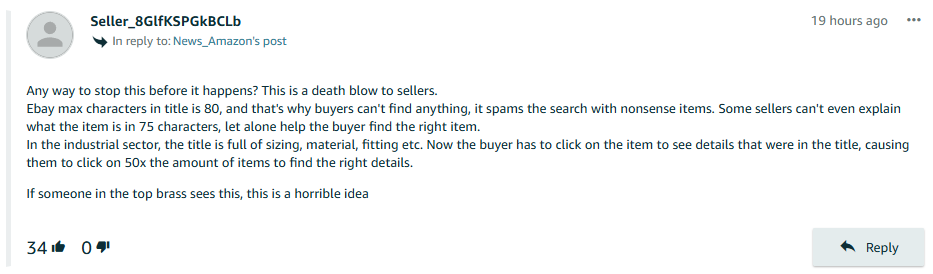
Source: Amazon Seller Central
The concern is understandable. Product titles influence ranking, click-through rate, conversion, ad relevance, and catalog compliance. Many sellers worry that AI may not fully understand category nuances, brand positioning, compliance requirements, or the keywords that actually drive sales.
Those concerns are amplified by the growing role of AI in ecommerce operations. According to McKinsey’s 2024 State of AI report, 65% of organizations report regularly using generative AI, nearly double the percentage reported just ten months earlier.
While Amazon’s AI tools may help identify listings that need updates, sellers should not automatically approve every recommendation. Before accepting an AI-generated title, consider whether it:
- Includes the highest-value keyword
- Clearly describes the product
- Preserves brand positioning
- Avoids unsupported claims
- Matches the correct variation
- Supports click-through from mobile search results
A title can be compliant and still underperform. Sellers should validate AI recommendations against keyword data, PPC search terms, organic rankings, and conversion metrics before making changes.
What Sellers Should Do Now
The rule is now active, but sellers still have an opportunity to take control of how their titles are updated.
This rollout should be treated as a catalog governance project rather than a simple copywriting exercise. The objective is not merely to reduce character count. Sellers must also protect discoverability, conversion, compliance, and brand control.
Here is what sellers should do now:
- Audit all ASINs with titles over 75 characters and prioritize them based on revenue, traffic, ad spend, organic rank, and overall catalog importance. High-performing listings should be reviewed first because they carry the greatest risk if a title change negatively affects visibility or click-through rate.
- When rebuilding titles, focus on the brand, product type, primary keyword, and most important differentiator. Secondary benefits, materials, use cases, and comparison points can move into Item Highlights, bullets, attributes, backend terms, or A+ Content.
- Review category-specific style guides and compliance requirements. This is particularly important in categories such as beauty, health, baby, pet, and supplements, where claims and trust signals can directly affect compliance and conversion.
Sellers should also check Seller Central’s Review Listing Changes area regularly. Brand owners have 14 days to review, modify, and approve Amazon’s recommended title and Item Highlights changes before implementation. Listings remain active throughout the rollout, and sellers can update their content at any time
If titles have already contributed to listing issues or suppression risks, sellers should review beBOLD Digital’s guide to Amazon listing suppression.
Monitor Performance After Implementation
Once titles are updated, performance should be monitored closely. Key metrics include:
- Sessions
- Click-through rate
- Conversion rate
- Keyword rankings
- Buy Box performance
- PPC impressions
- Sales by ASIN
PPC data can be especially valuable because title changes may affect ad relevance and shopper behavior. If click-through rates decline, sellers may need to test stronger descriptors or move a clearer differentiator into the title.
Whenever possible, implement changes in phases rather than updating every listing at once. A controlled rollout makes it easier to identify what is working and diagnose any ranking or conversion issues.
The Bigger Lesson for Amazon Brands
Amazon’s 75-character title limit reinforces a larger reality: brands may not control marketplace changes, but they can control how prepared their catalogs are.
The sellers most vulnerable to this update are those relying on long, overloaded titles to compensate for weak keyword research, incomplete attributes, thin bullets, or underdeveloped A+ Content. The sellers best positioned are those with structured catalog data, clear keyword prioritization, strong product attributes, and disciplined listing governance.
While the new limit may feel restrictive, it can ultimately encourage a stronger listing strategy. Effective titles should be clear, readable, keyword-informed, and optimized for mobile shoppers. Item Highlights, bullets, backend terms, images, and A+ Content should work together to tell the rest of the product story.
beBOLD Digital Is Here to Help
For brands managing large Amazon catalogs, the rollout is already underway. Audit your listings, manually update priority titles, carefully review AI recommendations, and monitor performance after changes are implemented.
beBOLD Digital helps Amazon brands manage listing optimization, catalog cleanup, SEO strategy, and performance monitoring across high-priority ASINs.
If your titles still exceed 75 characters or your team is reviewing Amazon’s AI-generated recommendations, now is the time to manage the rollout through a controlled, data-backed process.
Contact us today and let us help you navigate these changes more easily.
Sources
Updates to improve your product titles begin on July 27
Engage With Amazon: Get Your Product Title Update Questions Answered








Comments