


Virtual bundles are easy to set up, but the brands that win treat them as a merchandising strategy: pairing products that match a single shopper intent, pricing for margin, and iterating based on attach rate and conversion.
This guide covers virtual bundle strategy (what to bundle, when, how to price, and how to scale). If you need the step-by-step setup inside Seller Central, use our implementation guide here: How to Create Virtual Bundles in Amazon Seller Central.
Virtual bundle strategy in one sentence
Build bundles around one clear shopper use-case, protect contribution margin, and optimize based on attach rate + AOV lift, not “discount depth.”
What Is an Amazon Virtual Bundle?
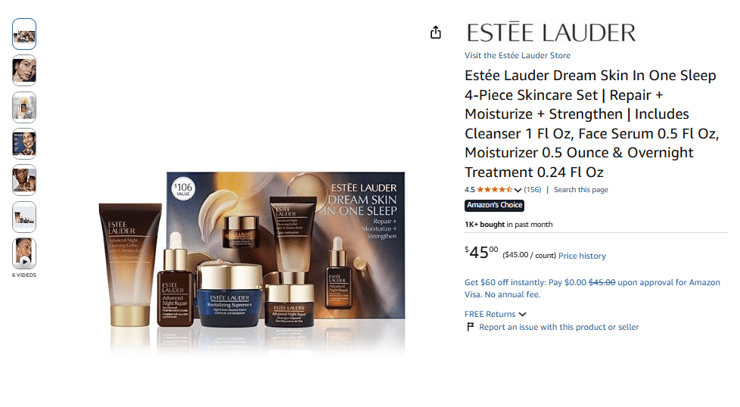
Source: Amazon
Amazon virtual product bundles let eligible brands sell 2–5 complementary ASINs together on a single detail page without physically packaging them.
This is a big opportunity, since Amazon reports that over 60% of its sales come from independent sellers. In 2025, U.S. independent sellers averaged more than $375,000 in annual sales, and over 75,000 sellers made more than $1 million that year.
The Virtual Bundle Strategy Framework
Successful bundles answer four questions:
1. What is the shopper intent? (pick one)
Bundles convert best when they support a single intent—mixing intents creates confusion.
- Routine/regimen: “Everything I need for X”
- Starter kit: “I’m new, what do I buy first?”
- Accessory attach: “Make the hero product work better”
- Replenishment set: “Stock-up convenience”
- Problem/solution kit: “Solve one specific issue”
2. Which ASIN is the “hero”?
Choose the product with the strongest conversion and stable inventory. The bundle’s job is to make buying the hero feel smarter and more complete.
3. What is the bundle’s primary KPI?
Pick one so you evaluate correctly:
- Lift AOV
- Increase attach rate (secondary item adoption)
- Improve conversion (reduced decision friction)
- Defend against price shoppers (better offer vs discounting)
4. What is the simplest value story?
If you can’t explain “why this bundle exists” in one sentence, it’s not ready.
How to Create and Optimize a Virtual Bundle on Amazon
To create a virtual bundle, begin with eligible FBA ASINs and focus the offer on a specific shopper need.
A simple workflow:
- Choose complementary ASINs with a clear use case.
- Set the strongest ASIN as the main component.
- Optimize the title, images, bullets, and price.
- Publish, then track conversion, AOV, inventory, and ad performance.
For a more in-depth guide on making virtual bundles for your brand, head over to How to Create Virtual Bundles in Amazon.
High-Performing Virtual Bundle Plays (When to Use Each)
Source: Amazon
1) Hero + must-have accessory (best for attach rate)
Use when: Hero sells well; accessory underperforms or is frequently bought next.
Watch: Accessory inventory volatility can shut down the bundle.
Measure: Attach rate, bundle CVR, hero CVR impact.
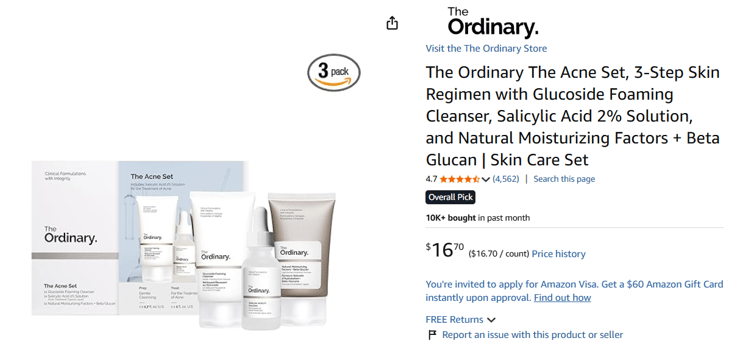
2) Complete routine (best for differentiation + conversion)
Use when: Shoppers commonly buy multiple steps (beauty routines are a strong fit).
Watch: If the routine isn’t visually obvious, it won’t convert on mobile.
Measure: Bundle CVR vs hero CVR, AOV lift, review sentiment.
3) Replenishment set (best for LTV)
Use when: Consumable items have repeat behavior.
Watch: Deep discounting can erase margin even if volume rises.
Measure: Contribution margin, repeat rate, TACoS/ACoS if advertised.
4) Problem/solution kit (best for intent alignment)
Use when: Shoppers search around outcomes (“repair,” “protect,” “soothe,” etc.).
Watch: Mismatched claims/expectations can hurt trust.
Measure: Search term performance, bundle CTR, bundle CVR.
Here is how this can work in practice.
For example, a beauty brand working with beBOLD Digital might have a popular leave-in conditioner and a newer styling gel that is less known. Rather than just discounting the styling gel, beBOLD could suggest a wash-day or styling routine bundle. The best-selling product helps shoppers discover the new one, and the bundle makes the new product feel like a natural part of the routine.

Virtual Bundle Pricing Strategy and How to Make it Feel Like a Deal
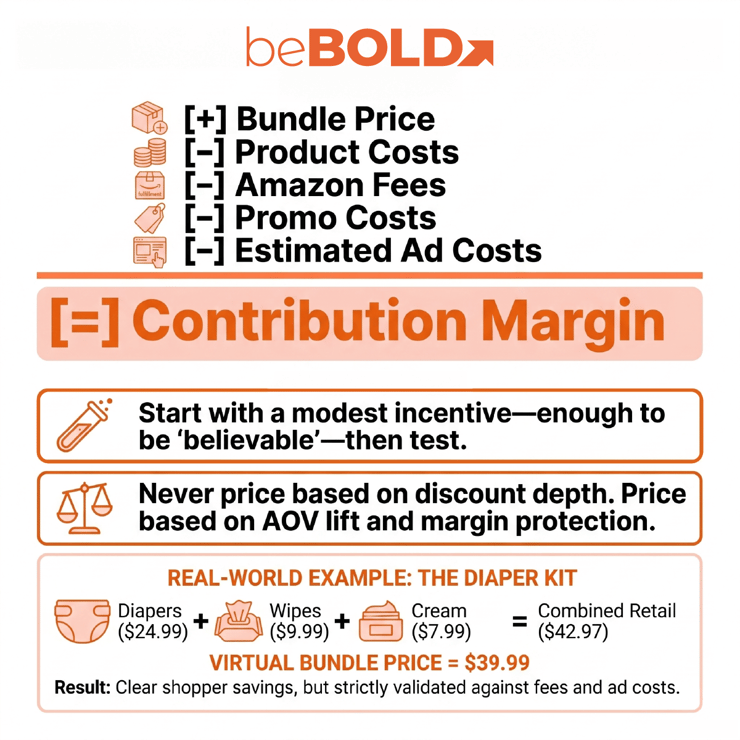
Virtual bundle pricing should do two jobs: create a clear value incentive and protect your margins after ads.
Here are some practical guardrails:
- Start with a modest incentive (enough to be “believable”), then test.
- If conversion is strong but margin is weak → reduce discount or improve perceived value (creative).
- If traffic is strong but conversion is weak → improve offer clarity (images/title) before discounting deeper.
To check if your bundle works, here’s a formula you should follow:
Bundle Margin = Bundle Price − Product Costs − Amazon Fees − Promo Cost − Estimated Ad Cost
Example:
- Diapers: $24.99
- Wipes: $9.99
- Diaper cream: $7.99
- Combined price: $42.97
- Bundle price: $39.99
The shopper gets clear savings, but the seller should still check that the discount makes sense after accounting for fees and advertising costs.
beBOLD Digital Expert Tip: If you have good traffic but low conversions, try adjusting your price, images, or value messaging. If traffic is low, check your keyword targeting, merchandising, or ad visibility.
Virtual Bundle Listing Optimization Tips To Follow
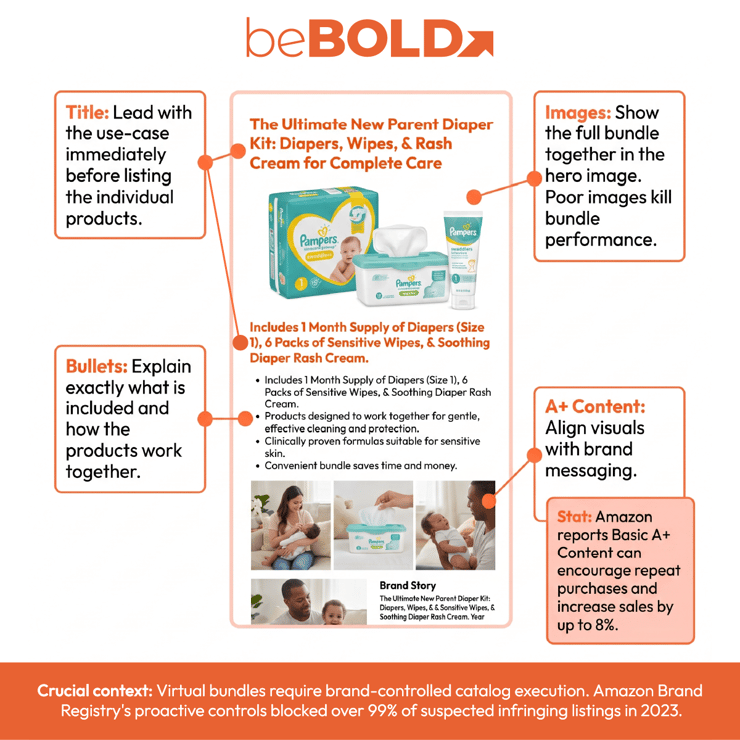
A bundle is still a product detail page, so shoppers should quickly see:
- What is included
- Who the bundle is for
- Why buying the set makes sense
Focus on:
- Clear titles: Lead with the use case before listing the products.
- Strong images: Show the full bundle together.
- Useful bullets: Explain what is included and how the products work together.
- Mobile readability: Keep benefits easy to scan.
- Seasonal framing: Use gifting, replenishment, or routine-based positioning when relevant.
- Creative consistency: Align bundle visuals with Amazon A+ Content and brand messaging.
Amazon says Basic A+ Content can encourage repeat purchases and increase sales by up to 8%, supporting the need for stronger creative and product education.
Each individual ASIN should also be optimized. Poor images, unclear bullet points, or weak keyword coverage can hurt how well your bundle performs.
That is why bundle strategy should connect with Amazon listing optimization services and broader Amazon listing optimization.
Amazon Brand Registry also matters because virtual bundles are designed for brand-controlled catalog execution. Amazon reports that in 2024, proactive controls blocked more than 99% of suspected infringing listings before brands had to find and report them.
Ready to Build Better Amazon Virtual Bundles?
An Amazon virtual bundle is most effective when it feels like a complete solution. The best bundles bring together related products, clear pricing, steady inventory, and strong creative content.
If you have eligible ASINs but need help picking product pairs, setting the right price, or improving your bundle’s product page, beBOLD Digital can help connect your bundle strategy with Amazon SEO, listing optimization, and A+ content to support real account growth. Schedule a call with us today!

FAQs About Amazon Virtual Bundle Strategy
Can you advertise an Amazon virtual bundle?
Virtual bundles are eligible for Sponsored Brands, but sellers should still confirm current options inside Campaign Manager before launch. Ad support can help visibility, but it cannot fix weak product fit.
What discount works best?
There is no universal rule. A small, clear savings often works better than a deep discount that damages margin. Test pricing based on conversion rate, profit, and AOV.
Can bundles increase AOV if products already sell well individually?
Yes, if the bundle makes the purchase easier, supports a routine, or encourages shoppers to buy more in one order.
When should sellers get help?
Sellers should get help when they have eligible ASINs but are unsure which products to pair, how to price the bundle, or how to optimize the listing for conversion.

Comments