


Amazon advertising has matured into one of the most competitive paid media ecosystems in ecommerce. With rising CPCs, AI-driven automation, and more sophisticated sellers entering the marketplace, many brands are asking the same question: are Amazon ads worth it in 2026? The short answer is yes, but only when ads are approached as a strategic growth lever rather than a shortcut to sales.
Key Summary
- Amazon PPC ads still deliver some of the highest conversion rates in digital advertising due to unmatched purchase intent 🛒
- Amazon paid search engine marketing is more complex and expensive than it was three years ago, rewarding experienced operators 📊
- Brands that align Amazon paid search marketing with listing optimization and inventory planning outperform those that treat PPC in isolation ⚙️
- Professional campaign structure, data discipline, and creative testing are now mandatory for profitability 🚀

Amazon ads can be worth the investment when acquisition costs fit your margins and growth goals. Sponsored search placements on Amazon can reach shoppers actively looking for products, while other advertising placements support discovery and consideration. Evaluate each campaign against its role in the buying journey, the sales it generates, and the profit remaining after advertising costs.
High Purchasing Intent = Higher Conversion Rates
Amazon traffic consistently converts at higher rates than most external channels because shoppers arrive with clear intent. According to studies, more than 50% of U.S. product searches now begin on Amazon rather than Google.
For sellers, this translates into higher conversion rates, faster sales velocity, and greater efficiency from Amazon pay per click spend when listings are conversion-ready.
beBOLD Digital Expert Tip: High-intent traffic only converts when listings are built to close the sale. To amplify performance through ads, funnel budget toward top-converting keywords and ASIN targets after validating conversion rate improvements on the PDP, then scale spend gradually to protect ROAS while increasing sales velocity. Ads amplify performance; they do not fix weak PDPs.
Unmatched Targeting Using Real Purchase Data
Amazon paid search marketing is powered by first-party shopping behavior rather than inferred interests. This allows advertisers to:
- Target high-intent keywords tied directly to purchase behavior
- Conquest competitor ASINs and complementary products
- Reach audiences based on prior purchase history and shopping signals
AI-Powered Ad Formats Are Expanding
Amazon PPC ads in 2026 are increasingly shaped by automation, predictive bidding, and machine learning. Brands benefit from:
- Sponsored Products as the primary revenue-driving ad format
- Sponsored Brands and Display ads supporting mid-funnel consideration
- Video placements that improve brand recall and visual differentiation
At the same time, Amazon’s AI optimizes delivery faster, but penalizes poor conversion data more aggressively.
Competitive CPC Compared to Other Platforms
While Amazon ad costs have risen, CPCs often remain competitive compared to Google Ads in high-intent commercial categories. The advantage of Amazon ads lies in in-platform conversions that eliminate extra funnel steps; clear attribution tied directly to sales performance; and stronger ROAS potential when ads are aligned with pricing and inventory strategy.
What’s Changed: Amazon Ads Are No Longer “Easy”
As Amazon’s advertising revenue continues to grow year over year, so does competition. Amazon ads in 2026 demand more planning, better data hygiene, and tighter operational control.
Increased Competition & Professionalization
Brands are no longer competing only with other sellers. They’re competing with private equity-backed aggregators, global brands, and agencies running advanced PPC frameworks. This professionalization has raised the skill floor for profitable Amazon PPC.
Inventory & Cash Flow Risks
Aggressive Amazon pay per click spend without inventory forecasting can create stockouts that destroy momentum and profitability. Ads now must be aligned with supply chain realities, not just ROAS targets.

Key Amazon Ads Strategies That Work in 2026

Winning with Amazon PPC ads today requires a full-funnel mindset. In 2026, the strongest performers treat ads as part of a connected system, spanning listing quality, data discipline, and long-term brand equity.
Listing Optimization Comes Before Ads
Amazon paid search engine marketing only performs when listings are optimized for conversion. Before scaling Amazon PPC ads, brands should ensure:
- Main images are scroll-stopping, compliant, and optimized for mobile-first shopping
- A+ Content reinforces key benefits, objections, and brand differentiation
- Pricing and promotions are competitive within the category at the time ads are running
- Review volume and ratings support buyer confidence and conversion
- Backend SEO and indexing ensure ads are driving traffic to fully searchable listings
Data-Driven Campaign Structure
Modern Amazon PPC ads demand granular control to protect efficiency as scale increases, especially when campaigns are structured intentionally instead of relying solely on Amazon PPC automatic campaign setups. High-performing accounts typically include:
- Separate campaigns by match type (exact, phrase, broad) to control intent and bids
- Dedicated ASIN-targeting campaigns for competitor and conquesting strategies
- Ongoing search term harvesting to move converting queries into exact-match campaigns
- Aggressive negative keyword management to eliminate wasted spend and budget leakage
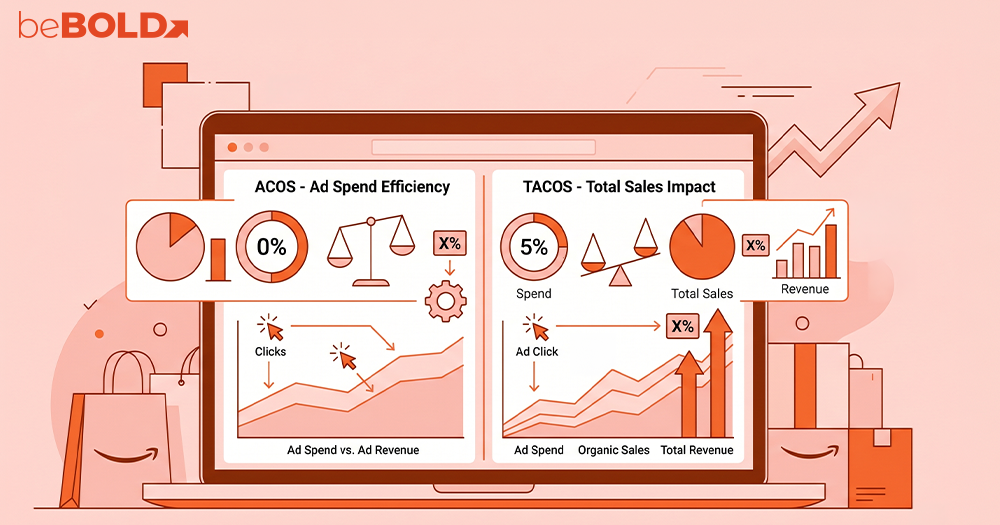
To decide whether Amazon ads are worth it, sellers need to understand ACOS and compare ad spend against margins, revenue, and growth goals.
Long-Term Brand Growth vs. Short-Term ROAS
Focusing exclusively on short-term ACoS can cap growth in competitive categories. In 2026, mature brands balance efficiency with controlled investment by:
- Defending top-of-search placements on core branded and category keywords
- Funding discovery campaigns to capture emerging search terms and trends early
- Using Sponsored Brands and Display to support mid-funnel visibility and brand recall
- Evaluating performance using blended metrics that account for organic lift, not just last-click ROAS
Here’s How beBOLD Digital Has Helped Clients Perform Better Through Ads Year on Year
When Henkel Professional Beauty partnered with beBOLD Digital, our team applied a data-first Amazon PPC strategy to reverse inefficiencies at scale. By rebuilding campaign architecture around true purchase intent, tightening keyword and ASIN targeting, and aligning ad spend with listing-level conversion improvements, beBOLD helped drive over 30% sales growth while reducing overall ad spend. The result was stronger organic keyword rankings, improved sales velocity, and a more stable ACoS, even during high-pressure promotional periods.
Evaluate Conversational Ads Against Your Profit Goals
Amazon’s ChatGPT advertising pilot adds another consideration when deciding where to invest. Selected U.S. advertisers can reach people exploring and comparing options in a conversational setting. That opportunity serves a different stage of the buying journey from an on-Amazon sponsored search placement.
For a beauty brand, the question is whether reaching shoppers as they compare foundation finishes or body-care preferences leads to additional profitable purchases. A low cost per click alone cannot answer that question.
Before testing, confirm access, campaign costs, and available purchase measurement. Set a spending limit and a profitability threshold based on your product margins. Maintain campaigns meeting their objectives while evaluating whether the new placement deserves more budget.
Our guide to Amazon ChatGPT Ads explains the pilot and what sellers should verify before participating.
Common Amazon Ads Mistakes to Avoid in 2026

Over-Optimizing Bids Too Frequently
In 2026, Amazon’s ad algorithm relies heavily on learning periods to stabilize performance. Making bid changes too frequently, especially daily or reactively, can reset this learning, leading to volatility in impressions, CPCs, and conversion rates. Instead of constant bid tinkering, sellers should:
- Allow sufficient data to accumulate before making adjustments
- Focus on structural optimizations (search term harvesting, negatives, campaign segmentation) before bid changes
- Evaluate performance trends weekly or biweekly, not day-to-day noise
Strategic optimization prioritizes system improvements over micromanagement, resulting in more predictable performance.
Treating Amazon Ads as a “Quick Win”
Amazon PPC is no longer a plug-and-play growth hack. In 2026, ads reflect the overall health of your brand ecosystem on Amazon. Sellers who expect immediate profitability without foundational work often struggle because:
- Weak listings suppress conversion, inflating ACoS regardless of bid strategy
- Poor inventory planning can cause stockouts that erase ad-driven momentum
- Short-term ROAS chasing can prevent brands from defending rank or discovering new growth opportunities
Sustainable results come from systems, not shortcuts, where ads, SEO, creative, pricing, and inventory planning all work together.
How beBOLD Digital Can Help Optimize Your Amazon Ads Strategy
If your Amazon ads aren’t driving consistent, profitable growth, it’s usually a strategy, not a spend issue. beBOLD Digital helps brands turn Amazon PPC into a scalable growth engine by aligning paid search, SEO, creative, and inventory planning, drawing on proven frameworks developed across enterprise and growth-stage sellers at beBOLD Digital.
If you’re ready to move beyond reactive optimizations and build a sustainable Amazon ads strategy, schedule a call with us and let us help you get there.
FAQ
Are Amazon Ads still profitable in 2026?
Yes. When they’re run with margins, inventory, and conversion in mind. Ads are still profitable, but only if your listings and pricing are built to support them.
Why do Amazon Ads convert better than other platforms?
Because shoppers are already in buying mode. Amazon ads reach people actively searching for products, not just scrolling for ideas.
Are Amazon Ads more expensive in 2026?
In many categories, yes. CPCs are higher, but well-structured campaigns often offset those costs with better efficiency and higher conversion rates.
What Amazon ad types work best in 2026?
Sponsored Products still do most of the heavy lifting, with Sponsored Brands and Display playing a supporting role for visibility and brand growth, especially when brands understand how each ad format fits into the broader Amazon ad ecosystem.
Is Amazon PPC still worth it for small sellers?
It can be. If budgets are tight, targeting is focused, and spend is aligned with realistic profit goals.
How often should you optimize Amazon ads in 2026?
Think weekly, not daily. Strategic reviews outperform constant reactive changes that can disrupt performance.
Do Amazon Ads help organic rankings?
Yes, indirectly. Strong ad-driven sales and conversion signals can support organic visibility over time.




Comments