


Beauty brands should use sponsored brand ads when they have a clear goal and a shopping experience ready for more visitors. For example, you might want to introduce your brand, show how a serum works, or help shoppers build a routine.
At beBOLD Digital, we suggest beginning by deciding what you want shoppers to know or do. Our approach to Amazon advertising links your campaigns with your product listings, inventory, and profits.
What Are Sponsored Brand Ads, and What Can They Do for Beauty Brands?
Amazon calls these ads Sponsored Brands. They use branded images, collections, or videos to help shoppers find products. Depending on your setup, clicks can take shoppers to product pages, your Brand Store, or a collection. Beauty brands can use these ads to showcase products or introduce routines. Sponsored Products, on the other hand, highlight single items.
For an in-depth comparison, head over to our Sponsored Products vs. Sponsored Brands article.
Is Your Beauty Brand Ready to Invest?
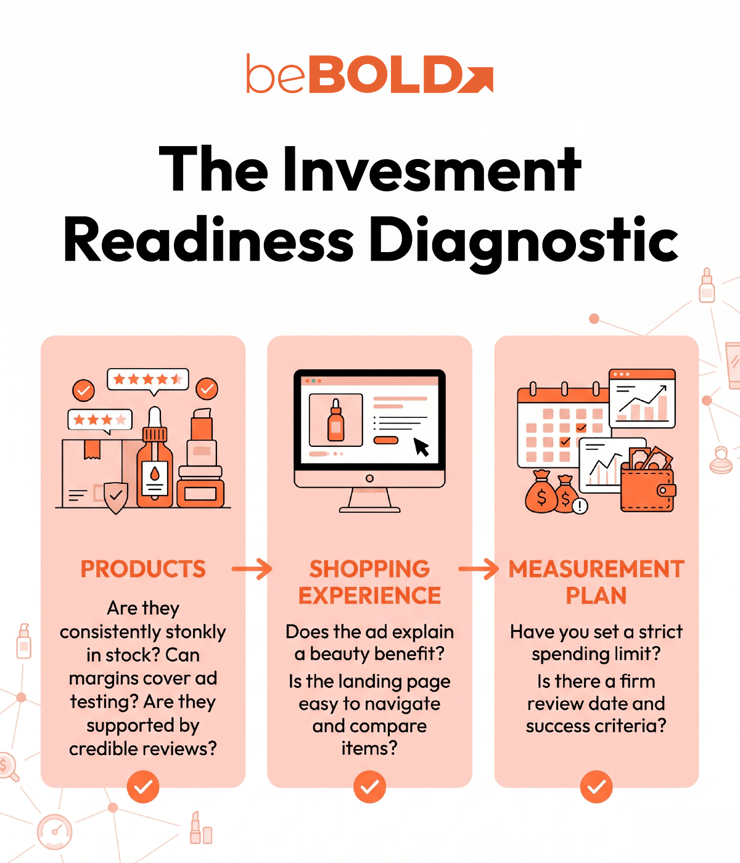
Being eligible doesn’t always mean you’re ready to invest more. Always check what shoppers will see after they click. At beBOLD Digital, we suggest reviewing three key areas:
-
Your products: Are they in stock, competitively priced, and supported by clear listings and credible reviews? Can their margins cover testing?
-
Your shopping experience: Does the ad explain a benefit? Can shoppers find and compare the featured products on the landing page?
-
Your measurement plan: Have you set a goal, spending limit, review date, and criteria for continuing?
Sponsored Products results can show which products and search terms lead to sales. Use this information when available. Remember, Amazon doesn’t require you to run Sponsored Products before trying Sponsored Brands.
Always hold off on expanding if:
-
Your featured products frequently run out of stock.
-
Your listings leave important shopper questions unanswered.
-
Your landing page is hard to navigate.
Our beauty retail-readiness guide can help you focus on those improvements. If you want real-life examples, our Henkel Professional Beauty case study shows how these elements work together. The program combined campaign restructuring with better listings, A+ content, and creative testing.
How to Plan Your Sponsored Brand Ads Campaign
%20(2).jpg?width=740&height=494&name=pexels-kampus-7857554%20(1)%20(2).jpg)
Choose the Objective Before Choosing the Campaign
Begin with your goal. Introducing your brand, explaining products, and encouraging Store visits each need different ads and ways to measure success.
|
Objective |
When investment makes sense |
What beBOLD recommends |
|
Brand awareness |
Shoppers need to discover your brand or a new range. |
Recognizable creative, relevant visibility, and engagement within budget. |
|
Product discovery |
Shoppers need help understanding products or finding related items. |
Demonstrations, useful collections, and new-customer purchases. |
|
Store traffic |
Your Store helps shoppers explore products and routines. |
Relevant pages, attributed page views, and shopping activity. |
Brand Awareness: Introduce a Distinctive Beauty Positioning
A professional hair-care brand might show its salon expertise with recognizable packaging and application videos. Decide who needs this introduction. Impressions show your ad appeared, but they don’t prove shoppers remember your brand or plan to buy.
Product Discovery: Help Shoppers Understand Products and Routines
Show serum texture, explain how to use it, or introduce complementary products. Separate branded searches from broader ones to measure discovery. Focus on ingredients and concerns your products really address.
Store Traffic: Give Shoppers a Reason to Explore
Send shoppers to your Store when it helps them decide. A page focused on dry-hair care gives a clearer next step than a homepage with every category.
Pick the Amazon setting that matches your goal:
-
Drive page visits: Uses cost-per-click (CPC) bidding; you pay for clicks.
-
Grow brand impression share: Uses vCPM bidding; you pay per 1,000 viewable impressions.
-
Reserve share of voice: Uses fixed upfront pricing for branded top-of-search visibility.
Match the Format and Featured Products to the Objective
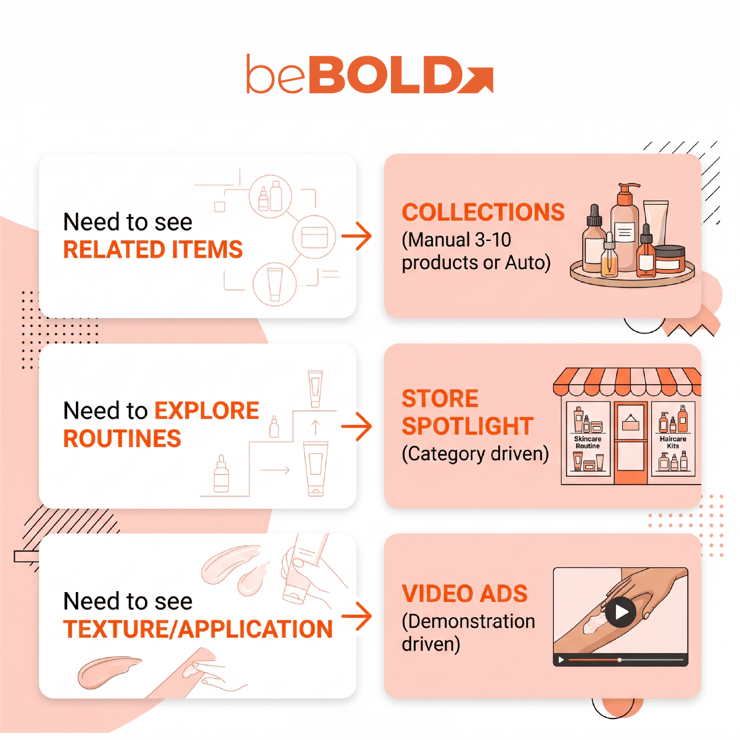
Consider what shoppers need, then pick an ad format:
-
Collections: Show related products, such as a cleanser, serum, and moisturizer. Manual collections support 3 to 10 products. Automatic collections select products based on your targeting and shoppers’ searches.
-
Store spotlight: Help shoppers find Store pages organized around categories or routines.
-
Video: Show texture, application, or product use. For a better background on video ads, our Sponsored Brands video guide covers the details.
For product selection, we recommend:
-
Manual selection when you want specific products to appear together, such as the steps in a routine.
-
Automatic collections for a more extensive range, with unsuitable products excluded.
Pick products based on shopper needs, stock, margins, and how they work together. Bestsellers aren’t always the best choice for a collection. Showing products together doesn’t mean shoppers can buy them as a single bundle.
Build Creative Around a Specific Shopper Question
A useful beauty ad answers shopper questions such as “How much should I apply?” or “What does this texture look like?”
Show the product clearly, make sure the message is clear even without sound, and back up benefit claims with evidence that fits your listing.
Test what helps shoppers understand the product, like showing application footage or a texture demo. Keep branding consistent in both the ad and landing page.
Choose a Landing Page That Delivers on the Ad
When shoppers click, they should find what your ad promised:
-
A product demonstration should lead to application details and purchase information.
-
A routine-focused ad should lead to products shoppers can compare.
-
A range introduction should lead to a relevant Store page.
Landing-page options depend on your format and setup. Check each click path before launch. For example, a moisturizing-routine ad should make that routine easy to find.
Set a Test Budget and Decide What Success Looks Like
Set a test budget for sponsored brand ads based on your learning goal and what you can afford to spend per customer.
Before launch:
-
Check product eligibility, stock, creative, and landing pages.
-
Choose your campaign goal, ad format, and relevant targets.
-
Separate campaigns for branded searches from those aimed at discovery.
-
Set spending limits and a review date.
-
Agree on what would make you scale, revise, or pause.
For CPC tests, multiply expected cost per click by the clicks you plan to evaluate.
Hypothetical example:
-
Estimate spending: 150 clicks × $2 CPC = $300.
-
Estimate orders: At a 10% conversion rate, 150 clicks produce 15 orders.
-
Calculate advertising cost per order: $300 ÷ 15 orders = $20.
Compare the $20 cost with what each order brings in after product costs, fees, and other variable costs, before advertising. These are just examples, not beauty industry benchmarks.
For vCPM tests, divide planned viewable impressions by 1,000, then multiply by expected vCPM.
When you review the test:
-
Increase your efforts if the results support your goal and stay within your budget.
-
Make changes if you attract the right shoppers but the ad or landing page needs improvement.
-
Pause your campaign if you go over your spending limit or if featured products run out of stock.
How to Track the Performance of Sponsored Brand Ads?
.jpg?width=740&height=494&name=pexels-kampus-7857567%20(1).jpg)
Use Campaign Manager to see what your spending accomplishes. Check the metrics that match your goal:
-
Impressions and impression share: How often ads appear and their share of eligible impressions, where reported.
-
Clicks, click-through rate (CTR), and CPC: Click volume, the percentage of impressions generating clicks, and cost per click.
-
Orders and sales: Purchases Amazon attributes to your ads.
-
New-to-brand orders and sales: Purchases by customers who haven’t bought from your brand on Amazon in the previous 12 months.
-
Brand Store page views: Store pages viewed and attributed to Sponsored Brands campaigns, rather than unique visitors or purchases.
Two useful measures of sales efficiency are:
-
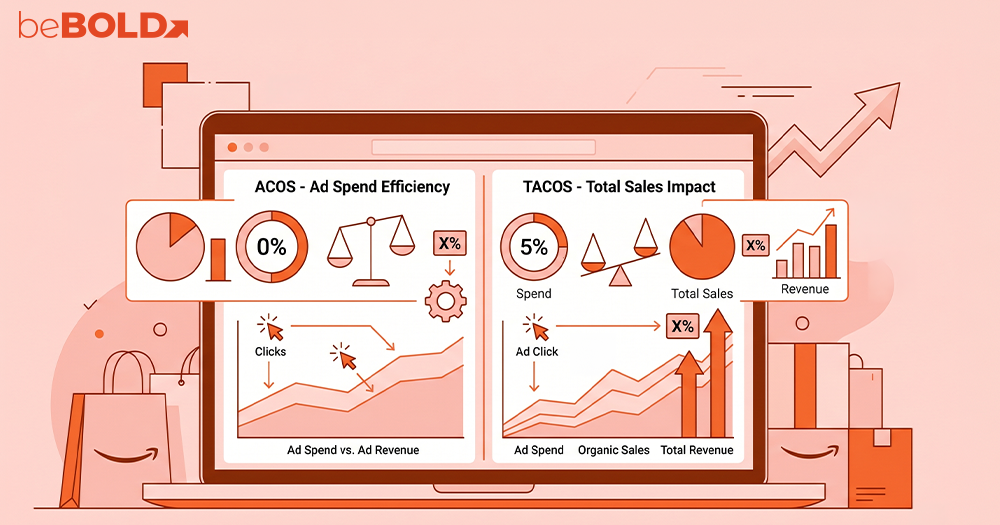
Advertising cost of sales (ACoS): Ad spend ÷ attributed sales × 100.
-
Return on ad spend (ROAS): Attributed sales ÷ ad spend.
These metrics compare spending with sales. To measure profit, also include product costs, fees, returns, and other expenses.
Check delivery and stock often. Use the same reporting periods and give time for purchases to show up in reports. Compare discovery campaigns only with other discovery campaigns so branded searches don’t affect your results.
Henkel’s case study shows 30% revenue growth with 34% lower ad spend across the whole program. This supports our focus on coordinated improvements, though the results don’t separate Sponsored Brands’ impact.
How to Utilize AI for Improved Ad Performance?
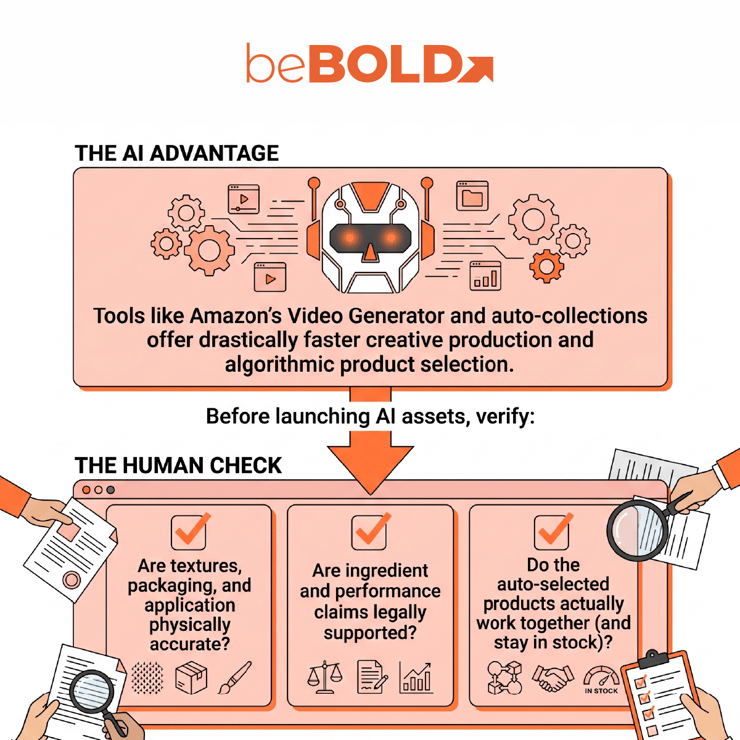
AI can make ad creation and product selection faster. Make sure the results match your brand and budget.
Amazon’s Video Generator creates Sponsored Brands videos from product imagery and listing information. Automatic collections select relevant products, with exclusions available.
Before using AI-assisted creative or product selections, check:
-
Are packaging, product identity, texture, and application accurate?
-
Are ingredient and performance claims supported?
-
Do products work together and stay in stock?
-
Does the ad match your brand and landing page?
Use real footage if generated visuals might misrepresent how a formula works. Test approved creative before spending more.
Use suggested bids and automatic selection as tools to watch. AI can save time, but it doesn’t guarantee better ROAS, more profit, or a better shopping experience.
beBOLD Digital’s Take: Invest When the Shopping Experience Is Ready
Invest when you know your goal and have products, ads, and landing pages that help shoppers move forward.
At beBOLD Digital, we suggest making sure these elements work together before you increase your spending. Check out our Amazon advertising services to see your Sponsored Brands opportunities and what to improve first, or schedule a call with us so we can help you navigate Amazon advertising.
 Frequently Asked Questions
Do Beauty Brands Need a Brand Store to Run Sponsored Brand Ads?
Not always. Store spotlight requires a qualifying Store. Other formats can lead to product pages or collections.
Can Sponsored Brands Support a New Beauty-Product Launch?
Yes. Start with clear listings, available stock, accurate creative, and a controlled budget. Check whether shoppers understand and buy the product.
What’s the Difference Between Sponsored Products and Sponsored Brands on Amazon?
Sponsored Products promote individual items. Sponsored Brands add branded images, video, and collections for discovery.
What Are the Benefits of Amazon Sponsored Brand Ads for Customers and Sellers?
Shoppers can discover and compare products. Brands can explain their positioning and attract relevant traffic. Results depend on execution.
Where Do Sponsored Brand Ads Appear on Amazon?
Ads can appear in shopping results, on product pages, and on the homepage, depending on the format and setup.
How to Set Up Sponsored Brand Ads?
Create a Sponsored Brands campaign in the Amazon Ads console. Choose a goal, configure products, creative, targeting, bids, and budget, then submit for review.
Who Can Use Amazon PPC Sponsored Brands?
Eligible beauty advertisers include vendors and professional sellers enrolled in Amazon Brand Registry. Pricing depends on the campaign goal.
What Are the Sponsored Brand Ad Format Types?
Options include collections, Store spotlight, and video. Settings and landing pages vary by format and marketplace.

Comments