

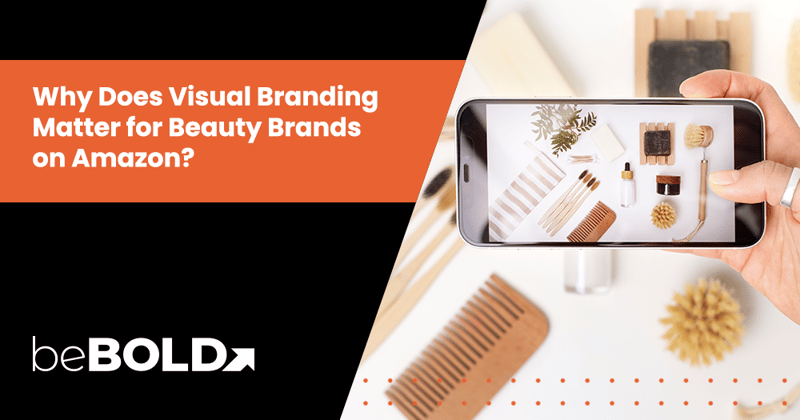
🔍 Story-at-a-Glance
- Beauty shoppers form first impressions in milliseconds, making product visuals the primary driver of trust, clicks, and early buying decisions on Amazon 👀
- Visual branding optimization for beauty brands replaces the in-store experience by clearly communicating texture, application, benefits, and expected results ✨
- On Amazon, strong product photography improves click-through rates, conversion rates, and ad efficiency by reducing shopper uncertainty and hesitation 🛒
- Inconsistent, over-edited, or unclear visuals can quietly increase bounce rates, returns, and negative reviews, especially in competitive beauty categories ⚠️
- High-performing Amazon beauty listings follow a strategic visual hierarchy, starting with clarity, then benefits, usage, and proof 📸
- Consistent visual branding across listings, A+ Content, and Storefronts strengthens recognition, supports Subscribe & Save performance, and builds long-term brand equity 🧠
- As Amazon and AI-driven discovery tools evolve, clear and structured visuals play a growing role in how beauty products are interpreted, ranked, and surfaced 🤖

To optimize visual branding for beauty brands, create a consistent brand identity across your product packaging, imagery, storefront, and marketing content so customers can instantly recognize and trust your products. High-quality visuals, cohesive colors, compelling lifestyle photography, and clear brand messaging all help beauty products stand out in a competitive market and drive more conversions. Whether you're starting off selling beauty products on Amazon or refining an existing brand, strong visual branding can help you attract more shoppers and build long-term loyalty.
What is Visual Branding Optimization for Beauty Brands
Visual branding optimization is the strategic design and structuring of product imagery to improve clarity, trust, conversion rates, and algorithmic performance across Amazon listings, ads, A+ Content, and AI-driven discovery surfaces.
Why Visuals Matter More in Beauty Than Almost Any Other Category
Beauty is one of the most visual and trust-driven categories in eCommerce. Because shoppers can’t test texture, shade, scent, or results online, product visuals must replace the in-store experience and communicate clarity and credibility instantly, particularly when navigating Amazon’s beauty category for the first time.
According to Google Research, shoppers are 70% more likely to purchase when imagery helps them clearly understand what they’re buying. On Amazon, where mobile browsing, fast ASIN comparison, and AI-driven recommendations dominate, visuals often influence the decision before copy is read.

When executed strategically, visual branding supports both shopper confidence and marketplace performance, going far beyond aesthetics alone. It plays a critical role in how brands optimize their Amazon beauty product listings for conversion and long-term growth.
Strong visual branding helps beauty brands:
- Create immediate credibility by signaling quality, professionalism, and compliance
- Show application, texture, and results that written copy cannot fully explain
- Reduce purchase hesitation by setting accurate expectations upfront
- Lower return rates by minimizing surprises after delivery
- Improve conversion rates by guiding shoppers visually through the decision process
- Build brand recognition through consistent imagery across listings, ads, and Storefronts
According to BigCommerce, high-quality product imagery can increase conversion rates by up to 30%. Additionally, a Shopify Plus study found that brands using consistent visual systems across channels see stronger brand recall and higher repeat purchase intent. Beauty brands that also incorporate authentic visuals, such as UGC and real-use photography, tend to build trust faster than those relying solely on studio images.
beBOLD Digital Expert Tip: If a shopper can’t understand what the product is, who it’s for, and why it works in under three seconds, they won’t wait for the copy to explain it.
How Poor Visual Branding Hurts Beauty Sales

Weak or inconsistent visuals can quietly erode performance, even when traffic levels appear healthy, especially for brands investing in Amazon Beauty Subscribe & Save or long-term retention programs.
Poor visual branding often leads to:
- Immediate trust loss caused by low-quality or inconsistent imagery
- Unanswered shopper questions due to limited or incomplete image galleries
- Higher return rates driven by over-edited or misleading visuals
- Negative reviews when products don’t match visual expectations
- Lower engagement when images focus on aesthetics instead of benefits
- Reduced audience connection when diversity and inclusivity are missing
beBOLD Digital Expert Tip: If your click-through rate is strong but conversions are lagging, visuals, not pricing or copy, are often the root issue.
If your traffic is strong but conversions aren’t improving, a visual audit is often the fastest lever to pull. beBOLD Digital can audit your visuals and prioritise the fixes that drive real conversion lift.
What Visual Branding Optimization for Beauty Actually Means
Visual branding optimization is not about adding more images. It's about designing visuals with purpose and performance in mind. This is especially important for brands aiming to become retail-ready on Amazon and scale beyond initial launches.
At its core, it involves:
- Creating clear, benefit-led visuals that answer shopper questions instantly
- Maintaining consistency across all ASINs, ads, and brand assets
- Optimizing imagery specifically for Amazon’s mobile-first layout
- Structuring visuals for fast scanning rather than long viewing sessions
For beauty brands, this means helping shoppers understand the product in seconds, not minutes, a critical advantage in competitive Amazon categories and across Amazon and Walmart marketplaces.
As an Amazon-focused beauty agency, beBOLD Digital measures visual effectiveness through CTR, CVR, ACoS, and return-rate signals, ensuring decisions are driven by performance, not opinion.
Even after launch, brands may run into catalog errors, compliance flags, or account problems that require help with Amazon Seller Support issues.
Where Beauty Brands Should Focus Their Visual Efforts on Amazon

Amazon follows a strict visual hierarchy, and high-performing beauty brands focus their creative efforts where visuals have the greatest influence on click-through rate, conversion, and downstream performance. This approach is often guided by experienced Amazon premium beauty marketing agencies that understand how visuals affect both ads and organic visibility.
Key focus areas include:
- Main image: The most important visual on the listing. A clean white background, clear product hierarchy, and strong mobile readability help the product stand out in search results. Amazon data shows that listings with clearer main images often see higher CTR, which directly impacts ad efficiency and organic momentum.
- Image gallery: A shopper-first sequence that visually answers key questions. High-performing listings move from product identification to benefits, usage, and proof, helping shoppers understand what the product does, how it’s used, and what results to expect before reading the copy.
- Supporting visuals: Persuasive images that validate claims and build trust. These include benefit callouts, texture and application close-ups, ingredient highlights, certifications, and real-use or UGC imagery that help replace in-store testing.
- A+ Content: Visual storytelling that reinforces differentiation and education. According to Amazon, A+ Content can improve conversion rates by 3–10% when executed effectively, especially for education-heavy beauty products.
- Storefront visuals: Brand-level consistency across categories. Cohesive visuals improve navigation, strengthen brand recognition, and increase cross-ASIN discovery for multi-product beauty brands.
beBOLD Tip: To ensure your visuals meet platform standards and perform well in search and conversions, Amazon Image Requirements covers the key guidelines every seller should follow.
Each visual layer should reinforce the same core message while serving a distinct role in the conversion journey: from attracting the click to validating the final purchase decision. In summary, here is summarized table:
|
Visual Asset |
Primary Goal |
Performance Impact |
|
Main Image |
Win the click |
CTR, CPC, organic momentum |
|
Gallery Images |
Educate + de-risk |
Conversion rate |
|
A+ Content |
Reinforce trust |
CVR, dwell time |
|
Storefront Visuals |
Build brand equity |
Cross-ASIN discovery |
|
Ad Creatives |
Capture attention |
Ad efficiency |
Looking to tailor your beauty strategy for emerging shoppers? Dive into Gen Z’s Impact on Beauty Industry: Statistics and Marketing Trends
for data-backed trends and marketing tips.
How beBOLD Digital Helped Clients Optimize Visual Branding
The following examples highlight how beBOLD Digital applies visual branding optimization in real-world Amazon and omnichannel scenarios, helping beauty brands strengthen performance while protecting brand equity.
- Amazon premium beauty brand: beBOLD Digital identified that highly stylized main images were suppressing CTR in competitive Amazon search results. By simplifying the hero image, improving product scale, and prioritizing mobile clarity, the brand strengthened top-of-funnel engagement and improved Sponsored Ads efficiency while supporting long-term Amazon beauty brand protection.
- Sephora brand expanding to other channels: As a Sephora-backed brand grew beyond in-store and Sephora-owned PDPs, beBOLD Digital restructured Amazon visuals to replace in-person education. By emphasizing benefit-driven imagery, clear application steps, and outcome-focused visuals across the image gallery and A+ Content, the brand improved conversion rates among first-time Amazon shoppers who lacked prior brand familiarity.
Sellers competing in crowded categories need more than competitive pricing to stand out. This guide on capturing buyers’ attention with an Amazon SEO audit breaks down how strategic optimization improves click-through rates, engagement, and sales performance.

Why Visual Branding Impacts Ads, Rankings, and AI Discovery
Visual branding influences far more than conversion rate. It plays a role across Amazon’s entire ecosystem.
Strong visuals help by:
- Increasing click-through rates, which can lower CPC in Sponsored Ads
- Improving engagement signals that support organic ranking stability
- Helping Amazon’s AI tools better interpret product attributes and relevance
Amazon has confirmed that shopper engagement signals, such as CTR and dwell time, feed into both ad performance and organic visibility. As AI-driven discovery continues to expand, clear and structured visuals become increasingly important for how products surface in search and recommendations.
Alongside cohesive visuals, Beauty Brand Pricing Strategy explains how price perception supports premium branding and customer trust.
Quick Visual Branding Checklist for Beauty Brands

Before launching or scaling, ask the following questions to evaluate whether your visuals are truly supporting performance:
- Can a shopper understand what the product is and why it matters in under three seconds? This includes instantly recognizing the product type, use case, and key benefit from the main image alone.
- Do your visuals clearly show texture, application, and realistic results? Beauty shoppers rely on imagery to replace in-store testing, so close-ups and in-use shots are critical.
- Do the visuals align with your intended brand positioning? Premium, clinical, clean, or playful brands should all look distinct and intentional through imagery.
- Are the images accurate representations of the product without heavy over-editing? Misleading visuals often lead to higher returns and negative reviews.
- Is branding consistent across all ASINs, variants, and formats? Consistency helps build recognition, trust, and easier cross-product navigation.
If the answer is no to any of these questions, visual optimization is likely limiting conversion and should be addressed.
As you build a steady stream of authentic feedback, Social Proof Ecommerce AI explores how AI systems increasingly interpret reviews and trust signals in online shopping.
How beBOLD Digital Helps Beauty Brands Optimize Visual Branding
At beBOLD Digital, visual strategy is always tied to performance data. We partner closely with beauty brands to optimize visuals for conversion, ad efficiency, and long-term scalability on Amazon; combining visual audits, Amazon-first photography strategies, image stack optimization by shopper intent, and creative direction aligned with SEO, advertising, and AI-driven discovery.
Not sure if your visuals are helping or hurting sales? Schedule a call with us today. We can audit your listings and show you exactly where to improve.
FAQs: Visual Branding Optimization for Beauty Brands
What is visual branding optimization for beauty brands?
It is the process of designing and refining product visuals to improve clarity, trust, conversion rates, and platform performance, especially on Amazon.
How do visuals affect sales for beauty products?
Strong visuals increase trust, reduce hesitation, and help shoppers understand texture, usage, and results, directly improving conversion rates.
Can better visuals improve Amazon ad performance?
Yes. Higher-quality visuals typically increase click-through rate, which can lower CPC and improve ad efficiency.
How many images should a beauty product listing have?
Most high-performing beauty listings use seven to nine images, each serving a specific role in the decision-making process.
Should beauty brands use user-generated content?
Yes. UGC adds authenticity and mirrors in-store confidence, especially for skincare and cosmetics.
How often should beauty brands update product visuals?
At least once per year, or whenever performance declines, packaging changes, or category standards evolve.
Is visual branding more important than copy for beauty products?
Visuals earn attention first, while copy reinforces the final decision.
What’s the difference between visual branding and A+ Content?
Visual branding covers all imagery across a listing, including the main image and gallery. A+ Content is one component focused on deeper storytelling and education.



Comments