


Amazon "Used - Like New" is a used-condition grade, also called "Open Box," for an intact, fully functional item in near-new condition. The original shrink wrap may be missing. Before listing, sellers must confirm that the exact ASIN permits the condition, inspect the individual unit, document what was tested, disclose imperfections, and confirm the offer meets margin requirements.
What Does Amazon Used - Like New Mean?
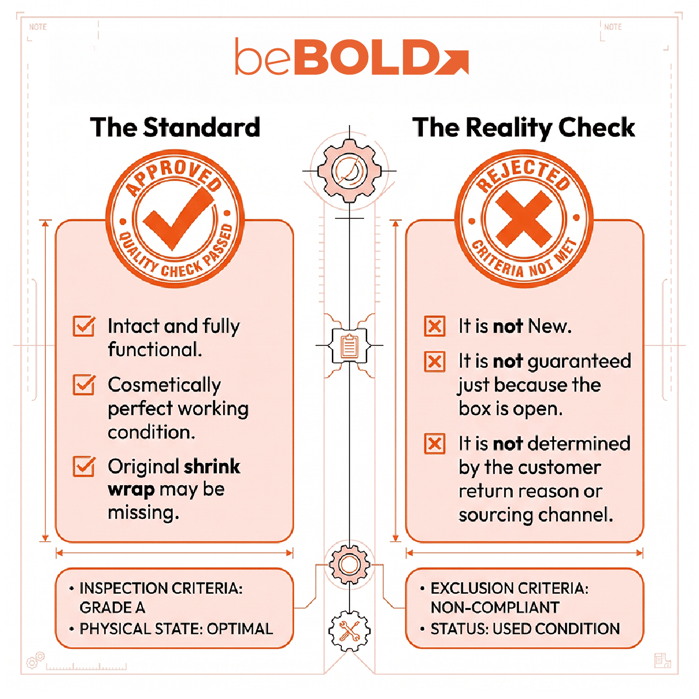
For sellers asking what this grade entails, Amazon's condition guidelines describe Used - Like New or Open Box as an intact, fully functional product in perfect working condition. The original shrink wrap may be missing, though category-specific requirements can modify this general standard.
This condition is not the same as New. An opened item may qualify, but the label "open box" alone does not prove the condition. The individual unit still needs to meet all applicable product and category requirements.
Conditions That Require a Downgrade or Rejection
Downgrade a unit when visible wear, packaging damage, or missing nonessential components exceeds Like New requirements but a lower condition is permitted.
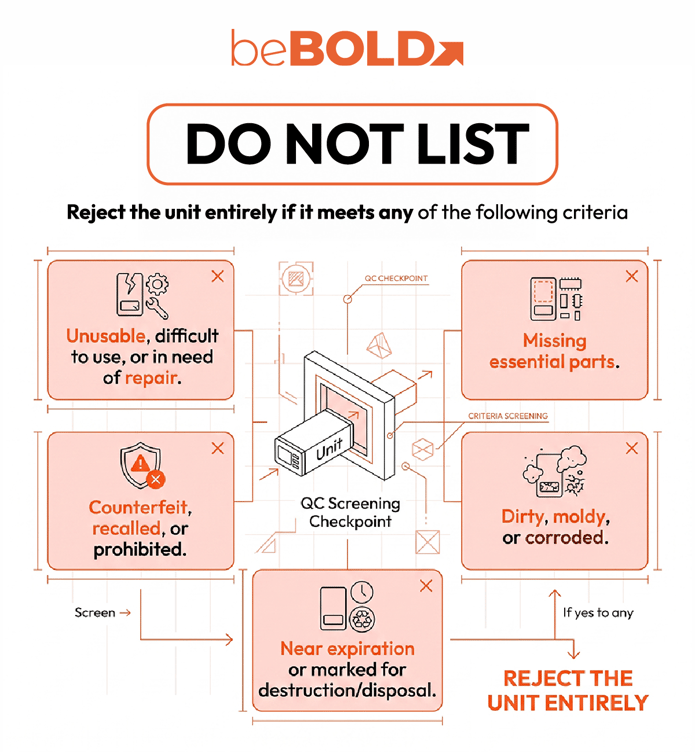
Amazon identifies specific states as unacceptable. Reject the unit entirely if it meets any of the following criteria:
-
Unusable or difficult to use
-
Missing essential parts or in need of repair
-
Counterfeit, recalled, or prohibited
-
Dirty, moldy, or corroded
-
Near expiration or marked for destruction
How to Inspect a Used - Like New Item
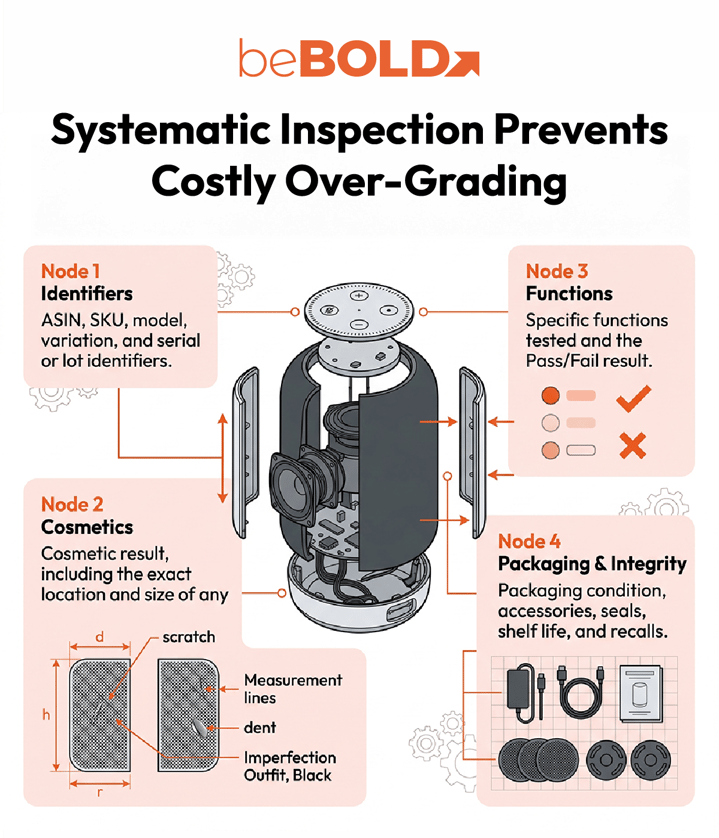
Record enough evidence during inspection for another trained team member to understand the grading decision. While this is not an Amazon-mandated template, tracking these data points supports consistent grading and return analysis:
-
ASIN, SKU, model, variation, and serial or lot identifiers
-
Cosmetic result, including the location and size of any imperfection
-
Functions tested and the pass or fail result
-
Packaging condition, accessories, and seals
-
Shelf life, recalls, inspector name, date, final grade, and disposition
Amazon Product Conditions Compared
|
Condition |
Product State |
Packaging and Accessories |
Correct Decision |
|
New |
Unused and meets New requirements |
Meets applicable factory-packaging and warranty requirements |
Use only when every New requirement is satisfied |
|
Used - Like New / Open Box |
Intact, near-new, and fully functional |
Shrink wrap may be missing; verify category rules and disclose actual condition |
Use only when no permitted lower-grade wear or incompleteness is present |
|
Used - Very Good |
Limited wear but in good working condition |
Packaging may show more damage; permitted missing items must be disclosed |
Use when limited wear or another allowed issue prevents Like New |
|
Used - Good |
Functional with regular wear |
May be repackaged or lack permitted accessories |
Use when wear is clear but usability remains intact |
|
Used - Acceptable |
Heavily worn but functional |
Packaging may be damaged, absent, or replaced where allowed |
Use only if the product remains usable and category rules permit it |
How to List an Amazon Used Like New Item
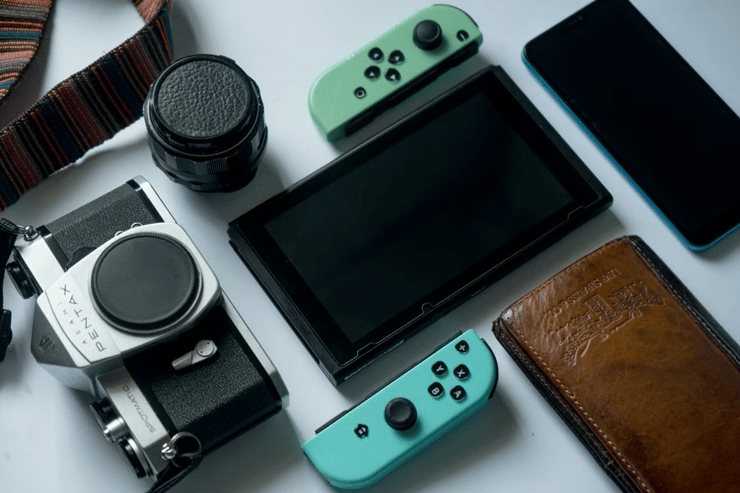
Source: Pexels
1. Confirm Eligibility Before Sourcing or Listing
Can you sell used items on Amazon? Yes, but eligibility depends on the ASIN, category, brand, approval status, account, fulfillment method, and marketplace. Another seller's active offer does not prove that your account is eligible.
In Seller Central, select Catalog, then Add Products, and find the exact ASIN. Review the available conditions and any approval requirements. If Used - Like New is unavailable, do not create a duplicate ASIN or choose an inaccurate condition to bypass the restriction.
Note on category rules:
Category rules can change the answer. Books have separate standards and may allow minor cosmetic defects within Used - Like New. Electronics, computers, video games, watches, consumables, and medical devices often have added requirements. Used ink and toner cartridges are not suitable for sale. Beauty, grocery, supplement, and other consumable products require extreme caution. An opened seal, insufficient shelf life, or contamination risk can prevent relisting.
beBOLD Expert Perspective: For beauty and health brands, returned inventory should be treated as a SKU-level disposition decision, not an automatic resale opportunity. Seal status, category eligibility, FBA return reason, inspection cost, brand risk, and remaining shelf life should determine whether a unit is relisted, liquidated, returned, or disposed of.
2. Write Condition Notes That a Buyer Can Verify
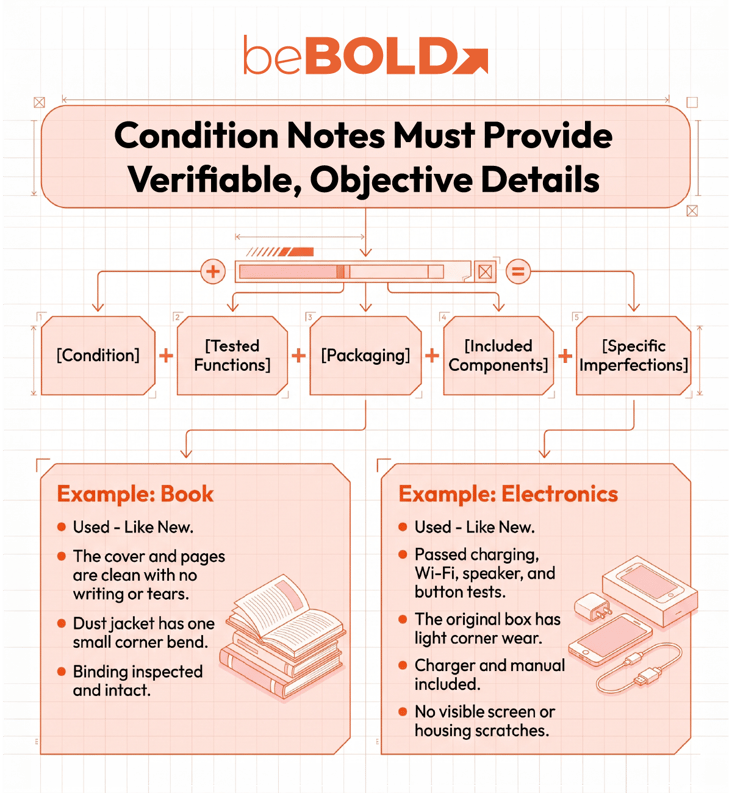
Use this formula: Condition + tested functions + packaging + included components + specific imperfections.
Avoid vague statements such as “great condition” or “basically new.” Do not copy one generic note across all units. A note should set accurate expectations, not hedge an aggressive grade.
3. Use the Grade-Gate-Margin Rule Before Creating an Offer
Established sellers need three separate answers before touching the condition dropdown. beBOLD Digital's Grade-Gate-Margin rule prevents optimistic condition choices:
-
Grade the unit: Inspect appearance, functionality, packaging, accessories, identifiers, seals, and expiration or recall status. Grade from physical evidence, not from the supplier manifest or customer return reason.
-
Gate the offer: Verify that the ASIN, category, brand, seller account, condition, fulfillment method, and US marketplace permit the offer. A unit can physically look Like New and still be restricted.
-
Model the margin: Include acquisition cost, Amazon fees, fulfillment or shipping, inspection labor, repackaging, and a reserve for returns or unsellable inventory. A compliant offer can still be commercially wrong if it loses money.

How Should Sellers Price Amazon Used Like New Items?

Source: Pexels
Use this transparent price-floor model to ensure profitability:
Minimum price = acquisition cost + Amazon fees + fulfillment or shipping + inspection and prep labor + expected return or unsellable reserve + target contribution.
Hypothetical example: A $74 sale price minus $30 acquisition, $11 estimated Amazon fees, $8 fulfillment, $4 inspection and prep, and a $6 return reserve leaves $15 before overhead and taxes.
Replace every assumption with your own SKU-level inputs. Use Amazon's Revenue Calculator and fee preview, or compare scenarios with beBOLD Digital's FBA calculator. Base the return reserve on your own historical recovery experience. Compare the new offer and the same used-condition tier, but never reprice below your approved floor.
Important Considerations Before Scaling Used Inventory
-
Return policies vary: The Amazon Used Like New return policy is not a separate universal policy. Most items are returnable within 30 days of estimated delivery, regardless of fulfillment method, but exceptions apply. FBA and seller-fulfilled (FBM) returns differ operationally.
-
Grade before commingling: Units under the same ASIN can have completely different conditions, accessories, packaging, and return histories.
-
FBA vs. FBM: With FBA, the condition decision must be absolute before the unit enters Amazon's fulfillment network. With FBM, the seller retains more handling control but owns the entire return workflow.
-
Model return pallets accurately: If sourcing Amazon return pallets, model your yield by actual disposition, not by the manifest label. Include inspection capacity and unsellable units in your economics.
-
Track your data: Monitor condition-related returns by ASIN, inspector, supplier, and fulfillment method. A rising pattern should trigger an immediate operational review.
Turn Used Inventory Into a Controlled Operating Decision
Used inventory should connect catalog eligibility, warehouse inspection, finance, fulfillment, and customer-experience reporting. A disciplined Amazon inventory management strategy can also help teams track returned, excess, aged, stranded, and unfulfillable units at the SKU level. beBOLD Digital's Amazon account management team helps established brands coordinate these marketplace decisions across the account rather than treating each used offer as an isolated listing task. Contact our team today!
Frequently Asked Questions
What Does Used Like New Mean on Amazon?
It is a specific condition grade for an intact, fully functional product in near-new condition. The original shrink wrap may be missing, but the item must be cosmetically perfect and category rules still apply.
Is Amazon Used Like New the Same as New?
No. Used Like New remains a used-condition offer. An item may have been opened, tested, or returned. New products must satisfy Amazon's separate and stricter New guidelines.
Does Used Like New Require Original Packaging?
Packaging requirements vary by category. Amazon's general guidance allows missing shrink wrap, but sellers should confirm the exact product rules and strictly disclose the actual packaging condition in their notes.
Can a Customer Return Be Listed as Used Like New?
Only after the individual unit passes manual inspection, testing, grading, and eligibility checks. A return reason code or manifest label does not establish the final condition.
Can Sellers Use FBA for Used Like New Inventory?
Generally, yes, provided the product and condition are eligible. Compare fees, handling control, returns, removal risk, and your overall volume before choosing FBA or FBM.
What Is the Difference Between Amazon Renewed and Used Like New?
Used Like New is a standard condition grade available to most eligible sellers. Amazon Renewed is a gated, approval-based program specifically for repaired or refurbished products that meet rigorous inspection, testing, quality, and performance benchmarks.
What Return Policy Applies to Used Like New Products?
There is no single separate return policy for all Used Like New offers. Generally, Amazon requires items to be returnable within 30 days of estimated delivery, though category exceptions and fulfillment-specific processes, including differences between FBA and FBM, apply.
What Should a Seller Do if Used Like New Is Unavailable for an ASIN?
Do not try to bypass the restriction by selecting the wrong condition. Recheck the product match, marketplace restrictions, necessary approvals, and category rules, then choose another permitted condition or dispose of the unit compliantly.
What Used Items Can't Be Sold on Amazon?
Amazon prohibits items that are unusable, need repair, are missing essential parts, counterfeit, recalled, prohibited, dirty, moldy, corroded, near expiration, have altered expiration information, or are marked for destruction or disposal. Category restrictions vary, so verify the ASIN's condition guidelines before listing.





Comments