


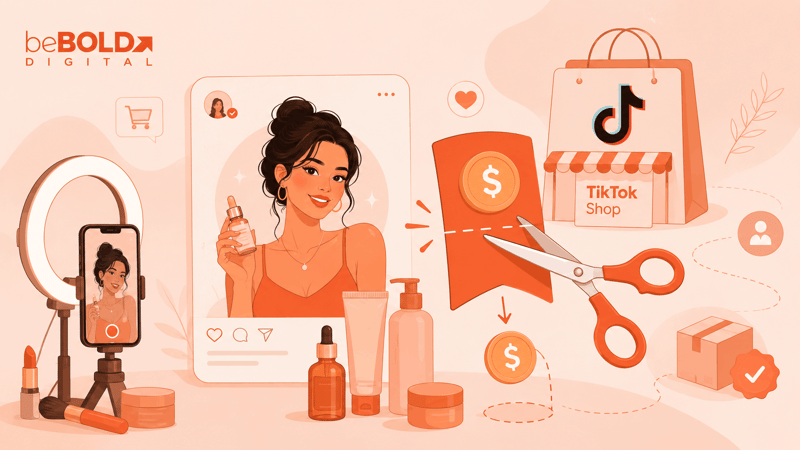
TikTok Shop Reduces Affiliate Commission Caps Across Key Categories
TikTok Shop has reportedly reduced affiliate commission caps across several high-volume categories, with beauty, supplements, and home goods seeing the deepest cuts. Nova Analytics reported on June 22, 2026, that the change took effect in Seller Center with no transition window, forcing creator-led brands to rework TikTok Shop economics quickly.
Ecommerce Times also reported that TikTok Shop quietly revised its affiliate commission structure earlier in June, cutting baseline creator payouts in apparel, beauty, and home goods by 2 to 4 percentage points. The same report noted that sellers were not necessarily required to lower creator commissions, since TikTok Shop affiliate rates are seller-set, but the change compresses the margin room brands have been using to fund high creator payouts.
That distinction matters. TikTok Shop still gives sellers control over affiliate collaboration rates, including open and target collaborations. But when platform-level defaults, caps, fees, or category economics shift, brands often have to choose between protecting creator incentives and protecting contribution margin.
How TikTok Shop Commission Cuts Impact Seller Margins and Strategy
Beauty brands are especially exposed because TikTok Shop has become a major discovery engine for visual, demo-friendly products. EMARKETER reported that TikTok Shop is now the fourth-largest health and beauty ecommerce retailer in the U.S., with health and beauty sales surpassing $4.4 billion. The same report said TikTok Shop’s beauty and personal care dollar sales rose 107.7% year over year in the 52 weeks ended December 27, 2025.
That growth is exactly why the commission change matters. Many beauty and wellness brands built TikTok Shop strategies around aggressive creator payouts, fast product demos, affiliate sampling, and viral content velocity. If top creators now earn less per sale, they may post less often, negotiate retainers, prioritize higher-paying partnerships, or redirect attention to Amazon, Instagram, or other affiliate channels.
For Amazon sellers, the impact can show up in two places. First, TikTok Shop contribution margin may weaken if the brand has to use retainers, bonuses, or paid media to replace lost creator motivation. Second, Amazon listings may see traffic changes if creators begin sending audiences to Amazon storefronts or Amazon affiliate links instead of TikTok Shop product pages.
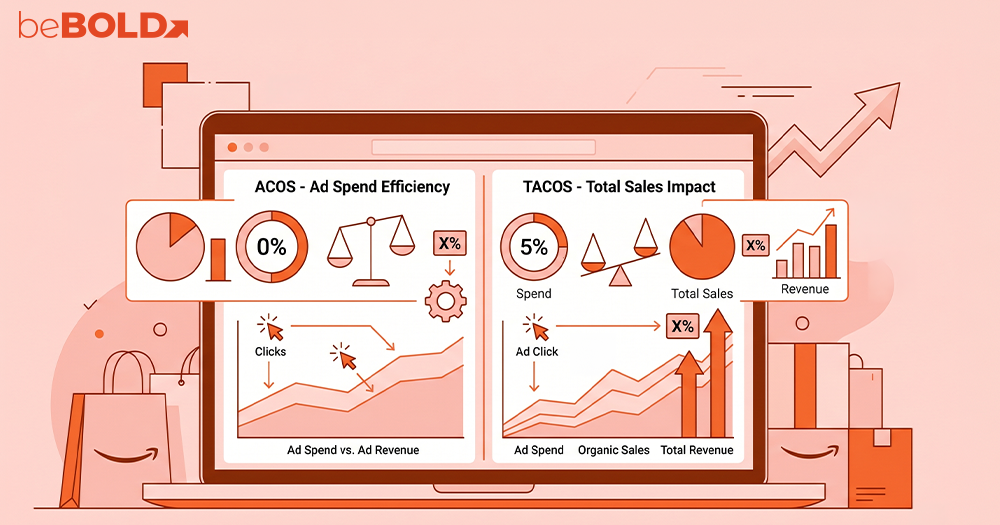
That makes this a cross-channel profitability issue, not just a TikTok Shop issue. Brands should compare TikTok Shop, Amazon, and DTC performance by contribution margin, not GMV alone. A smaller Amazon sales lift with stronger margin may be more valuable than higher TikTok Shop volume that depends on expensive incentives and unstable creator participation.

Recommended Actions for Sellers in Response to Commission Changes
Brands should re-run SKU-level margin at the new affiliate rate assumptions. For affected TikTok Shop products, model commission at 10%, 12%, and 15%, then include platform fees, samples, content costs, discounts, returns, fulfillment, and paid amplification.
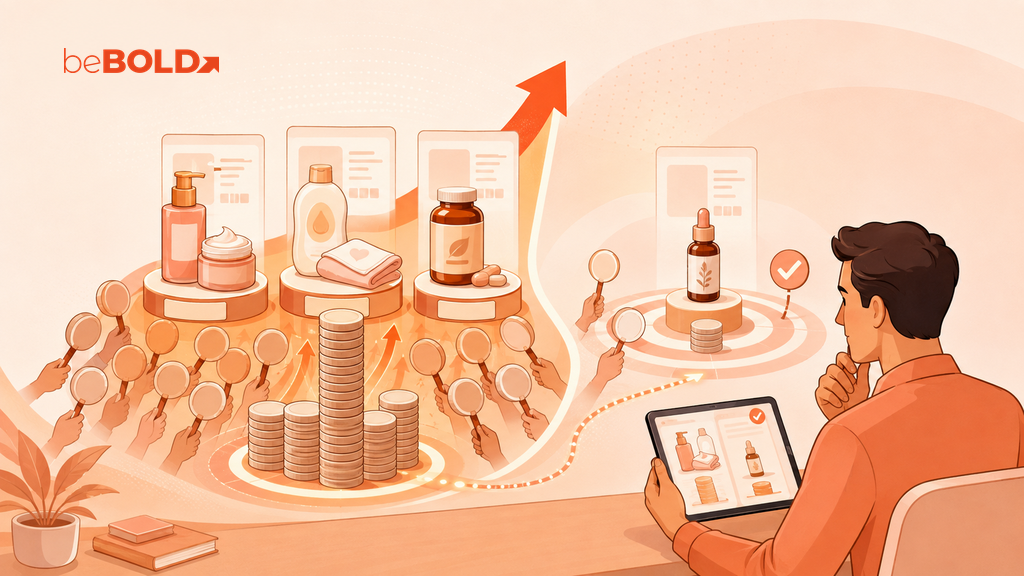
Beauty brands should also review whether TikTok Shop is driving new customers or simply shifting demand from Amazon or DTC into a lower-margin channel. For brands already selling beauty products on Amazon, the question is whether TikTok Shop creates incremental demand or pulls sales away from a more profitable marketplace path. If TikTok is introducing new shoppers, it may still deserve investment. If it is moving existing demand into a channel with weaker margin control, the strategy needs tightening.
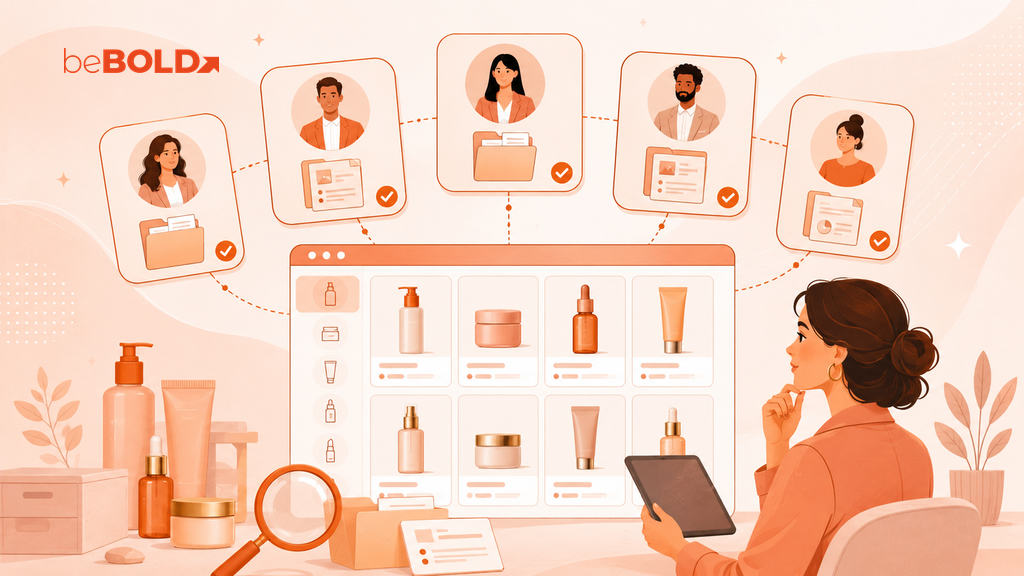
Creator strategy should also become less concentrated. Relying on a handful of top affiliates creates risk when rates change or creators renegotiate. A broader mix of micro-creators, tighter product selection, better offer testing, and clearer performance tracking can make the channel more resilient. Brands that rely on TikTok influencer marketing should also separate creator reach from true contribution margin so they know which partnerships are actually profitable.
For brands comparing TikTok Shop with Amazon growth channels, the same principle applies across paid and creator-led media: channel decisions should be based on profitable customer acquisition, not surface-level reach. That is especially important for beauty brands evaluating Amazon Ads vs Meta Ads alongside TikTok Shop affiliate programs.
What This Means for Brands and How to Respond
TikTok Shop is still important for beauty discovery, but this update is a reminder that creator-led commerce can change quickly when platform economics shift. Sellers should not treat affiliate commission changes as a creator relations issue only. They should treat them as a margin, attribution, and channel mix issue.
The brands in the strongest position will know which SKUs can support creator commissions, which products belong on Amazon instead, and where TikTok Shop is actually creating incremental demand. If your marketplace strategy depends on TikTok Shop, Amazon, or both, beBOLD Digital can help you reassess channel profitability and build a smarter growth plan. Contact beBOLD Digital for a consultation.
Sources
Ecommerce Times: TikTok Shop’s Affiliate Commission Cuts Are Reshaping Influencer Economics
https://ecommerce-times.com/tiktok-shops-affiliate-commission-cuts-are-reshaping-influencer-economics/
Nova Analytics: TikTok Shop slashes affiliate commissions across top categories
https://novadata.io/resources/news/tiktok-shop-affiliate-commission-cuts-june-2026
TikTok Shop Seller Center: Setting Up Affiliate Collaborations
https://seller-us.tiktok.com/university/essay?knowledge_id=6837873164896001&lang=en
TikTok Shop Seller Center: How Standard Affiliate Commission Works
https://seller-us.tiktok.com/university/essay?knowledge_id=6077860360177451
EMARKETER: TikTok Shop reshapes US beauty ecommerce landscape
https://www.emarketer.com/content/tiktok-shop-reshapes-us-beauty-ecommerce-landscape






Comments