


AI assistants are becoming digital shopping guides that help customers compare products, understand ingredients, read reviews, and make buying decisions.
For beauty brands, this changes how products get discovered. Keyword rankings are still important, but now it’s just as important to make product information easy for AI assistants to understand and recommend.
This change matters most on Amazon, where beauty brands need listings that work for both shoppers and AI-powered recommendation systems.
AI Assistants Are Becoming the New Beauty Shopping Guide
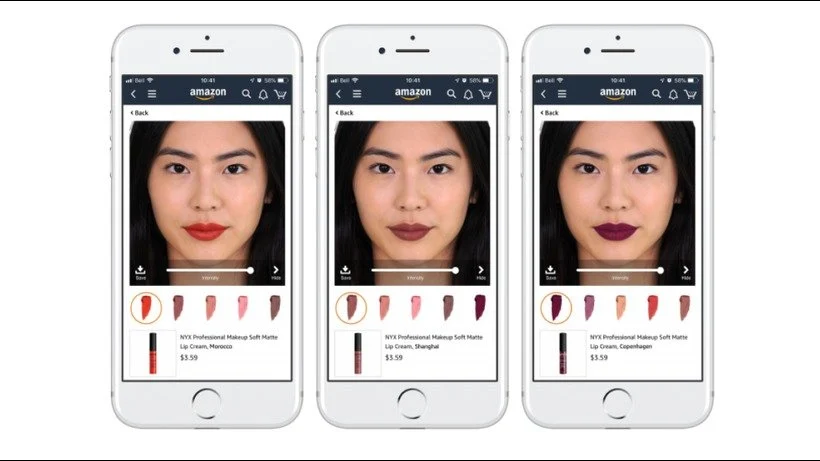
Source: L’Oreal
Beauty shopping has always required guidance. A shopper rarely wants “a moisturizer.” They want a moisturizer for dry, sensitive skin that works under makeup, avoids fragrance, fits their budget, and has strong reviews from people with similar concerns.
This is where AI assistants are making a difference in the shopping journey.
Instead of making shoppers scroll through endless product lists, assistants help them ask better questions, like:
- Which serum is better for beginners, vitamin C or niacinamide?
- What foundation works for oily skin and humid weather?
- Is this cleanser safe for sensitive skin?
- What is the difference between lip oil and lip gloss?
- Which products in this routine should not be layered together?
This is why AI assistants in beauty products matter. They reduce friction in categories where confusion, risk, and personal fit often slow down conversion.
Amazon is already moving this way with AI shopping tools like Rufus and Alexa for Shopping. For sellers, the key is not the assistant’s name, but how it helps shoppers. People want answers, not just product lists. You can learn more about how Amazon’s AI shopping tools may affect sellers in Amazon Rufus AI.
Why Beauty Is a Strong Fit for Assistant-Led Shopping
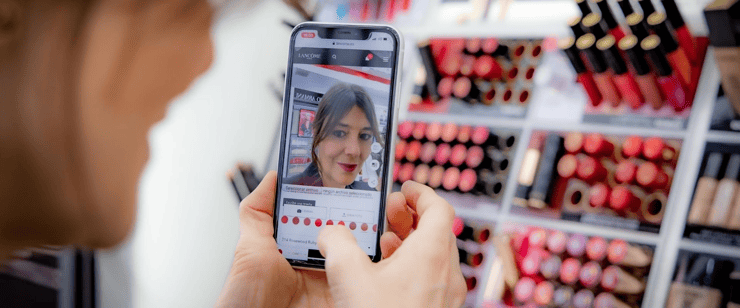
Beauty is one of the most natural categories for AI-assisted discovery because the purchase decision is personal and often emotional. A shopper may care about skin tone, allergies, ingredient preferences, clinical credibility, texture, shade accuracy, lifestyle, age, price, and social proof.
That creates a high need for guided decision-making.
Several brands and retailers are already proving the value of this model. Sephora has used virtual try-on experiences to help shoppers test makeup digitally, including features that let users swatch hundreds of eyeshadow palettes. L’Oréal’s ModiFace-powered virtual try-on technology has also shown strong commerce impact, with reported results including doubled time spent on site and tripled conversion rates on sites with try-on experiences.
This is not limited to AI makeup. The same behavior is expanding into skincare diagnostics, shade matching, hair color, product comparison, and routine building. L’Oréal has also promoted Beauty Genius, a personalized AI beauty assistant designed to bring skincare diagnostics and recommendations to a broader consumer audience.
The takeaway for Amazon beauty brands is clear: AI assistants work best when they can turn product information into strong recommendations. Thin listings, vague claims, and generic content make this harder.
What AI Shopping Assistants Mean for Amazon Beauty Brands
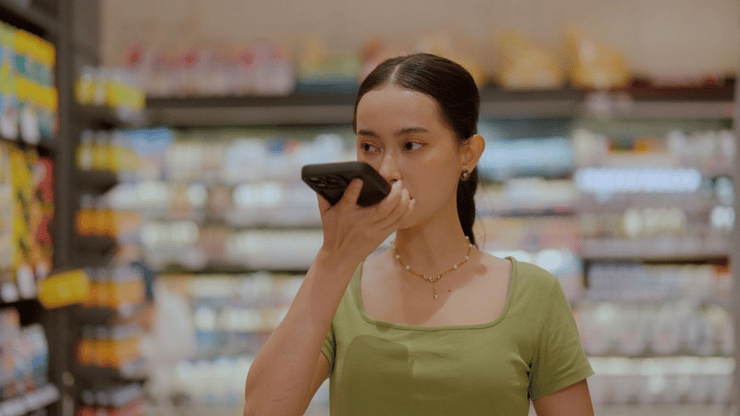
Amazon beauty brands should see AI assistants as another way shoppers find products, not a replacement for Amazon SEO. Basics like relevance, conversion rate, reviews, pricing, creative quality, retail readiness, and ad performance still matter.
What’s changing is how product information gets interpreted.
An assistant may need to answer questions like:
- Who is this product best for?
- What skin or hair type does it support?
- What problem does it solve?
- Are the claims backed by ingredients, reviews, or clinical language?
- How does it compare to similar products?
- Are there usage warnings or pairing concerns?
If those answers are buried, inconsistent, or missing, the product may be harder to recommend.
This is where Amazon SEO and GEO come together. Amazon SEO helps your listing rank and convert on the marketplace. Generative engine optimization makes your content easier for AI systems to understand and use. Beauty brands should focus on both at the same time.
Industry data supports this shift. Adobe reported that traffic from generative AI sources to U.S. retail websites increased by more than 1,200% between July 2024 and February 2025, highlighting how quickly AI-assisted discovery is becoming part of the shopping journey.
See beBOLD Digital’s guide to Generative Engine Optimization for Amazon and Amazon SEO Strategy for Beauty Brands.
The AI Assistant-Ready Amazon Beauty Listing Framework

Source: Adobe Stock
To get ready for assistant-led discovery, Amazon beauty listings should work like structured product resources. Every main part of your content should answer a shopper’s question.
Use this framework when auditing a beauty listing:
|
Shopper Question |
Assistant Needs to Understand |
Amazon Listing Element |
|
Who is this product for? |
Skin type, hair type, concern, use case |
Title, bullets, A+ Content |
|
Why should I trust it? |
Claims, ingredients, reviews, proof |
Bullets, images, reviews |
|
How do I use it? |
Routine step, frequency, pairing |
A+ Content, FAQ, images |
|
What makes it different? |
Comparison points and positioning |
A+ comparison chart |
|
Will it work for me? |
Shade, texture, sensitivity, expectations |
Images, reviews, Q&A |
This is where many beauty brands underperform. Their listings may mention benefits, but not in a way that is specific enough for a shopper or AI assistant to evaluate.
A stronger and more optimized listing should include:
- Clear product positioning in the title
- Benefit-led bullets tied to real shopper concerns
- Ingredient explanations in plain language
- Usage guidance and routine placement
- High-quality product images and infographics
- A+ Content that educates, compares, and reduces hesitation
- Review mining to identify recurring questions and objections
- FAQs that answer assistant-style prompts
beBOLD Digital Expert Tip: Your beauty product images should do more than look good. They should answer questions visually by showing texture, scale, how to use the product, benefits, ingredients, and where it fits in a routine.

The Trust Signals AI Assistants Need Before Recommending Beauty Products
Source: Adobe Stock
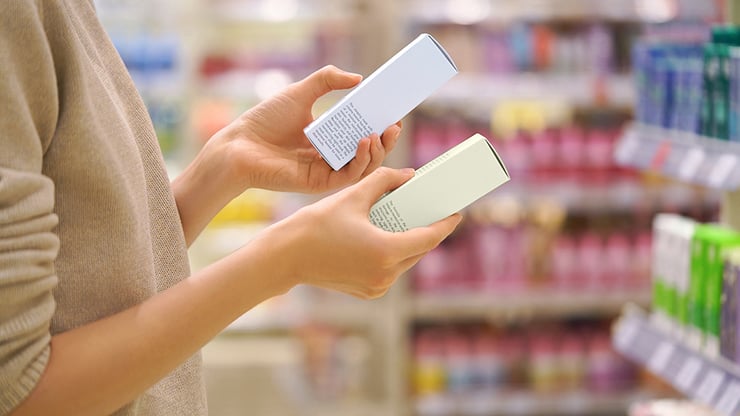
AI assistants are only as helpful as the information they can use. In beauty, trust signals matter a lot because bad recommendations can cause irritation, shade mismatch, wasted money, or hurt your brand’s credibility.
Brands should strengthen these signals:
- Specific claims instead of broad promises
- Consistent product data across Amazon, brand site, Walmart, and social channels
- Clear ingredient education
- Strong review volume and review quality
- Transparent usage instructions
- Comparison-ready content
- Credible expert or clinical support where applicable
- High-quality imagery that matches the actual product experience
This is also why tools like Sephora AI, Google shopping, virtual beauty advisors, and Amazon assistant features should not be seen as separate from marketplace basics. They all rely on clear product information.
Retailers are investing heavily in AI because shoppers respond to more guided experiences. According to IBM's Consumer Study, 59% of consumers are interested in using AI-powered applications while shopping, and 55% say AI helps them discover products they may not have found otherwise.
Industry examples show measurable results. Macy's reported a 2% increase in conversion rates and a 1.3% increase in revenue per visit after implementing generative AI-powered search improvements, demonstrating how better product discovery can directly impact sales performance.
For Amazon sellers, the main point is practical. Better content gives assistants more to work with, and better retail execution gives shoppers more reasons to buy.
What Beauty Brands Often Get Wrong About AI Assistants
The biggest mistake is treating AI visibility like a prompt-hacking exercise. Beauty brands do not win by guessing magic phrases. They win by building better product information ecosystems.
Common mistakes include:
- Publishing generic AI-written copy that says little
- Overusing claims like “clean,” “glow,” or “premium” without proof
- Ignoring reviews and Q&A as content intelligence
- Treating Amazon SEO and AI optimization as separate projects
- Using A+ Content for branding only, not education
- Forgetting that ads, retail readiness, and organic visibility work together
AI assistants might change how shoppers interact, but brands still need strong marketplace basics. If your listing has weak images, unclear claims, poor reviews, or inconsistent messaging, an assistant will not fix those problems.
beBOLD Digital Expert Tip: Mine reviews before rewriting Amazon beauty content. Review language often reveals the exact phrases shoppers use when asking assistants for help.
Consumer-language research should extend beyond Amazon reviews. Reddit beauty communities can reveal how shoppers describe ingredient concerns, product comparisons, routines, and unmet needs in their own words. Explore how Reddit communities are reshaping beauty discovery and use those insights to strengthen FAQs, comparison content, and product education for both shoppers and AI assistants.
How Amazon Beauty Brands Can Prepare for the Future of AI-Assisted Shopping
Even with assistant-led beauty shopping, marketplace basics still matter.
AI assistants can help shoppers find and compare products, but the brands that benefit most are those with clear positioning, optimized listings, strong creative, good review insights, solid catalog data, and effective media support.
The broader market is moving in this direction. Gartner predicts that traditional search engine volume could decline by 25% by 2026 as consumers increasingly turn to AI assistants and conversational interfaces for information discovery. While search remains critical, brands should prepare for a future where AI recommendations influence a growing share of purchase decisions.
That’s where beBOLD Digital helps Amazon beauty sellers compete. As an Amazon agency with experience in SEO, PPC, DSP, A+ Content, listing optimization, and beauty marketplace strategy, beBOLD Digital helps brands create listings that shoppers trust and AI assistants can easily understand.
This is even more important as beauty competition grows on Amazon, Google, Sephora, TikTok, Walmart, and new international players. Olive Young’s U.S. K-beauty expansion shows how fast the discovery landscape is changing.
For beauty brands looking for a stronger Amazon growth partner, beBOLD Digital’s Amazon Premium Beauty Agency services connect listing strategy, retail media, and marketplace execution.
Ready to Future-Proof Your Amazon Beauty Brand for AI-Driven Shopping?
AI in beauty is more than just virtual try-ons or chatbots. It is changing how shoppers ask questions, evaluate products, and make buying decisions.
For Amazon beauty brands, the opportunity is clear. Create listings that answer shopper questions better than your competitors. Build trust signals. Use reviews as insights. Use A+ Content and images to educate shoppers. Support organic visibility with smart advertising, including Amazon PPC.
AI assistants will keep changing how people shop. The brands that succeed will be those that make their products easy to understand, easy to trust, and easy to recommend.
FAQ
How are AI assistants changing beauty shopping?
AI assistants are making beauty shopping more conversational and personalized. They help shoppers compare products, understand ingredients, explore routines, evaluate claims, and narrow choices based on specific concerns.
Why do AI shopping assistants matter for Amazon beauty brands?
They may influence which products shoppers discover, compare, and trust. Amazon beauty listings need to be structured clearly enough for both shoppers and assistants to understand the product’s value.
How can beauty brands optimize Amazon listings for AI assistants?
Start with clear titles, benefit-led bullets, ingredient education, review insights, strong FAQs, high-quality images, and A+ Content that answers real shopper questions.
Are AI assistants replacing Amazon SEO?
No. AI assistants add another discovery layer, but Amazon SEO, conversion rate, reviews, pricing, content quality, and advertising still matter. Brands should optimize for both search visibility and assistant-led recommendations.




Comments