


 Source: Amazon
Shopping on Amazon is now more like having a conversation. With Alexa for Shopping, you can use Amazon’s AI assistant in the search bar, the Amazon Shopping app, on Amazon.com, and on Echo Show devices to research products, compare options, track prices, and manage your shopping lists.
This is a big change for Amazon brands. Product discovery is not just about ranking for exact keywords anymore. Listings now need to answer real customer questions that AI shopping tools can understand.
With “Update Me When,” shoppers can also ask Alexa to monitor future releases. For brands, that adds a launch-readiness question: is the product information accurate and the buying experience ready when customers first discover the release?
What Is Alexa for Shopping?

Alexa for Shopping is Amazon’s AI-powered assistant that is part of the shopping experience. It brings together Alexa+ and the product research features from Rufus, Amazon’s earlier AI shopping chatbot.
According to Amazon, Rufus helped over 300 million customers in 2025 to research, compare, and buy products. This shows how fast AI shopping is becoming a normal part of Amazon’s experience.
Shoppers can now ask questions like:
- “What’s a good skincare routine for men?”
- “Compare Kindles.”
- “When did I last order AA batteries?”
- “Add my regular dog treats to my cart.”
This means Alexa for Shopping is helpful for researching products, reordering items, checking prices, and managing your shopping lists.
How to Use Alexa for Shopping

If you are in the U.S., you can use Alexa for Shopping by updating the Amazon Shopping app and tapping the Alexa icon at the bottom of the screen. On desktop, you’ll find Alexa near the top of Amazon.com.
Amazon says customers do not need a Prime membership, an Echo device, the Alexa app, or a separate Alexa account to use Alexa for Shopping while signed into Amazon.
Alexa can help with:
|
Product research |
Answers shopping questions and creates buying guides |
|
Product comparison |
Compares prices, features, reviews, and options |
|
Shopping lists |
Adds products to a cart or list through natural-language prompts |
|
Price tracking |
Shows up to a year of price history on many Amazon products |
|
Scheduled actions |
Watches for deals or adds items when conditions are met |
|
Reordering |
Restocks repeat purchases like pet food, paper towels, or supplements |
What Can You Add to a Shopping List for Alexa?
A shopping list for Alexa can include everyday essentials, repeat purchases, gifts, pantry items, pet supplies, beauty products, or seasonal needs.
A major new feature is that Alexa can now understand conditions. For example, you could say, “Add this sunscreen to my cart if it drops below $10 and I haven’t bought it in the last two months.” Amazon says Alexa can either notify you or add the product to your cart based on your request.
This means that pricing, availability, clear product information, and making products easy to buy again are now even more important for Amazon sellers.

Why Alexa for Shopping Matters for Amazon Brands

Voice shopping is no longer just about giving a simple command. It is now more visual, personalized, and supported by AI across different devices.
For brands, Alexa for Shopping makes clear product content even more important. Listings should help AI understand:
- Who the product is for
- What problem it solves
- What ingredients, materials, sizes, or compatibility details matter
- How it compares with alternatives
- Why shoppers should trust it
- Whether it fits repeat-purchase behavior
This is part of Amazon’s bigger move toward AI-powered product discovery. Brands that already know how Amazon Rufus and AI-driven recommendations work will be better prepared for Alexa’s shopping features. For more details, check out beBOLD Digital’s guide to Amazon Rufus AI.
How “Update Me When” Notifications Change Product Launches
Alexa for Shopping now lets shoppers request updates about upcoming releases. Amazon says “Update Me When” checks Amazon and the broader web, then sends personalized notifications about relevant developments, including new product lines. Shoppers can set up monitoring through a conversation in the Amazon Shopping app or on Amazon.com.
For Amazon brands, this creates another potential discovery path before a shopper conducts a fresh search. It also raises a practical launch question: Is the product ready for customers when they first discover it?
A brand may plan to finish its listing before switching on advertising. However, public product pages and launch announcements may appear earlier. beBOLD Digital recommends preparing accurate customer-facing content before public discovery and checking purchase readiness before announcing that the product is available.
For a new Amazon Standard Identification Number (ASIN), teams should review:
- Product identity: Confirm the correct brand, product name, size, pack count, and variation relationships. Keep those details consistent with packaging and the brand website.
- Listing quality: Prepare accurate titles, bullets, attributes, and images. Submit planned A+ Content early enough to accommodate review. These are launch-quality recommendations, not published Alexa alert eligibility requirements.
- Purchase readiness: Check that the intended offer is buyable, pricing is correct, inventory is available, and delivery information matches the launch plan. If the product is not yet available, make that timing clear in public announcements.
- Announcement timing: Coordinate Amazon availability with website pages, email campaigns, creator content, and other public launch communications.
For example, a beauty brand introducing a moisturizer should ensure that ingredient information, fragrance details, directions, package size, and supported claims agree across its Amazon listing and website. Customers should be able to understand what is new and whether the product suits their needs.
After launch, review ASIN sessions, orders, conversion, advertising activity, and stock availability together. Record when public announcements and promotions occurred. An unexplained traffic increase can prompt investigation, but it does not prove that Alexa notifications caused it.
The practical priority is to have accurate content and a dependable buying experience ready for the first customer visit.
How Alexa for Shopping Changes Amazon SEO
Traditional Amazon SEO still matters. Titles, bullets, backend keywords, attributes, images, reviews, and conversion rate continue to affect visibility.
The main change is that AI shopping adds an extra step. Product listings now need to be clear enough for Alexa to understand and recommend them.
For example, instead of searching for “fragrance-free ceramide moisturizer,” a shopper might ask, “What moisturizer is good for sensitive skin after using retinol?” A pet owner might ask, “What treats are good for an older dog with a sensitive stomach?”
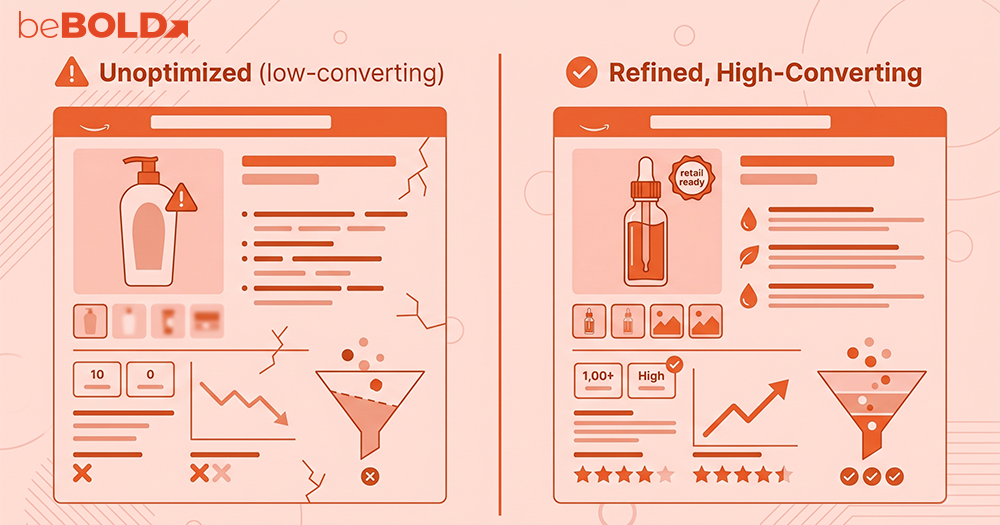
To prepare for Alexa for Shopping, brands should:
- Use natural language in bullets and A+ Content
- Complete product attributes accurately
- Make benefits and use cases easy to understand
- Address common objections in product copy
- Improve product images and infographics
- Monitor reviews for recurring customer language
- Keep pricing and inventory competitive
Visual content is also important as Amazon combines AI search, product comparison, and visual decision-making. Brands can make their product images better by following image SEO optimization tips.
What This Means Beyond Amazon
Alexa for Shopping is part of a bigger change in ecommerce. AI assistants are now shaping how people discover, compare, and choose products.
The Verge reports that Alexa for Shopping can use Amazon data, web information, and customer context to answer shopping questions.
This means product information should be clear not just for Amazon search, but also for AI-driven discovery on other platforms. It’s similar to how products might show up in ChatGPT, where having structured, trustworthy, and specific details can help your product get noticed.
Ready to Optimize Your Amazon Listings for AI Shopping?
Alexa for Shopping makes Amazon shopping more conversational, personal, and automated. Shoppers can ask questions, compare products, track prices, build carts, and manage repeat purchases with help from AI. For brands, this means listings need to be optimized for both shoppers and AI, especially as the ecommerce customer journey becomes more AI-driven.
beBOLD Digital helps brands adapt by reviewing and improving Amazon listings for SEO, conversion, and AI discoverability. This means refining titles, bullets, backend keywords, product attributes, A+ Content, images, review-based messaging, and marketplace strategy so products are easier for Alexa and shoppers to understand, compare, and trust. Contact us today and let us help you future-proof your brand.





Comments