


The Amazon Premium Beauty program is Amazon’s selective program and curated shopping destination for prestige beauty brands across skincare, haircare, makeup, and fragrance. Participation requires Amazon’s acceptance. Listing a product in Beauty or enrolling in Brand Registry does not enroll a brand in Premium Beauty.
For a brand, the decision involves more than premium presentation. Evaluate whether the proposed selling arrangement, costs, distribution expectations, and supply commitments support your business. Then prepare evidence of brand demand and operating readiness for a conversation with Amazon.
This guide focuses on assessing fit and preparing for entry in the U.S. For support connecting that decision to execution, explore beBOLD Digital’s Amazon beauty strategy services.
What Sets the Premium Beauty Category Apart?

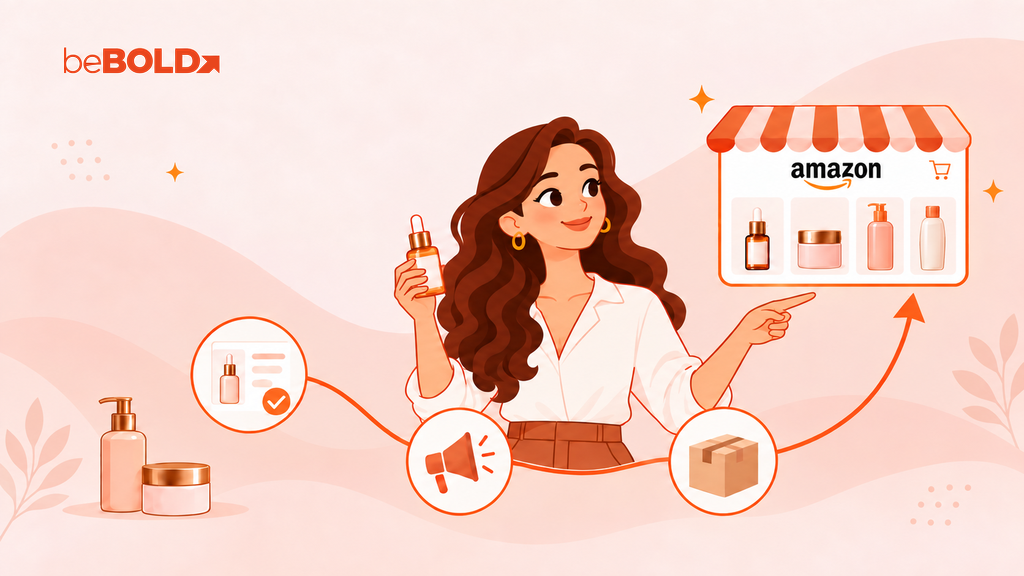
Premium Beauty gives prestige brands a curated shopping context. Its value depends on the selling arrangements and capabilities available to the individual brand:
-
Brand positioning: Present the brand alongside a curated beauty assortment and explain what makes its products worth the price.
-
Selling arrangements: Confirm which sellers Amazon will authorize, how restrictions will be enforced, and how issues will be escalated. Any additional control should be evaluated against the brand’s wider distribution plan.
-
Presentation and merchandising: Confirm available content tools and any merchandising commitments. Evaluate Premium A+ eligibility separately; program participation should not be treated as automatic access to every feature or placement.
These opportunities can support a stronger customer experience. Measure conversion and profitability after launch rather than assuming that acceptance alone produces better results.
Note that Professional Beauty and Amazon Luxury Stores are separate offerings. Do not use their eligibility or purchase-access rules as Premium Beauty requirements. If your assortment includes professional-use products, verify the restrictions for those specific products and the relevant marketplace.
Premium brands can also learn from how K-beauty brands build global trust, combining ingredient transparency, polished visuals, customer education, and consistent marketplace presentation across countries.
Is Amazon Premium Beauty a Good Fit for Your Brand?
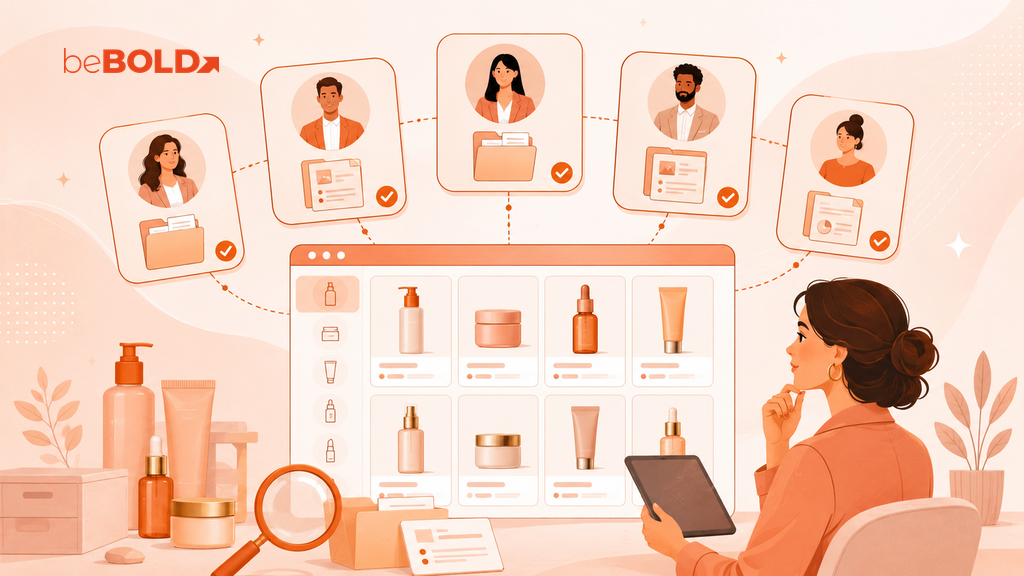
A premium price is only one part of the business case. Use the following assessment to decide whether to pursue a conversation with Amazon and what to resolve first.
|
Fit factor |
Evidence to gather |
What the evidence should resolve |
|
Brand positioning |
Differentiated products, substantiated claims, specialty or professional distribution, and customer demand. |
Can you explain why the brand belongs in a curated prestige assortment? |
|
Distribution and pricing |
Authorized seller list, wholesale routes, retailer promotions, DTC offers, and exclusives. |
Can you coordinate channels and investigate unwanted seller activity without relying on gating alone? |
|
Contribution profit |
SKU costs, proposed Amazon charges, fulfillment, storage, advertising, promotions, and returns. |
Does the arrangement leave acceptable profit under normal and promotional conditions? |
|
Assortment and supply |
Proposed eligible SKUs, replenishment lead times, shelf life, inventory capacity, and fulfillment plan. |
Can you meet the catalog and availability obligations Amazon proposes? |
|
Compliance and content |
Ingredient records, packaging, supported claims, required approvals, and accurate product assets. |
Are documentation or listing gaps likely to disrupt a launch? |
|
Demand and investment |
Amazon performance if available, DTC or retail demand, forecast assumptions, and launch budget. |
Is there a credible demand case and enough investment to support the launch? |
Prestige retail or professional distribution can help explain positioning, but a retailer name alone should not be treated as a guaranteed qualification or disqualification.
Pursue entry discussions when positioning and demand are credible and the proposed economics and operations work. Resolve gaps first when pricing conflicts, supply limits, or compliance issues undermine the plan. Evaluate standard Beauty selling when it can meet the brand’s goals without a clear incremental benefit from Premium Beauty.
Before committing launch spend, use our beauty retail readiness guide to evaluate the catalog and customer experience. Retail readiness supports execution; it is separate from program admission.
What Does Amazon Premium Beauty Cost?
Start with the fee schedule and agreement that apply to your brand. Confirm any program charge, its calculation base, the products it covers, and whether it is additional to other Amazon fees.
For context, Amazon’s current U.S. standard selling fee table lists referral fees for Beauty, Health, and Personal Care at 8% of the total sales price for products priced at $10 or less, and 15% above $10, with a $0.30 minimum. These standard rates do not establish the complete cost of a Premium Beauty arrangement.
A hypothetical fee sensitivity check
Consider a $50 sale. The table below shows how an additional charge would affect proceeds if a proposed agreement added 15% of the same $50 base.
|
Illustrative calculation |
Amount |
|
Sale price |
$50.00 |
|
Standard referral charge at 15% |
$7.50 |
|
Hypothetical additional charge at 15% of the same base |
$7.50 |
|
Combined charges in this hypothetical scenario |
$15.00 |
|
Remaining before product costs and other expenses |
$35.00 |
That additional charge reduces contribution by $7.50 per sale. Subtract product costs, fulfillment, storage, inbound freight, advertising, returns, and other expenses before deciding whether the arrangement is attractive. Repeat the calculation for promotions and slower sales periods.
Use the right model for the selling relationship
For a third-party seller using Seller Central, model consumer sales revenue less applicable Amazon charges and operating costs. For a first-party vendor selling wholesale to Amazon, model wholesale receipts less product costs, freight, negotiated allowances, deductions, and other contract expenses. Do not apply a seller referral-fee calculation to a vendor agreement.
Coordinate Amazon offers with your wider beauty brand pricing strategy so the business case accounts for retailer promotions and channel economics.
How to Apply and Get Into Amazon Premium Beauty: Your Step-by-Step Guide
Amazon controls participation in the Amazon Premium Beauty program. Treat entry as a brand and commercial review with Amazon, rather than assuming a standard seller application completes enrollment. Confirm the current process for your marketplace and selling relationship.
Step 1: Decide the commercial relationship
Clarify whether the discussion concerns third-party selling through Seller Central or an available first-party vendor relationship. Compare the economics and responsibilities of each route. Identify who will own inventory, account operations, content, and the launch budget.
Step 2: Prepare the selling foundations
Check Brand Registry readiness, account access, product-level selling approvals, catalog accuracy, compliance documents, and fulfillment capability. These are distinct workstreams; completing one does not complete the others.
Amazon’s Brand Registry requirements include an eligible pending or registered trademark and branding permanently affixed to products or packaging. Review the applicable enrollment requirements rather than assuming a registered trademark is the only qualifying route.
If you are preparing a new launch, our guide to selling beauty products on Amazon covers the broader selling foundations. Product selling approval is separate from Premium Beauty acceptance.
Step 3: Build a concise business case
Prepare a short deck and supporting files that cover:
-
Brand positioning, differentiated products, supported claims, retail footprint, and customer demand.
-
Proposed assortment, retailer exclusives, authorized sellers, and cross-channel promotions.
-
SKU economics, forecast assumptions, launch investment, inventory, and replenishment capacity.
-
Existing Amazon performance where available, or DTC and retail evidence for a brand that has not launched on Amazon.
Use reviews and sales history as evidence where they exist. Do not substitute an unsupported universal rating, review-count, or sales-history cutoff for Amazon’s current review process.
Step 4: Confirm the current Amazon contact route
Ask your existing Amazon beauty, category, account, or vendor contact about the appropriate consideration process. If there is no existing relationship, use official support channels to clarify the relevant team and route; a support request is not an invitation.
An agency can organize the business case and support discussions, while Amazon decides participation. Use verified current contacts rather than an old email address or a promised approval window.
Step 5: Review the proposed terms in writing
Before agreeing to a launch, request confirmation of:
-
Fees, calculation bases, and the commercial relationship.
-
Eligible products, assortment commitments, and treatment of retailer exclusives.
-
Authorized sellers, restrictions, enforcement responsibilities, and escalation routes.
-
Fulfillment requirements, launch stock, replenishment, and ongoing availability or sales targets.
-
Pricing and promotional obligations, including how other retail offers affect the arrangement.
-
Content access, merchandising commitments, monitoring, and conditions for continued participation or removal.
Recalculate contribution using these actual terms. Confirm any catalog or inventory percentage directly rather than relying on a checklist copied from another brand or marketplace.
Step 6: Build the launch and monitoring plan
Assign an owner and deadline for every SKU, asset, approval, inventory commitment, and promotion. After launch, monitor contribution profit, availability, pricing health, seller activity, returns, and content accuracy against the agreed requirements.
Acceptance is one milestone. Maintaining a commercially healthy, compliant assortment is the ongoing work.
How Can You Make Your Listings Irresistible on Premium Beauty?

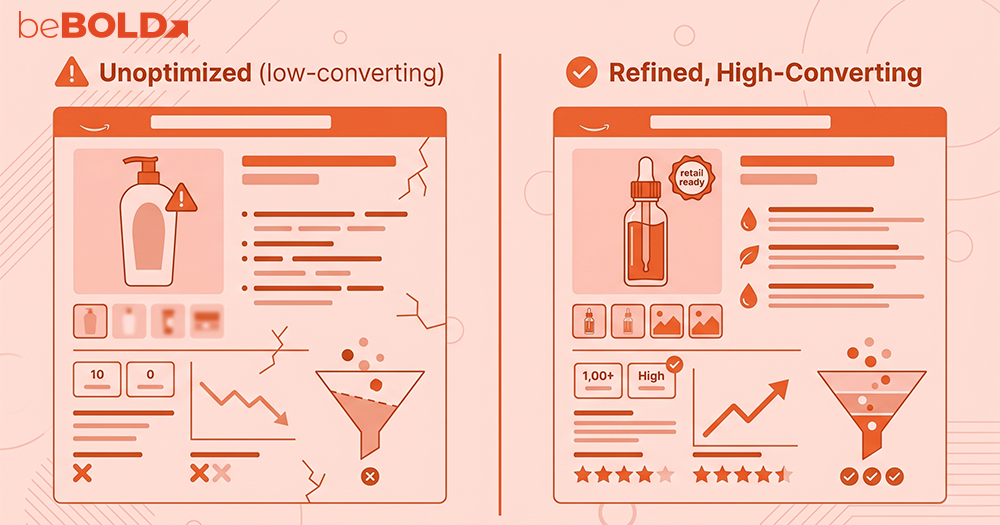
Prepare listings that explain the product’s value and help shoppers choose confidently. This work supports a launch whether or not the brand participates in Premium Beauty.
Use the A+ Content available to your brand
Use A+ Content to explain benefits, routines, and product differences. Check Premium A+ eligibility separately in your account; Premium Beauty participation and Premium A+ are different programs. Our A+ Content guide covers the available formats and planning considerations.
Show product value through imagery
Use clear pack shots, texture or application images, and product education that reflect the brand’s positioning. Keep claims consistent with supporting evidence. See our guide to visual branding for beauty products for deeper creative guidance.
Learn from reviews and customer questions
Use customer feedback to identify unclear instructions, expectations, or product differences. Follow Amazon’s review policies and avoid treating a particular rating or review count as a confirmed program admission requirement.
Keep the brand message consistent
Align names, benefits, usage instructions, and positioning across Amazon, DTC, and retail. Consistency helps shoppers understand the same product wherever they discover it.
For a practical workflow covering titles, bullets, images, and product details, follow our beauty listing optimization guide. Track conversion, returns, and contribution to evaluate whether content changes improve the business.

Compliance Rules You Need to Follow to Avoid Getting Flagged

Premium Beauty participation does not replace Amazon’s product and listing requirements. Keep compliance records and catalog information accurate, and review obligations for each product and marketplace. Key areas to monitor include:
- Accurate product claims and ingredient transparency
- Compliance with FDA and cosmetic regulations
- Proper labeling and packaging standards
- Consistent content updates to reflect regulatory changes
Assign an owner to review product claims, ingredients, packaging, and listing changes before they go live. Keep supporting documents accessible so the team can respond to Amazon requests. Amazon’s beauty selling guidance is a useful starting point for product-specific approvals and documentation.
Track program obligations alongside product compliance. Monitor pricing, inventory, seller activity, and any performance conditions in your agreement. Escalate gaps early rather than assuming acceptance guarantees continued participation.
Improve Your Premium Beauty Brand Performance With beBOLD Digital
The right Premium Beauty strategy starts with a business case: why the brand fits, how the arrangement affects contribution profit, and whether the team can meet the proposed obligations.
beBOLD Digital helps beauty brands connect pricing, catalog preparation, content, advertising, and account operations. Explore our Amazon beauty marketing services to discuss your current position and the work needed for a viable launch or stronger performance.

Want to position your brand for Amazon Premium Beauty or improve your current performance? Contact beBOLD Digital to build a strategy tailored to premium growth.

Frequently Asked Questions
Can a brand pursue Premium Beauty before launching on Amazon?
Ask Amazon about the route available to your brand. If you have no Amazon sales history, prepare evidence of demand from DTC or retail, a proposed assortment, and an operating plan. Do not assume that every brand must meet the same prior Amazon sales or review threshold.
Does Brand Registry automatically qualify a brand?
No. Brand Registry enrollment and Premium Beauty acceptance are separate. Brand Registry supports brand tools and protections, while Amazon must separately accept the brand into the program.
Should every brand budget a 30% referral fee?
Use the fees in your applicable agreement. Confirm whether a program charge applies, what it covers, and how it is calculated. A standard referral rate plus a hypothetical additional charge is not proof of a universal Premium Beauty fee.
Must a brand list every SKU or meet a fixed stock percentage?
Confirm the eligible assortment and availability requirements in writing, including exclusions and retailer exclusives. Do not treat a catalog or stock percentage cited for another account or marketplace as a universal rule.
Does Premium Beauty eliminate unauthorized sellers?
Do not assume complete elimination. Confirm the authorized seller arrangement, restrictions, and enforcement process with Amazon, and continue monitoring distribution. Program participation is not a blanket guarantee of seller removal or Featured Offer ownership.
How long does entry take, and can an agency guarantee it?
Confirm the expected review and onboarding milestones with the Amazon team handling your brand. Timing depends on that process and the work required. An agency can support preparation and execution; Amazon controls acceptance.


Comments