


Amazon ads can help improve organic ranking on Amazon, but not in a direct or guaranteed way. What they can do is increase visibility, drive qualified traffic, and generate the conversion signals that support stronger organic performance over time. That only works when the listing is relevant, conversion-ready, and paired with a clear keyword strategy. For brands trying to scale profitably, PPC and organic optimization work best as one system, not two separate tactics.

Key Summary
- Amazon ads do not directly improve organic rank, but they can strengthen the performance signals that influence visibility.
- PPC is most useful for organic growth when it drives relevant traffic to listings that already convert well.
- The biggest organic lift usually comes from tight keyword targeting, strong conversion rate, and consistent sales velocity.
- Ads alone will not fix weak listings, poor reviews, pricing issues, or inventory problems.
- Brands usually see better results when PPC data feeds listing optimization, SEO, and broader account strategy.
How to Use Amazon Ads to Support Organic Growth Step by Step

Before we dive in, it’s important to understand the scaling framework. The aim isn’t just to spend more on ads. Instead, you want to use ads to create signals you can track, so you can watch your organic rank and grow both paid and organic sales over time.
- Step 1: Focus on a small group of keywords. For example, if you sell a beauty serum, target a few keywords that are directly related to your product instead of broad category terms. Use Amazon PPC keyword research to find terms that are relevant, get searched often, and are realistic for you to rank for.
- Step 2: Make sure the listing can convert. Sponsored Products send shoppers to your product page, so if your title is weak, images are poor, reviews are low, or your copy is unclear, you lose value from each click. A strong product page and clear listing strategy are key for better ranking.
- Step 3: Begin with Sponsored Products. These ads show up in search results and on product pages, so they’re great for building momentum with your chosen keywords. If you’re new, get comfortable with Sponsored Products before trying more advanced strategies.
- Step 4: Read search term and conversion data closely. Start with auto campaigns to learn what shoppers are searching for, then switch to manual keyword targeting for more control as you see patterns.
- Step 5: Feed winning terms back into the listing. If a non-branded keyword works well in ads, update your title, bullet points, backend keywords, and future optimizations to include it.
Want to learn more about Amazon Ads? Head over to our Amazon Ads 2026 Breakdown for Sellers.
If your campaigns are generating spend but not improving overall visibility, head over to our Amazon Ads 2026 Breakdown for Sellers. The issue is usually not traffic alone. It is campaign structure, keyword alignment, listing conversion, or all three working out of sync.
Why Most Amazon PPC Campaigns Don’t Improve Organic Ranking

Many sellers get stuck here. They run ads, get a few orders, and expect their organic ranking to improve on its own, but that usually doesn’t happen.
- Weak listings: Ads can bring in traffic, but they can’t make up for a product page that doesn’t convert. If your page doesn’t build trust, your campaigns might spend money well but still not help your organic ranking.
- ACOS-only optimization: If you cut bids too soon, pause keywords before they gain traction, or ignore your organic keyword position, your campaigns might look efficient but won’t help your long-term ranking. If your ad spend goes up but you don’t see more visibility, consider doing an Amazon PPC audit.
- Poor keyword targeting: Sending broad or irrelevant traffic rarely helps your organic ranking. Your campaigns need to match the search terms shoppers use when they’re ready to buy.
- No SEO feedback loop: Many brands discover good keywords through PPC but don’t update their listings to match, which breaks the link between paid results and organic relevance.
- Stopping campaigns too early: Amazon PPC needs time to gather enough data on conversions and search terms before you make big decisions. Give your campaigns a realistic amount of time to show results.
Because branded searches often convert at a higher rate, branded spend can support organic ranking by feeding Amazon stronger sales velocity and conversion signals.

How Amazon Organic Ranking Works

At a practical level, Amazon organic ranking tends to follow four core inputs:
|
Relevance |
How closely the listing matches the shopper’s query |
|
How often shoppers click when they see the product |
|
|
CVR |
How often those clicks turn into purchases |
|
Sales velocity |
How consistently the product generates sales |
An Amazon organic ranking tool is useful only if it links keyword position with your ad, listing, and sales data. Just knowing your rank isn’t enough. You need to understand why it changes.
How Amazon Ads Support Organic Growth
Amazon ads help organic growth by sending strong signals to Amazon when shoppers search for relevant terms. The connection is indirect, but it matters if you manage your ads well.

Ads create a ripple effect beyond attributed sales
Paid traffic can do more than just drive the sales you see in your ad reports. Some shoppers click your ad, leave to compare, and come back later through organic search or other ways. This means your reported sales may not show the full impact of your PPC efforts.
In one Amplify analysis covering three years of campaign data across 58 books, the Amazon Ads dashboard attributed 500 orders, while total sales influenced by ads reached 2,495 orders, which the study described as roughly a 4x multiplier.
Ads can create a halo effect after campaigns pause

Some campaigns keep helping your performance even after you lower or pause your ad spend, especially if they boosted your keyword visibility and made shoppers more familiar with your product while they were running.
Dashboard reporting does not show the full picture
A dashboard shows impressions, clicks, spend, and sales from ads, but it doesn’t tell the whole story about your organic ranking. You also need to look at pricing, inventory, reviews, conversion rates, and search trends.
Ads can improve algorithmic trust over time
When your ads bring in clicks and sales on the right keywords, it shows Amazon that your product deserves a better spot for those searches.
Ads can support reviews, trust, and repeat visibility
Getting more qualified traffic means more purchases and reviews over time. This is especially important in beauty and wellness, where social proof has a big impact on conversions. In the Amplify study, books with 4.6-star average ratings and at least 20 reviews converted significantly better, which reinforces how review quality and review volume can amplify the long-term value of ad-driven traffic.
Established brands need a growth system where PPC works together with SEO, content, analytics, and listing optimization. If you want a more advanced account, look into top Amazon PPC software and advanced strategies.
Which PPC Metrics Matter the Most in Organic Ranking
If your goal is how to improve organic ranking on Amazon, the most important metrics are:
- Click-through rate: tells you whether the keyword, ad, and offer are relevant enough to earn the click
- Conversion rate: tells you whether the listing can turn traffic into sales
- Sales velocity: shows whether the product is building sustained momentum
- Organic keyword position: shows whether visibility is improving on target terms
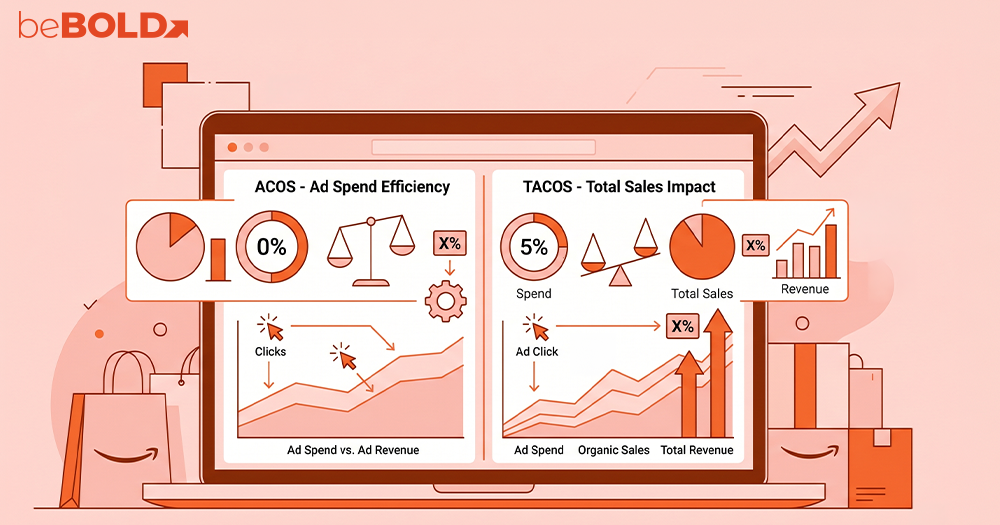
- TACoS: helps connect paid spend to total account performance
- Paid vs. organic sales mix: shows whether PPC is creating dependence or supporting broader growth
- Branded vs. non-branded performance: helps separate awareness effects from real category-level visibility gains
Looking at all these metrics together helps you see if your PPC is really helping organic growth or just driving short-term paid sales.
Why the Amazon Ads Flywheel Works

Small improvements add up, especially when you coordinate changes across your listings and campaigns.
- Better creative can improve click-through rate.
- Stronger copy and reviews can improve conversion rate.
- Better fulfillment and pricing can protect conversion.
- More precise targeting can improve efficiency.
This is where many brands get stuck. PPC, listing optimization, SEO, and reporting are managed separately, so the flywheel never compounds. beBOLD Digital helps connect those pieces into one growth system.
For example, a health and wellness brand ranking weakly for a high-value supplement term may already be spending on ads without improving category visibility. The fix is rarely “spend more.” It is tighter keyword targeting, a stronger listing, clearer conversion signals, and better decisions on which search terms deserve scale.
When to Work With an Amazon PPC Agency
A brand should consider working with an Amazon PPC agency when the following issues start affecting performance:
- Plateauing growth despite active campaign management
- High ad spend without improvement on target non-branded keyword positions
- Strong traffic but weak detail-page conversion
- PPC learnings are not being applied to SEO or listing optimization
- Reporting focuses on ACOS but not total growth efficiency, TACoS, or organic lift
These are usually signs that the issue is not campaign activity alone. It is the lack of a joined-up strategy across paid media, listing conversion, keyword targeting, and organic visibility.
If your brand is investing in Amazon Ads but not seeing stronger organic visibility, the problem is usually deeper than bids and budgets. beBOLD Digital helps brands connect PPC, SEO, listing optimization, and performance analysis into one system built for profitable growth.
If you’re choosing a partner to run the organic + paid flywheel, start with this agency shortlist of top Amazon SEO teams for 2026.

FAQs
Do Amazon ads directly improve organic ranking?
Not directly in any simple or publicly stated way. Indirectly, they can support organic rank by increasing relevant traffic, conversions, and sales signals.
Which Amazon ad type helps organic ranking the most?
Sponsored Products are typically the strongest starting point because they target product-level searches and send traffic directly to the detail page.
How long does PPC take to affect organic rank?
It varies by competition, listing quality, and budget. Movement usually requires sustained performance, not a short burst.
Can a weak listing improve rank just by running ads?
Usually no. Weak conversion limits the value of paid traffic.
Should I use auto or manual campaigns for keyword discovery?
Use both. Auto helps surface search behavior, then manual helps you scale proven terms with more control.
What metrics matter most if my goal is organic growth?
Focus on CTR, conversion rate, sales velocity, organic keyword position, TACoS, and paid versus organic sales mix.
What are the most common mistakes that stop PPC from helping organic ranking?
Weak listings, ACOS-only optimization, poor keyword targeting, no SEO feedback loop, and stopping campaigns too early are the most common issues.
Which matters more, paid or organic sales?
Neither works best alone. The strongest accounts use paid to accelerate and organic to scale more profitably over time.
Why are my ads generating sales but not improving organic rank?
Usually because the traffic is too broad, the listing is not converting well enough, or PPC learnings are not being carried back into listing optimization and keyword strategy.




Comments