

Amazon PPC costs depend on ad auctions and can change based on category, keyword, placement, conversion rate, and campaign goals. In 2026, the average Sponsored Products CPC is $1.13, with Grocery at $0.56 and Health & Household at $1.42.
Rather than using averages, brands should set their budgets based on margin, break-even ACoS, TACoS goals, and conversion rate.
What Does Amazon PPC Cost in 2026?
The cost depends on the type of ad, how much competition there is, and your targeting strategy.
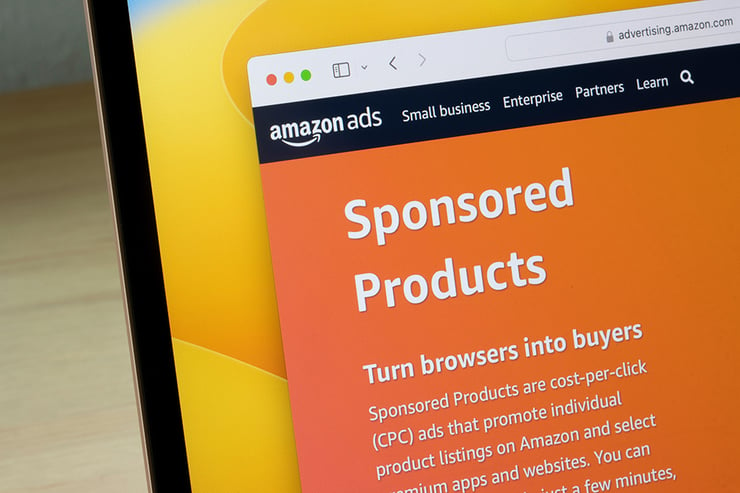
Sponsored Products and Sponsored Brands usually use CPC bidding, letting advertisers set a maximum bid per click. The final CPC changes depending on competition, relevance, placement, and Amazon’s auction system.
Display and awareness campaigns might use vCPM pricing. Amazon DSP uses programmatic buying for display, video, audio, and streaming ads.
2026 Amazon PPC Cost Snapshot
|
Cost component |
2026 planning consideration |
|
Sponsored Products |
CPC, no platform fee |
|
Sponsored Brands |
CPC, vCPM, or reserve SOV |
|
Display ads through sponsored ads |
CPC or vCPM, no minimum |
|
Amazon DSP |
Often $50,000+ minimum |
|
Daily budget guidance |
~$10+ recommended baseline |
|
Cross-category CPC |
~$1.13 average benchmark |
|
Agency management |
Retainer or % of spend |
Amazon confirms Sponsored Products have no upfront fees and recommends at least $10 per campaign as a baseline.
Why Is There No Single Amazon CPC?
Using an average Amazon CPC can help with early planning, but it shouldn’t be your performance goal.
Even within the same category, two products can have very different affordable CPCs. For example, a $15 beauty accessory and a $75 premium skin care set. If both have the same conversion rate, the higher-priced product can afford a bigger bid since each sale brings in more revenue.
CPC is influenced by keyword competition, search volume, relevance, listing quality, conversion rate, reviews, ratings, and seasonality.
The goal isn’t always to get the cheapest click. A $2 click that leads to profitable sales can be worth more than a $0.60 click that rarely converts.
Amazon’s 2026 Category Benchmark Reporting
On May 18, 2026, Amazon launched expanded benchmark reporting across supported marketplaces.
Advertisers can now compare performance against similar brands using:
-
CPC and CPM
-
CTR
-
New-to-brand metrics
-
Video completion rates
-
Cost per purchase
Amazon builds peer groups using category, price range, ad format, and marketplace data. This makes internal benchmarking more reliable than generic industry averages.
Amazon Advertising Costs by Ad Format
Each ad type has its own purpose and shouldn’t be judged by the same performance standards.
|
Ad format |
Pricing model |
Minimum requirement |
Primary use |
|
Sponsored Products |
CPC |
No platform fee |
Sales & SEO |
|
Sponsored Brands |
CPC or vCPM |
None (standard campaigns) |
Brand growth |
|
Sponsored Brands reserve share of voice |
Fixed CPM |
$6,000+ US minimum |
Branded visibility |
|
Display ads through sponsored ads |
CPC or vCPM |
No minimum |
Retargeting |
|
Amazon DSP |
Programmatic impressions |
Often $50,000+ managed spend |
Full-funnel |
Amazon PPC Costs by Product Category
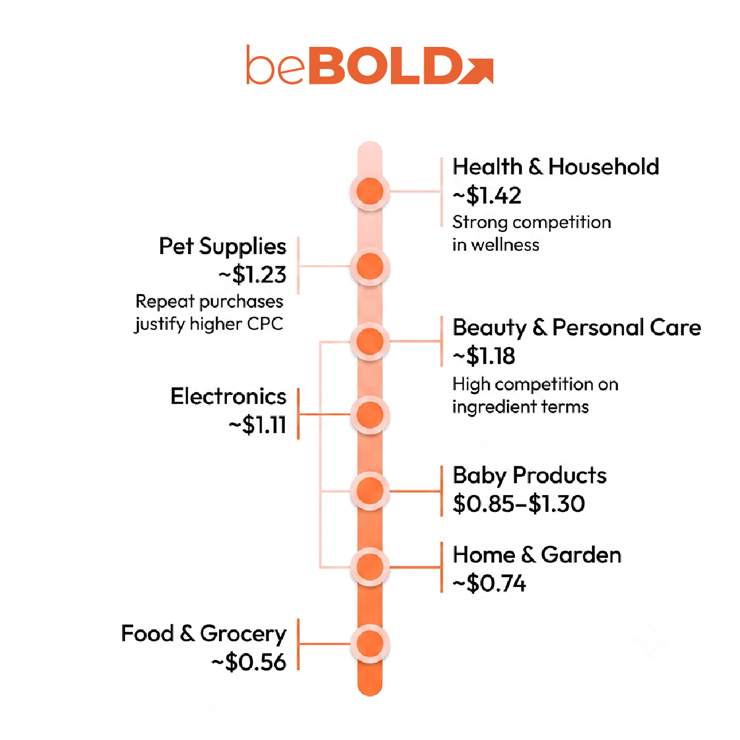
Competition within a category has a big impact on CPC. But a low CPC doesn’t always mean your cost per sale will be low.
|
Product category |
Illustrative CPC |
Key insight |
|
~$1.18 |
High competition on branded and ingredient terms |
|
|
~$1.42 |
Strong competition in supplements and wellness |
|
|
~$1.23 |
Repeat purchase can justify higher CPC |
|
|
$0.85–$1.30 |
Wide variation across subcategories |
|
|
Home & Garden |
~$0.74 |
Broad category with mixed intent |
|
~$0.56 |
Low CPC but tight margins |
|
|
Electronics |
~$1.11 |
Higher AOV supports higher CPC |
Most of the category numbers above come from a third-party dataset of 2026 Sponsored Products benchmarks. The Baby category uses a separate planning benchmark since there isn’t a public median available. Brands should update these estimates with their own Amazon benchmark data once they have enough campaign results.
What Determines How Much You Pay?
-
Keyword Competition: High-volume keywords attract more advertisers and higher CPCs. Long-tail keywords are often cheaper and more targeted.
-
Ad Placement: Top-of-search placements cost more due to visibility. Rest-of-search and product-page placements behave differently and should be analyzed separately.
-
Conversion Rate: Conversion rate directly impacts cost per sale. A product with higher conversion can afford higher CPCs while remaining profitable.
-
Listing Quality: Poor listings increase CPC pressure by reducing conversion. Images, copy, reviews, and pricing all affect performance.
-
Featured Offer and Inventory: Losing the Featured Offer or running out of stock can immediately reduce campaign efficiency and waste spend.
-
Campaign Objective: Brand awareness, launch, and retargeting campaigns should not be judged using the same ACoS targets as direct-response campaigns.
How to Calculate an Amazon PPC Budget
A good Amazon PPC cost calculator starts with your product’s economics. If you begin with an industry-average CPC and work backward, you might end up with a budget your product can’t support.
Start With Break-Even ACoS
Break-even ACoS is the point at which ad-attributed revenue covers the advertising expense without producing contribution profit.
Break-even ACoS = Contribution profit before advertising ÷ Product revenue
Contribution profit should include all variable costs such as referral fees, FBA or fulfillment fees, COGS, shipping, returns, and discounts.
If your product has a 35% contribution margin, your break-even ACoS is about 35%. Mature campaigns should usually stay below this, but launches might go over it for growth or ranking.
Calculate the Maximum Affordable CPC
Once break-even ACoS and conversion rate are known:
Break-even CPC = Selling price × Conversion rate × Break-even ACoS
Example:
-
$40 price
-
10% conversion rate
-
35% break-even ACoS
-
= $1.40 break-even CPC
If your CPC goes above this amount, your profitability drops unless your conversion rate gets better.
Daily Testing Budget Framework
A practical daily budget for Amazon PPC gives you enough data to evaluate your campaigns:
Daily budget = Expected CPC × Desired daily clicks
Example:
-
$1.25 CPC With a 10% conversion rate, you can expect about 2 orders per day. It’s best to review results over time, not just day by day.
Amazon suggests starting with at least $10 per Sponsored Products campaign. Budgets can change from day to day, and Amazon allows up to 25% variation within your monthly pacing.
New-Product Launch Budget Framework
Launch budgets should be tied to expected sales:
30-day budget = Target ad sales × Planned ACoS
Example:
-
$20,000 target sales × 45% ACoS = $9,000 monthly budget
Launch campaigns might go over mature ACoS targets to help with ranking, data collection, and customer acquisition, but you should set clear:
-
Maximum loss tolerance
-
Testing window
-
Target keywords/ASINs
-
Inventory readiness
-
Performance milestones
-
Exit or scale conditions
Allow sufficient time for data before judging performance.

Mature-Brand TACoS Framework
For established brands:
Monthly ad budget = Forecast sales × Target TACoS
Example:
- $250,000 sales × 10% TACoS = $25,000 monthly budget
Typical allocation:
-
60% performance campaigns
-
15% branded defense
-
15% expansion (new-to-brand/competitors)
-
10% testing
You should adjust this allocation based on your product’s lifecycle, margin, and growth goals.
Seasonal and Event Budgets
Peak events like Prime Day or Black Friday require separate planning:
-
Identify scalable profitable campaigns
-
Build event-specific budgets
-
Ensure inventory coverage
-
Use budget rules where appropriate
-
Reserve remarketing spend
-
Don’t increase your budget across the board without a plan.
-
Reassess after the event
Amazon’s budget rules can automatically change your spending during certain periods or when specific performance conditions are met.
Use the Amazon FBA Calculator Before Setting Your Ad Budget
You can’t accurately calculate Amazon FBA PPC costs without including fulfillment and marketplace fees. Before setting your budget, figure out your real margin after referral fees, FBA fees, COGS, shipping, and returns. This will help you find your break-even ACoS and the highest CPC you can afford.
Use the Amazon FBA calculator to estimate fees and available margin for PPC.
Hidden Costs Beyond the Amazon Ad Bill
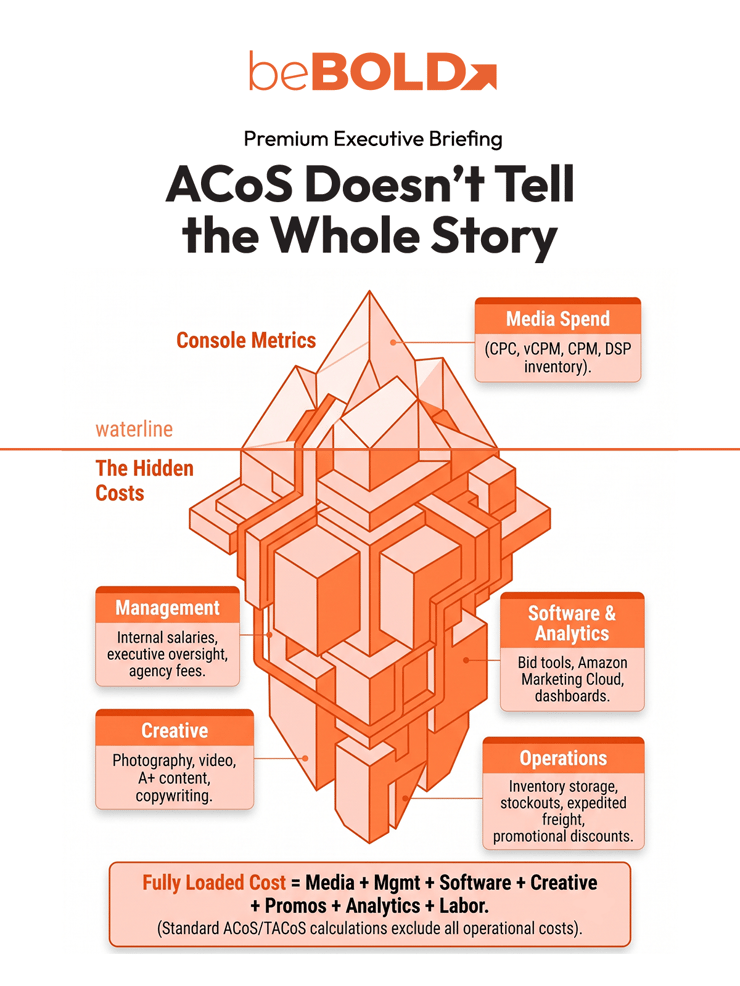
The media charge shown in the Amazon Ads Console is only part of the total Amazon ads cost.
|
Cost |
What it may include |
Why it matters |
|
Media spend |
CPC, vCPM, CPM, reserved placements, and DSP inventory |
The amount paid to Amazon for advertising delivery |
|
Management |
In-house salaries, freelancers, consultants, or agency fees |
Strategy, optimization, reporting, testing, and oversight |
|
Software |
Bid tools, keyword tools, dashboards, attribution, and competitive intelligence |
Helps teams process data and manage campaigns at scale |
|
Creative |
Photography, video, copy, Sponsored Brands assets, and display ads |
Creative quality can influence CTR, engagement, and conversion |
|
Listing optimization |
Images, copy, SEO, A+ Content, variation structure, and testing |
Stronger detail pages improve the value of paid traffic |
|
Promotions |
Coupons, deals, discounts, and reduced margin |
Promotional cost should be included when measuring profit |
|
Analytics |
Dashboards, Amazon Marketing Cloud, data warehousing, and reporting |
More complete measurement may require added resources |
|
Internal labor |
Meetings, approvals, reporting, creative coordination, and inventory planning |
Employee time is a real operating cost |
|
Inventory |
Stockouts, storage, aged inventory, expedited freight, and lost sales |
Advertising cannot produce sustainable growth without available inventory |
The appropriate calculation is:
Fully loaded advertising cost = Media spend + Management + Software + Creative + Promotions + Analytics + Internal labor
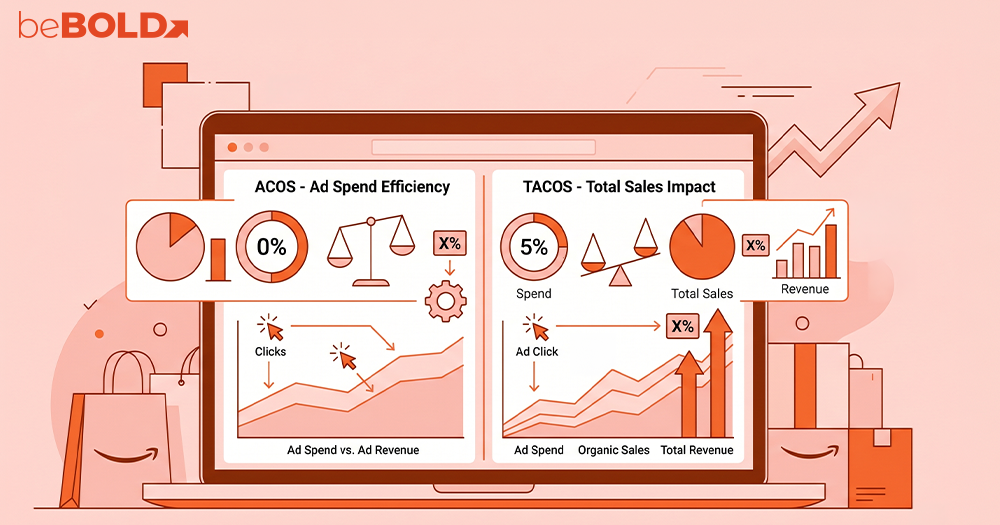
ACoS and TACoS do not include all of these expenses.
-
ACoS = Ad spend ÷ Ad-attributed sales
-
TACoS = Ad spend ÷ Total Amazon sales
To really understand your total profitability, you need a separate analysis that includes all marketing and contribution-profit costs.
DIY vs. Agency Amazon PPC Costs
Handling PPC in-house might look cheaper since there’s no agency invoice, but your brand still pays for things like one or more internal specialists, advertising software, reporting tools, creative resources, copywriting and listing optimization, training and recruitment.
Agency pricing typically ranges from $1,500 to $8,000/month or 10% to 20% of ad spend, depending on scope and complexity. Enterprise programs cost more due to DSP, creative, and multi-marketplace management.
How to Calculate Whether an Agency Pays for Itself

The simplest starting calculation is:
Agency fee as a percentage of media = Monthly agency fee ÷ Monthly ad spend
Example:
-
Monthly agency fee: $3,000
-
Monthly advertising spend: $30,000
-
Management cost relative to media: 10%
The agency should deliver enough value to cover its fee by:
-
Reducing wasted clicks
-
Improving conversion
-
Increasing profitable sales
-
Improving organic visibility
-
Increasing repeat purchase
-
Preventing inventory or pricing mistakes
-
Consolidating software expenses
-
Reducing internal labor
-
Improving reporting and decision speed
Don’t judge the fee only by short-term ACoS. A good agency can also help with TACoS, contribution profit, organic sales, catalog structure, inventory planning, creative results, and brand protection.
When Hiring an Amazon PPC Agency Makes Sense

An experienced agency is more likely to create value when:
-
The brand manages a large catalog
-
Multiple marketplaces or channels are involved
-
Monthly ad spend is large enough that modest efficiency gains matter
-
Campaign decisions affect inventory, pricing, promotions, and content
-
The internal team lacks daily Amazon Ads expertise
-
The brand needs Sponsored Products, Sponsored Brands, display, and DSP coordination
-
PPC produces revenue but not profitable growth
-
Reporting does not connect ACoS, TACoS, margin, and total sales
-
The brand needs faster testing and execution
-
Senior leadership lacks a clear view of where the advertising budget is going
When comparing Amazon PPC management costs, look at the full scope of work, not just the retainer. Also, compare agency pricing based on results, team expertise, reporting, creative skills, software, and strategic support.
See our Amazon PPC consultant questions guide
What Effective Agency Management Can Produce
Hiring an agency should not mean spending more without control. The objective is to make media, content, organic visibility, and marketplace operations work together.
In one beBOLD Digital case study, Henkel Professional Beauty achieved:
-
30% growth in total sales
-
40% growth in organic sales
-
34% reduction in ad spend
-
44% reduction in ACoS
-
49% reduction in TACoS
These results came from restructuring campaigns, better targeting, optimizing listings and content, using analytics, and balancing paid and organic growth. Results will vary, and a case study doesn’t guarantee the same outcome for every brand.
Learn more about our Amazon advertising agency services
How to Reduce Amazon PPC Costs Without Limiting Growth
To lower your Amazon PPC costs, focus on improving efficiency instead of just cutting bids.
-
Improve Conversion Rate: Stronger listings reduce cost per sale by improving conversion.
-
Separate Campaigns: Split branded, category, competitor, and discovery campaigns for better control.
-
Use Search-Term Data: Scale converting terms and exclude irrelevant ones based on sufficient data.
-
Manage Placements: Adjust bids only when placement performance justifies the cost.
-
Protect Inventory: Avoid wasted spend during stockouts or pricing issues.
-
Connect PPC and SEO: Use PPC data to improve organic keyword strategy and listing content.
-
Audit Regularly: An Amazon PPC audit helps identify wasted spend and inefficiencies.
Get Expert Help to Build a Profitable Amazon PPC Strategy
If you’re not sure your Amazon PPC budget is leading to real, lasting growth, beBOLD Digital can help. We work with brands to match ad spend with contribution margin, conversion rates, and long-term profits.
Get in touch with beBOLD Digital to review your Amazon advertising strategy and uncover opportunities to improve efficiency, reduce wasted spend, and scale profitably across PPC, SEO, and marketplace operations.
Frequently Asked Questions
How much should a new seller spend on PPC per day?
Start with expected CPC × required clicks. For example, $1.25 × 20 clicks = $25/day. Adjust based on margin and conversion rate.
What is a reasonable launch budget?
Multiply target sales by planned ACoS. For example, $20,000 × 45% = $9,000 monthly budget.
How much do Amazon PPC agencies charge?
Typically $1,500–$8,000/month or 10%–20% of ad spend, depending on scope and complexity.
Is an Amazon PPC agency worth it?
Yes, if it improves profitability, reduces wasted spend, and strengthens overall Amazon performance beyond ACoS.
Does Amazon exceed daily budgets?
Yes, daily spend can fluctuate up to 25% but averages out over the month.
What costs are not included in ACoS or TACoS?
They exclude management fees, software, creative, inventory, and operational costs.



Comments