


Your Amazon PPC holiday 2026 plan should cover October through December, with budgets adjusted for Black Friday/Cyber Monday and the final Christmas shopping window. Prioritize products with enough stock, strong listings, and margins that can support both discounts and ad costs.
beBOLD Digital's Amazon advertising services help brands align these decisions to turn holiday demand into profitable sales.
Prepare This October: Which ASINs Should Receive Holiday Ad Spend?
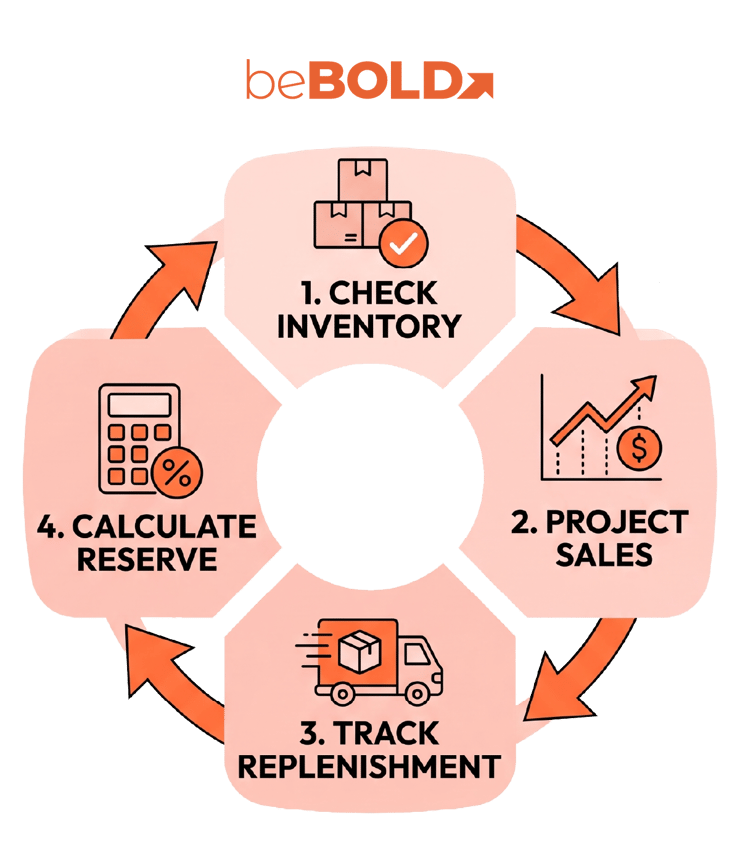
Start with products, identified by their ASINs, that can turn more visits into profitable orders. Even your bestseller needs enough stock and margin for more advertising.
1. Check Inventory and Replenishment Timing
Check each variation separately. You may have plenty of one scent or pack size and very little of another.
For each ASIN, check:
-
Sellable units: How much stock is available now?
-
Expected daily sales: How many units will you sell, including orders from ads?
-
Replenishment timing: When will incoming units actually be ready to buy?
-
December reserve: How much stock should remain after Black Friday and Cyber Monday?
Divide available units by expected daily sales to estimate how long stock will last. Track incoming shipments separately.
You might limit shampoo ads to preserve stock for repeat customers, then give a well-stocked gift set more spend if it converts profitably.
2. Prioritize Products With Proven Conversion
Check how often ad clicks lead to orders. Review listing unit session percentage separately: it compares units sold with listing sessions across traffic sources. Compare similar periods, accounting for price changes and promotions.
For beauty products, check whether shoppers can quickly understand:
-
Who the product is for and what it does.
-
What is included, how much they get, and how to use it.
-
Whether reviews or returns point to concerns you need to address.
Our beauty retail-readiness guide helps you spot problems before buying more traffic. Check stock, listing status, and Featured Offer eligibility—the offer shoppers use to add products to their cart. Amazon requires stock and Featured Offer eligibility for Sponsored Products advertising.
3. Confirm Margin After Holiday Discounts
Calculate contribution: revenue after discounts minus product costs, Amazon fees, fulfillment, promotions, and expected returns. This is what remains before ads. Count each cost once.
At beBOLD Digital, we recommend a simple shortlist:
|
Decision |
When it fits |
|
Scale |
The product is eligible for ads, sells well, and has enough stock and margin for more traffic. |
|
Fix First |
Resolve a specific listing, offer, or campaign problem before increasing spend. |
|
Hold |
Keep spending limited because stock or margins cannot support more orders. |
Record the reason, next step, owner, and review date.
Set Your Amazon PPC Holiday Budget Around Profit and Stock
Set your Amazon PPC budget around what each order leaves after costs. Bigger discounts leave less room to buy traffic.
1. Calculate What Each Order Can Support
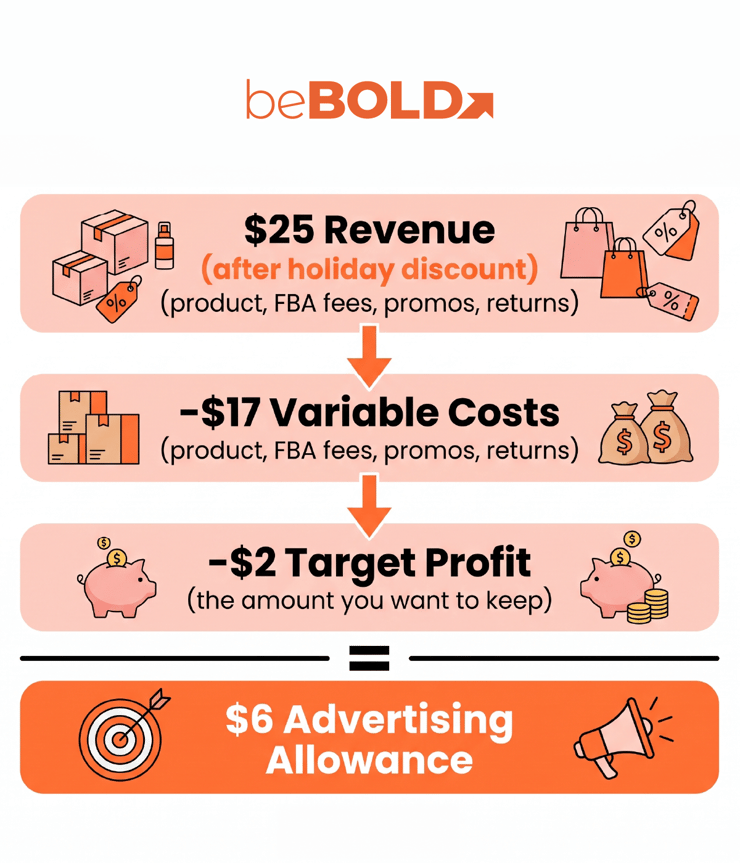
Subtract what you want to keep from the money left before ads. The remainder is your advertising allowance.
Consider this hypothetical one-unit order:
-
Revenue after discount: $25.
-
Variable costs before advertising: $17.
-
Money left before ads: $8.
-
Amount you want to keep after ads: $2.
-
Advertising allowance: $6.
Turn that allowance into two campaign spending limits:
-
Find your target ACoS ceiling: Advertising cost of sales (ACoS) is ad spend as a share of sales credited to ads. Divide $6 by $25: a 24% ceiling.
-
Estimate affordable average CPC: Cost per click (CPC) is what you pay per ad click. If 10% of clicks produce an order, $6 multiplied by 10% gives an affordable average CPC of $0.60.
This assumes one unit per order and no future repeat purchases. Use a consistent sales basis after discounts. The $0.60 is an average click allowance; bidding settings and placement adjustments affect the base bid you can afford.
2. Decide When to Increase Budgets or Bids
Ask what is holding the campaign back:
-
Increase budget when a profitable campaign runs out of money and its products can support more orders.
-
Increase bids when results suggest that paying more for a specific keyword, target, or ad placement can still meet your goals.
In our Henkel Professional Beauty case study, we refined targeting, adjusted bidding, and improved listings. The case study reports 30% revenue growth with 34% lower ad spend from that broader work. For holiday planning, the useful lesson is to check where your money goes before deciding to spend more.
3. Reserve Spending Capacity for December
Give proven campaigns, seasonal tests, and reengagement campaigns separate limits. Reserve funds for December. Check budget rules and settings: Amazon allows spending above the average daily budget on individual days.
How to Run Amazon PPC During Black Friday, Cyber Monday, and December

Prices, stock, and delivery dates change throughout Q4. Amazon's 2026 holiday guidance separates preparation, peak shopping, and December follow-through. We recommend a spending goal and review schedule for each phase.
Black Friday and Cyber Monday: Scale Proven Campaigns
Black Friday falls on November 27, 2026, and Cyber Monday on November 30. Confirm Amazon's wider promotional windows and account-specific deadlines separately.
Before the events: prepare the offer and campaign.
Run an Amazon PPC audit while you have time to act. Find search terms and placements producing worthwhile sales, and campaigns wasting spend. Give tests separate limits to protect proven campaigns' budgets.
A gift set might suit seasonal searches; a shampoo bottle may sell through familiar product terms. Test relevant searches before peak traffic with a limited budget. Our Amazon PPC keyword research guide explains how.
Build a campaign plan that records:
-
Products you will advertise and their spending limits.
-
Offer dates, promotional prices, and pages shoppers will reach.
-
Whether creative is approved and which backup products are ready.
-
Who checks campaigns and approves larger changes.
Use Sponsored Products to advertise individual items. If you are eligible, Sponsored Brands can introduce a gift assortment or bring shoppers to a relevant Brand Store page. Make sure the ad and destination show products that match what the shopper is looking for.
During the events: respond to what is happening.
Keep your campaign checks focused on three decisions:
-
Where should spending go? Check which campaigns run out of budget and which search terms and placements meet your goals. Move available funds toward products that can support more orders.
-
Can the product still support demand? Check that the offer is available, the product remains eligible for ads, delivery dates are suitable, and stock is holding up.
-
Can you afford a higher bid? More traffic alone is not a reason to raise bids. If conversion falls after a price change, check the offer before paying more per click.
Recent ad-driven sales can take time to appear in reports. Address stock and eligibility problems immediately, but let sales reporting catch up before judging efficiency.
After Cyber Monday: Update your December spending plan.
Remove expired offers from your messaging and review any budget or bidding rules set for the event. Recalculate what each order leaves at the current price and check remaining stock. A gift set that looked promising in October may now need less spend, while a product with steady year-round demand has room to grow.

December: Match Advertising to Gifting Demand and Delivery
 Review your products again in December. Some shoppers are buying gifts; others need another bottle of a product they already use. Your Amazon holiday PPC strategy should make room for both. Here’s what you should do:
-
Keep effective year-round campaigns running and test gifting searches where they fit. "Hair-care gift set" may suit a boxed assortment. A specialist treatment may sell better through searches about the hair concern it addresses.
-
Use permitted secondary images, approved ad creative, and Store pages to show the packaging, contents, and who the product suits. Keep the main image within Amazon's image requirements, and only make delivery promises your offer can support.
-
Where available, display ads can help you reach shoppers who viewed your products but did not buy. Give these campaigns their own goal and spending limit, then check whether those shoppers return and purchase.
Key Shopping Windows Left Before the Year Ends
Use these windows to plan changes in targeting and spending. Check actual demand and delivery estimates before adjusting campaigns.
-
December 10–24, 2026: Christmas Rush. Put gifting spend behind ready products with suitable delivery dates. Check the estimate for the actual offer and shipping destination. If arrival moves beyond Christmas, reduce or redirect Christmas-focused ads and update urgency messaging. Customers buying for themselves may still want the product.
-
December 26, 2026–January 5, 2027: Post-Christmas Clearance. Watch for gift-card purchases, self-purchase, and clearance demand. Discount only when moving stock makes sense for your margins. Reduce Christmas targeting as it becomes less relevant, and keep effective campaigns for repeat purchases running.
-
Early January 2027: New Year, New Me Cycle. Test self-care, grooming, or routine-building messages that suit your products. A skincare routine or hair-care regimen may fit, but check conversion before moving a large share of your budget. This overlaps the post-Christmas window, so use one coordinated spending plan.
We recommend making these changes product by product. Two items from the same brand may have different stock levels, gift appeal, and delivery dates.
Measure Holiday PPC Success Beyond Revenue
Sales tell you how much customers bought. To understand what those sales left for your business, review these measures together:
-
Contribution after ads: Money left after the relevant costs of each sale and advertising.
-
ACoS: Ad spend as a share of sales credited to ads.
-
Total advertising cost of sales (TACoS): Ad spend as a share of total sales, including organic sales, for the same products and period.
-
Conversion: How often your paid traffic leads to orders.
-
Stock cover: How long available stock will last at expected demand.
Review brand searches separately from general product searches. Shoppers looking for your brand may be closer to buying; low branded ACoS alone does not establish profitable customer acquisition.
Use those measures to decide what happens next:
-
Profitable campaign runs out of budget: Add funds if the product still has enough stock and margin.
-
Conversion falls: Check the offer and listing before increasing bids.
-
Stock runs low: Reduce spending or move it to another suitable product.
Compare similar periods and revisit recent results once sales reporting has caught up.
Build Your Holiday PPC Plan With beBOLD Digital
Your holiday ads work best when the products behind them are ready. beBOLD Digital brings campaign strategy, listing improvements, inventory planning, and profitability analysis together to help established brands make informed spending decisions.
If you need help choosing products or dividing your budget across the season, explore our Amazon advertising services. We can help turn your product and campaign data into a practical Q4 plan. Schedule a call with us today!
Frequently Asked Questions
Which ASIN should get more holiday spend when my bestseller has limited stock?
Look for another eligible product with enough stock, proven conversion, and margin. Check that it meets the same shopper need before transferring targeting. Preserve bestseller stock for expected organic and repeat orders. If no alternative is ready, consider spending less.
Should I raise bids, daily budgets, or both for Black Friday?
Raise budgets when profitable campaigns run out of money. Raise bids when results support paying more for a target or placement. You may need both; assess them separately and check existing adjustments so the combined increase stays affordable.
Can I start holiday PPC in December if I missed BFCM?
Yes, if products are eligible, stocked, ready to convert, and leave enough margin. Use relevant searches and existing campaign data, or small tests if you lack history. Check delivery dates and shift toward repeat purchases or self-purchase when appropriate.
How can I tell whether holiday ads brought new customers?
Use new-to-brand reporting where your campaign type and goal support it. Amazon looks at the previous 12 months of purchase history to identify customers new to your brand on Amazon. They may already buy from you elsewhere. The metric does not show whether every sale happened because of the ad, and strong branded return on ad spend (ROAS) alone does not prove customer acquisition.




Comments