


For beauty brands on Amazon, hiring an agency is usually the better choice for faster growth, access to specialized expertise, and cost efficiency, especially in early to mid stages, while in-house teams make more sense for brands that need full control and have the budget to support multiple specialists. Because the category is highly competitive and requires strong execution across PPC, SEO, and creative, most brands either start with an agency or adopt a hybrid model as they scale.
According to Statista, Amazon accounted for over 37% of U.S. eCommerce sales in recent years, highlighting how high-stakes the marketplace has become, especially for brands where visibility and conversion are key.
What Is an Amazon Marketing Agency?
An Amazon marketing agency is a specialized partner that helps beauty brands scale faster through platform expertise, advanced tools, account management and proven growth frameworks.
Services typically include (particularly critical for beauty brands):
- Amazon PPC and DSP campaign management
- Listing optimization and Amazon SEO
- A+ Content and creative development
- Account management and compliance
- Data analytics and reporting
In practice, agencies provide immediate access to specialists across PPC, SEO, and creative, combined with advanced tools and cross-account data that most in-house teams cannot replicate. This allows brands to scale campaigns, test faster, and optimize performance more efficiently.
When Should You Hire an Amazon Marketing Agency?
The answer often depends on how quickly you need the results. You should consider hiring an agency if:
- You are launching or scaling on Amazon and need immediate expertise
- Internal expertise is limited across PPC, SEO, or analytics
- PPC performance is inconsistent or inefficient
- You need faster growth without the delay of hiring and training
Marketplace date suggests that early brands benefit the most from Amazon agencies due to their market knowledge.
What Is an In-House Amazon Team?

An in-house Amazon team consists of internal employees responsible for managing your Amazon channel.
Typical roles include:
- Account manager
- PPC specialist
- SEO and listing expert
- Creative designer
- Data analyst
While this structure provides full control, it also introduces complexity, especially for beauty brands that must balance branding, compliance, and performance marketing. Amazon is no longer a single-skill platform. It requires coordinated execution across multiple disciplines.
When Should You Build an In-House Team?
We recommend building an in-house team if:
- Amazon is a primary revenue channel and requires daily oversight
- You have the budget to hire multiple specialists across functions
- Long-term control and internal knowledge retention are priorities
For established brands, in-house teams provide stronger alignment across marketing, operations, and product strategy.
If you're still unsure whether your brand has reached the point where outside expertise makes sense, start by looking at the warning signs. These signs your beauty brand needs Amazon help can help you determine whether your current team or strategy is holding back growth.
What Are the Pros and Cons of Building an In-House Amazon Team?
To evaluate an Amazon agency vs internal team, it helps to compare the benefits and trade-offs side by side.
|
Pros of Building an Amazon Team |
Cons of Building an Amazon Team |
|
Full control over strategy, campaigns, and execution |
High total cost (salaries, benefits, tools can exceed $400K/year) |
|
Deep brand knowledge and customer insights |
Hiring specialized Amazon talent is difficult |
|
Faster internal communication and approvals |
Slower time to market due to hiring and training |
|
Long-term knowledge retention within the company |
Limited expertise breadth across PPC, SEO, creative, and analytics |
From an operational standpoint, in-house teams work best when Amazon is a core revenue channel and there is sufficient budget to support multiple specialists, particularly for beauty brands managing multiple SKUs and variations.
beBOLD Digital Expert Tip:
In-house teams perform best when supported by external specialists for advanced areas like DSP, SEO, or large-scale PPC optimization.
What Are the Pros and Cons of Hiring an Amazon Marketing Agency?
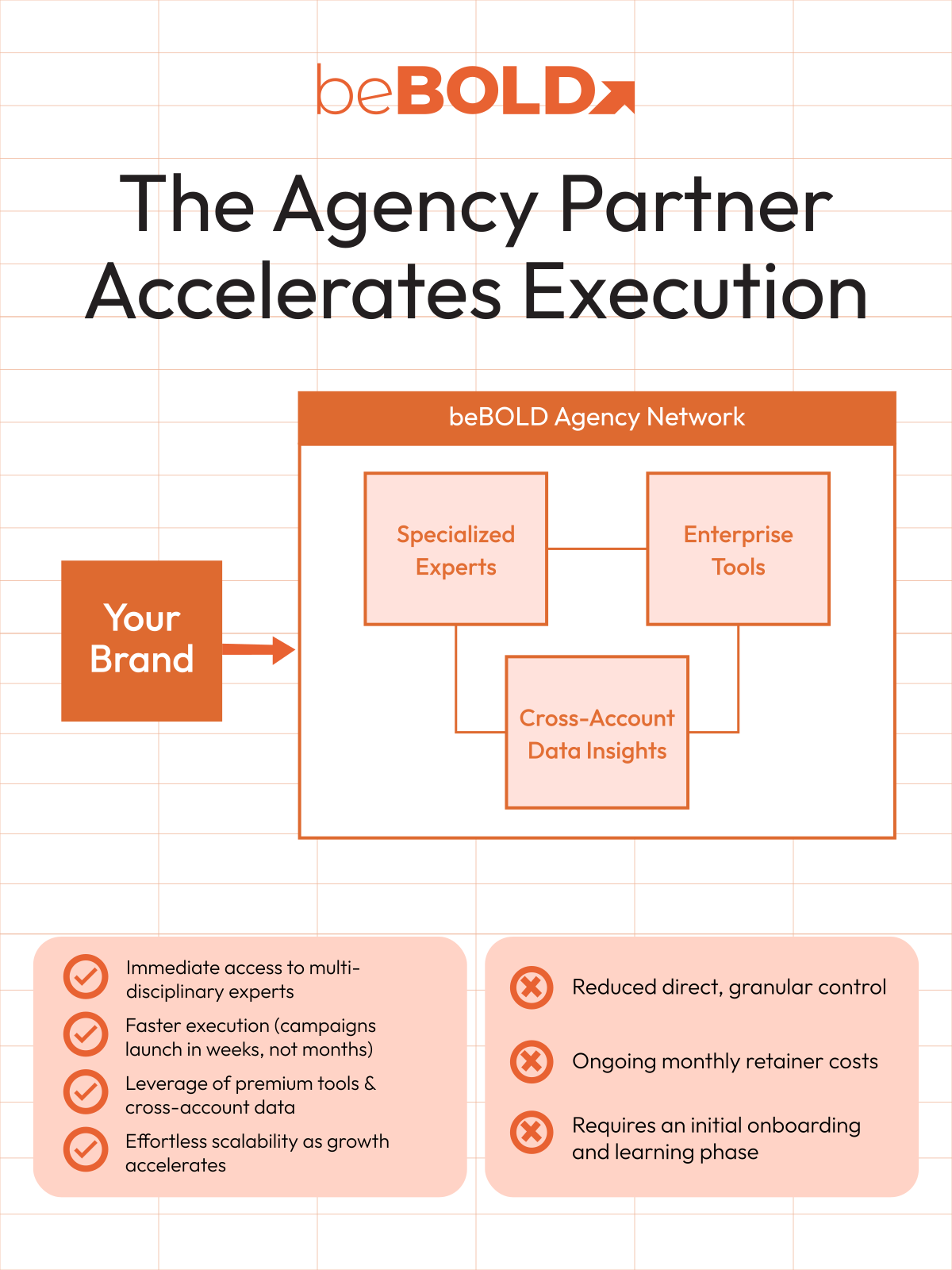
To evaluate an Amazon agency vs in-house team, it helps to compare the advantages and trade-offs side by side.
|
Pros of Hiring an Amazon Agency |
Cons of Hiring an Amazon Agency |
|
Access to specialized experts across PPC, SEO, and creative |
Less direct control over day-to-day execution |
|
Faster execution with campaigns launched in weeks |
Ongoing monthly retainers and % of ad spend |
|
Advanced tools and cross-account data insights for optimization |
Onboarding time to align with brand and products |
|
Scalable support without hiring additional staff |
Agencies manage multiple clients simultaneously |
When vetting partners, brands should prepare key questions to ask an Amazon PPC consultant to ensure alignment and expertise.
Based on industry benchmarks, brands that hire an Amazon marketing agency often see faster improvements in ROAS and organic rankings. If you are evaluating partners, it is important to understand typical pricing structures and deliverables outlined in this guide to Amazon agency costs.
Here’s an Example of How beBOLD Digital Helped a Beauty Brand Through an Agency Layout
In practice, one beauty brand approached beBOLD Digital after struggling with inconsistent PPC performance and declining organic rankings.
After onboarding:
- Campaign structure was rebuilt using data-driven segmentation
- Listings were optimized for high-intent keywords
- A+ Content was redesigned to improve conversion
Within 90 days:
- ROAS improved by over 35%
- Organic rankings increased across core keywords
- Total revenue grew by 28%
This illustrates the benefits of hiring an Amazon agency when internal resources are limited or underperforming.
Cost Comparison: How Much Do Amazon Agencies and In-House Teams Cost in Real Life?
Understanding real-world cost differences is critical for decision-making.
|
Factor |
Agency |
In-House |
|
Monthly Cost |
$2,000–$10,000+ retainer + 5–15% ad spend |
$25,000–$45,000+ (team salaries + tools) |
|
Annual Cost |
$50K–$180K+ |
$300K–$500K+ |
|
PPC Specialist |
Included |
$70K–$120K/year |
|
SEO / Listing Expert |
Included |
$60K–$100K/year |
|
Account Manager |
Included |
$80K–$130K/year |
|
Creative / Design |
Included |
$60K–$90K/year |
|
Tools & Software |
Included |
$2K–$5K/month |
|
Scalability |
High |
Requires hiring |
In simpler terms, agencies bundle multiple specialists into a single cost, while in-house teams require hiring each role individually.
For a mid-sized brand spending $50K/month on ads:
- Agency: ~$5K–$8K/month + % of ad spend = ~$90K/year total
- In-house: 3–5 hires + tools = ~$350K–$450K/year
This is why many brands exploring the cost of Amazon marketing agency vs in-house find agencies more cost-efficient, especially in early growth stages.

The Hybrid Model: Best of Both Worlds

Many successful brands now combine both approaches because Amazon has become too complex for a single model to handle efficiently.
The hybrid model allows brands to keep strategic control internally while leveraging agency expertise for execution and optimization.
Agency Handles:
- PPC and DSP strategy, including campaign structure, bidding, and scaling
- SEO and listing optimization based on keyword and conversion data
- Data analysis, reporting, and performance insights across accounts
In-House Handles:
- Brand messaging and positioning to ensure consistency across channels
- Product launches, including coordination with inventory and promotions
- Inventory planning and supply chain alignment with demand signals
In practice, this division of responsibilities reduces internal workload while maintaining control over brand direction. It also ensures that highly technical areas like PPC and SEO are managed by specialists.
For established brands, this hybrid model provides both control and expertise while minimizing the risk of performance gaps.
How to Decide: Amazon Agency vs Internal Team

Choosing between an Amazon agency vs internal team comes down to three core factors, but each one has real operational implications that impact performance and scalability.
- Budget - Can you afford to build and maintain a full team? In practice, this goes beyond salaries. You also need to account for tools, training, management overhead, and turnover risk. If your budget is limited or you want predictable costs, an agency often provides better value
- Expertise - Do you have access to experienced Amazon specialists? Amazon requires expertise across PPC, SEO, creative, and analytics. From an execution standpoint, most internal teams lack depth in at least one of these areas
- Growth Goals - If your focus is long-term brand control and internal ownership, building a team makes more sense. For established brands, this often leads to a hybrid approach.
Final Thoughts: Which Is Right for Your Brand?
The choice between an Amazon marketing agency vs in-house team is not one-size-fits-all.
Agencies provide speed, expertise, and scalability. In-house teams offer control and brand alignment. The most effective strategy often combines both. For brands looking to scale efficiently, partnering with an experienced agency like beBOLD Digital can unlock faster growth, stronger performance, and long-term success on Amazon.
Need help deciding between an agency or in-house approach? Contact beBOLD Digital today to build a strategy tailored to your brand’s growth stage and goals.
Frequently Asked Questions
Is it cheaper to hire an Amazon agency or build an in-house team?
Hiring an Amazon agency is usually cheaper for small to mid-sized brands because you get a full team for one monthly cost. In-house teams become more cost-efficient only at larger scale.
How much does an Amazon agency cost?
Most Amazon agencies charge $2,000 to $10,000+ per month, plus 5% to 15% of ad spend. Costs vary based on catalog size and service scope.
Can you combine an agency with an internal team?
Yes. Many brands use a hybrid model where the agency handles execution and optimization, while the internal team focuses on brand strategy and operations.
Can we start with an agency and build in-house later?
Yes. Many brands start with an agency to scale quickly, then build an in-house team as Amazon becomes a larger revenue channel.
What’s the right time to transition from agency to in-house?
Transition when Amazon becomes a core revenue driver and you can support a full team. Many brands still keep agencies for specialized support even after transitioning.








Comments