

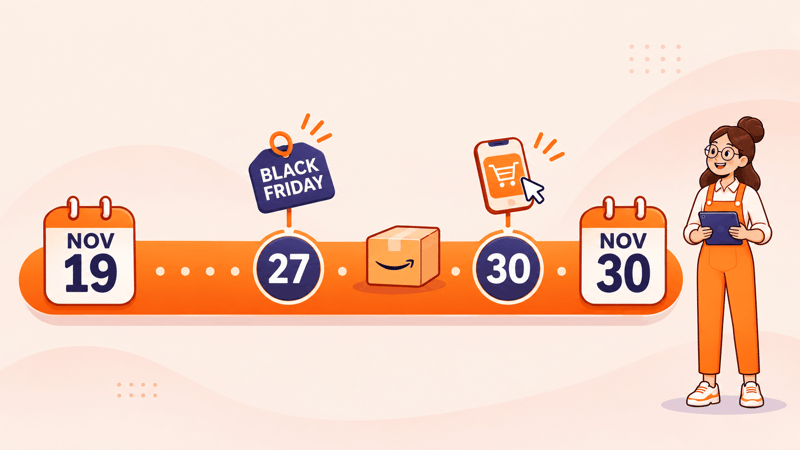
Amazon’s U.S. Black Friday Week and Cyber Monday events are underway, giving brands a 12-day selling window that runs through Monday, November 30. The calendar extends beyond the traditional Black Friday weekend, making daily execution as important as the dates themselves.
For established brands, the immediate question is how to manage the remaining event days across the account. Inventory, offers, listings, and advertising all need attention together, which is where coordinated Amazon account management can support a more consistent approach.
The 2026 Amazon Event Calendar
Amazon says its Black Friday Week and Cyber Monday deal events began at 12:01 a.m. PST on Thursday, November 19, and continue through Monday, November 30. Black Friday itself is Friday, November 27.
Across the event, Amazon is featuring daily themed drops through Today’s Big Deals. The themes span categories including toys, tech, fashion, beauty, premium gifts, and stocking stuffers. Amazon says deals and availability are subject to change.
For the first time, Amazon says Today’s Big Deals will drop twice on both Black Friday and Cyber Monday: at midnight and 8 a.m. PST. These are Amazon’s announced shopping moments, not a guarantee that any particular seller’s offer will be featured or run for the full event.
The shopping window is separate from the earlier promotion request period. For background on that change, see beBOLD Digital’s coverage of the 2026 Black Friday and Cyber Monday deal-submission deadline.
Manage Inventory Across the Full Window
With the event already live, sellers should review available inventory against current sales pace and the days remaining through November 30. A product that performs well early in the event may need a different advertising or merchandising approach if stock becomes constrained.
Check the availability and delivery promises shown on priority listings, alongside any account or catalog issues that could interrupt an offer. For seller-fulfilled products, confirm the team can support the order volume and delivery commitments it displays.
The goal is not simply to drive more traffic. It is to direct demand toward products that can remain available and deliver a reasonable return after discounts, advertising, and fulfillment costs. For a closer look at connecting stock coverage with campaign decisions, read beBOLD Digital’s guide to Amazon inventory management.
Review Spend and Offers Before Peak Days
The November 27 and November 30 deal drops give teams defined moments to monitor, but they do not mean every campaign needs the same budget increase. Review performance by product and campaign, and decide where remaining spend is justified by conversion, available inventory, and margin.
Check that live offer prices and promotional details match the account’s approved plans. Keep an eye on product-page content and availability as conditions change, and compare performance throughout the event rather than waiting until Cyber Monday ends.
For a framework to allocate and rebalance spend as product conditions change, see beBOLD Digital’s guide to building an Amazon Ads budget portfolio.
Keep Inventory and Advertising Aligned Through Cyber Monday
A 12-day event rewards disciplined execution, not just a strong opening day. Brands should protect their ability to sell through Cyber Monday by connecting inventory decisions to advertising and checking the economics of each priority product.
For support coordinating listings, advertising, and account operations during major selling periods, contact our team today!
Sources



Comments