

Key Summary
-
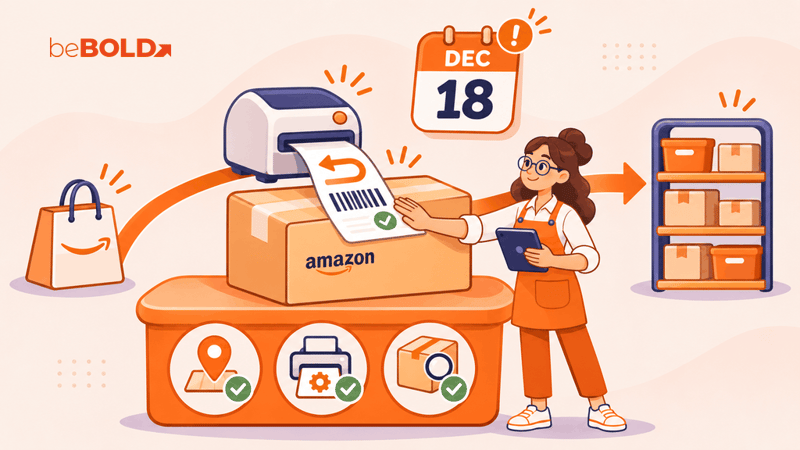
Starting December 18, 2026, most US seller-fulfilled returns require a prepaid return label; heavy and bulky items have a temporary exception.
-
When Amazon does not provide a label, sellers generally must upload one through Manage seller-fulfilled returns or issue a full returnless refund within seven calendar days.
-
Amazon may issue a returnless refund and charge the seller’s account if neither action is taken.
-
Prepaid does not always mean seller-paid: Amazon says sellers may deduct return shipping costs for buyer-fault returns through the refund workflow.
Amazon’s upcoming return-label change gives brands that fulfill their own US orders a deadline to reassess how exceptions are handled. For hybrid FBA and FBM brands, the operational impact depends on which products are seller-fulfilled and which returns already receive an Amazon-generated label.
The change is also a reason to connect returns with broader Amazon account management: a missed request can affect both cash and recoverable inventory, even when advertising and sales metrics look unchanged.
The Seven-Day Clock Changes Exception Handling
Amazon already supplies Amazon Prepaid Return Labels, or APRL, for eligible returns. Starting December 18, 2026, its guidance says US seller-fulfilled returns must have prepaid labels, excluding heavy and bulky items.
Where an Amazon label is unavailable, the seller can purchase and upload a Merchant Prepaid Return Label through the Manage seller-fulfilled returns workflow. For a domestic return request, Amazon says the seller must upload a prepaid label or issue a full refund without requiring the item back within seven calendar days.
Address-only labels will no longer satisfy the requirement for covered returns. A label sent through Buyer-Seller Messaging or another outside channel does not meet the stated requirement. If neither a qualifying label nor a returnless refund is provided in time, Amazon may issue a returnless refund on the seller’s behalf and charge the selling account. Amazon Seller Central
That seven-day label deadline is separate from Amazon’s requirement to respond within 24 hours to return requests requiring manual authorization. Sellers should build coverage for both, including weekends and staff absences.
Exempt From APRL Does Not Mean Exempt From a Prepaid Label
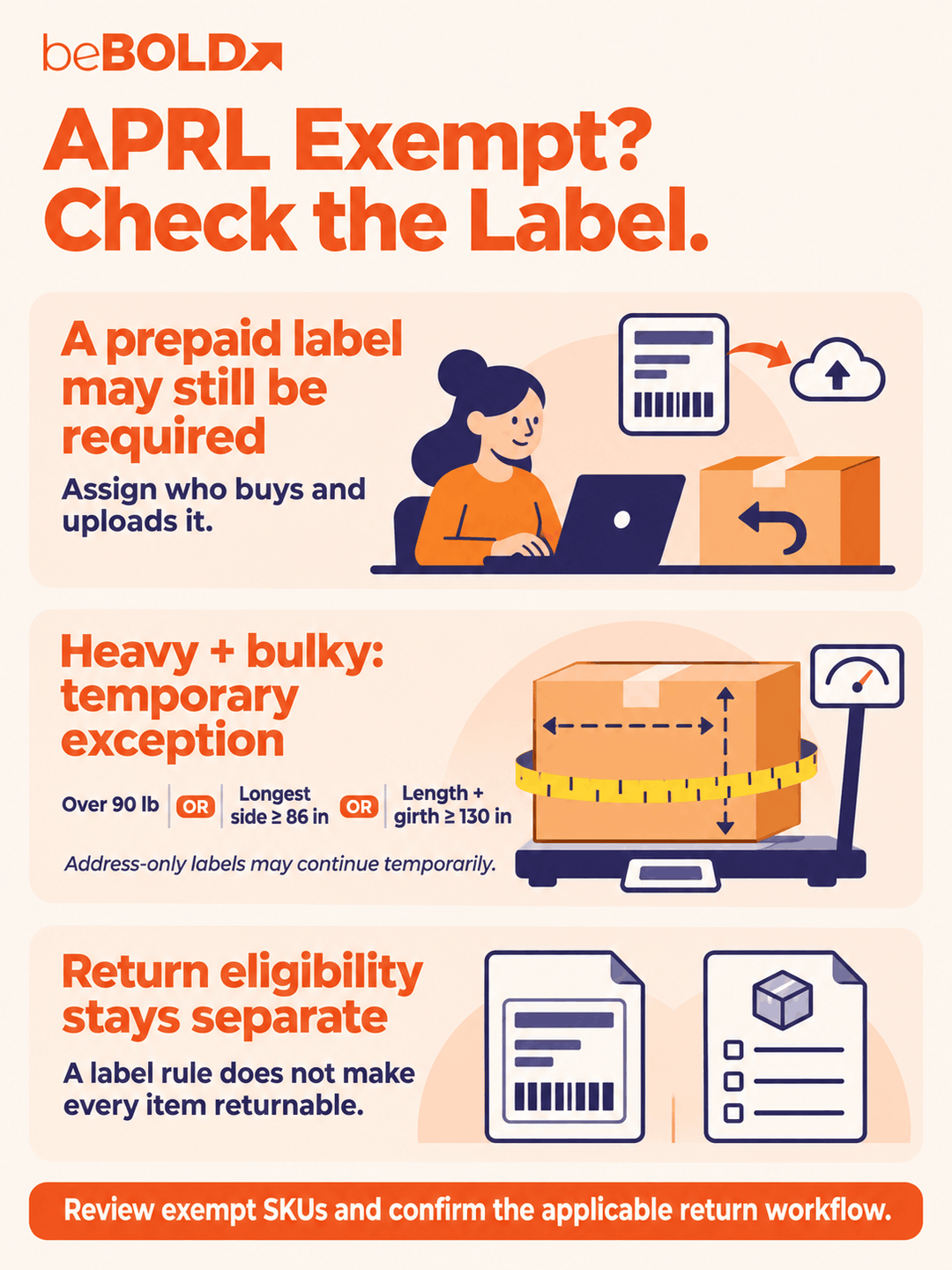
Amazon permits sellers to request APRL exemptions for certain SKUs. Its current guidance says that where APRL is unavailable, sellers may need to provide their own prepaid label. Teams should therefore review exempt SKUs and determine who will purchase and upload labels before the deadline.
Heavy and bulky items may temporarily continue using address-only labels. Amazon defines a qualifying package as over 90 pounds, or with a longest side of at least 86 inches, or with length plus girth of at least 130 inches. Amazon has not specified an end date for that temporary exception.
The change does not alter existing return-eligibility policies for certain product types, such as Handmade or Custom products. It changes the label requirement for covered returns, not whether every product is eligible to be returned.
Model the Return Decision at SKU Level
A prepaid label is not automatically a final postage cost for the seller. Amazon says sellers have the option to deduct return shipping costs in the refund workflow for buyer-fault returns. Teams should check the applicable return reason and Amazon guidance before making a deduction.
For each affected SKU, compare expected label and handling costs with the value likely to be recovered from a returned unit. A deliberate returnless refund may make commercial sense when recovery costs exceed that value. For higher-value inventory, a missed deadline can be more consequential because the seller may lose both the refunded sale and the opportunity to recover the item.
Amazon’s guidance describes reimbursement routes for some seller-fulfilled refunds, but the supplied sources do not establish whether a refund triggered specifically by a missed label deadline qualifies for a SAFE-T claim. Sellers should not assume reimbursement is available.
Prepare Your FBM Returns Workflow Before December 18
Treat December 18 as an operating-model deadline, not just a label update. Assign ownership of the return queue, arrange backup coverage, and review the products most exposed to manual label creation. Then use return costs and recovery rates to inform SKU-level margin decisions.
For support connecting marketplace operations, inventory coordination, and performance reporting, contact our team today.
Sources



Comments