

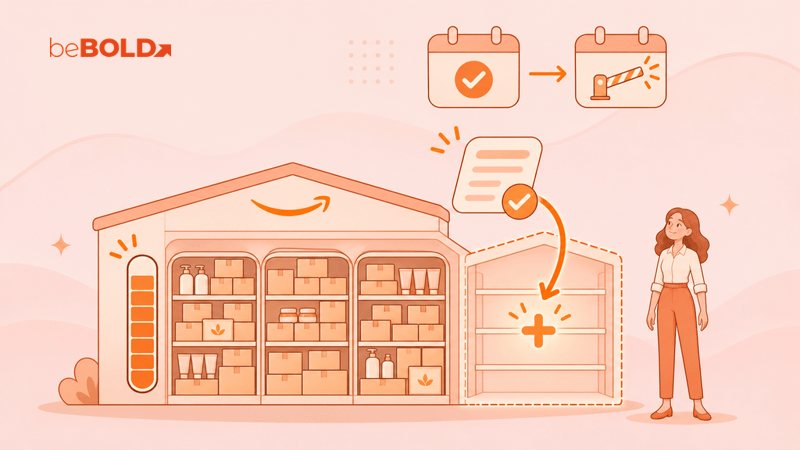
Amazon is changing how US sellers manage space in Amazon Warehousing and Distribution (AWD), making capacity planning a priority for brands reviewing their Amazon account management. Since November 9, 2026, base capacity has been allocated across two categories: AWD palletizable facilities and AWD standard facilities.
Two AWD Capacity Pools Will Govern New Shipments
Amazon is changing how US sellers manage space in Amazon Warehousing and Distribution (AWD). Since November 9, 2026, base capacity has been allocated across two categories: AWD palletizable facilities and AWD standard facilities.
According to Amazon’s capacity-management documentation, enforcement begins January 7, 2027. When sellers create an AWD shipment, Amazon will compare inventory and open shipments against the relevant pool’s total capacity: its base allocation plus active storage reservations.
If the shipment exceeds that capacity, sellers cannot create it. Spare capacity in one pool does not offset a shortfall in the other.
Amazon reviews base allocations quarterly and displays them six weeks in advance. Allocations reflect historical AWD inventory and open shipments, while new or recently inactive sellers receive an initial allocation that is refreshed after 13 weeks of AWD history.
The immediate task is to open both AWD tabs in Capacity Manager and compare available space with planned inbound volume.
December 4 Is the Deadline for Base Allocation Requests
Sellers seeking a larger base allocation must email awd-capacity-management@amazon.com during the November 9–December 4, 2026, adjustment window.
Use the subject line “AWD base capacity allocation increase request” and include:
-
Merchant token ID (MCID).
-
Existing base capacity for each facility type, in cubic feet per month, as displayed in Capacity Manager.
-
Additional capacity requested for each facility type, in cubic feet per month.
-
The reason for the increase, such as sales growth, a product launch, or seasonal demand.
-
A six-month shipment forecast, including SKU or ASIN details and average monthly units for each facility type.
Amazon says requests missing required information will not be considered. Reviews are case by case. Approved adjustments will appear in Capacity Manager by January 7, 2027; denial notifications will arrive by that date.
For sellers, the planning issue is timing: an answer may arrive on the day enforcement starts. Before submitting, reconcile on-hand stock, open shipments, expected arrivals, and planned outbound replenishment. Cancel shipments you no longer intend to send so they do not continue consuming capacity.
Storage Reservations Require a Separate Decision
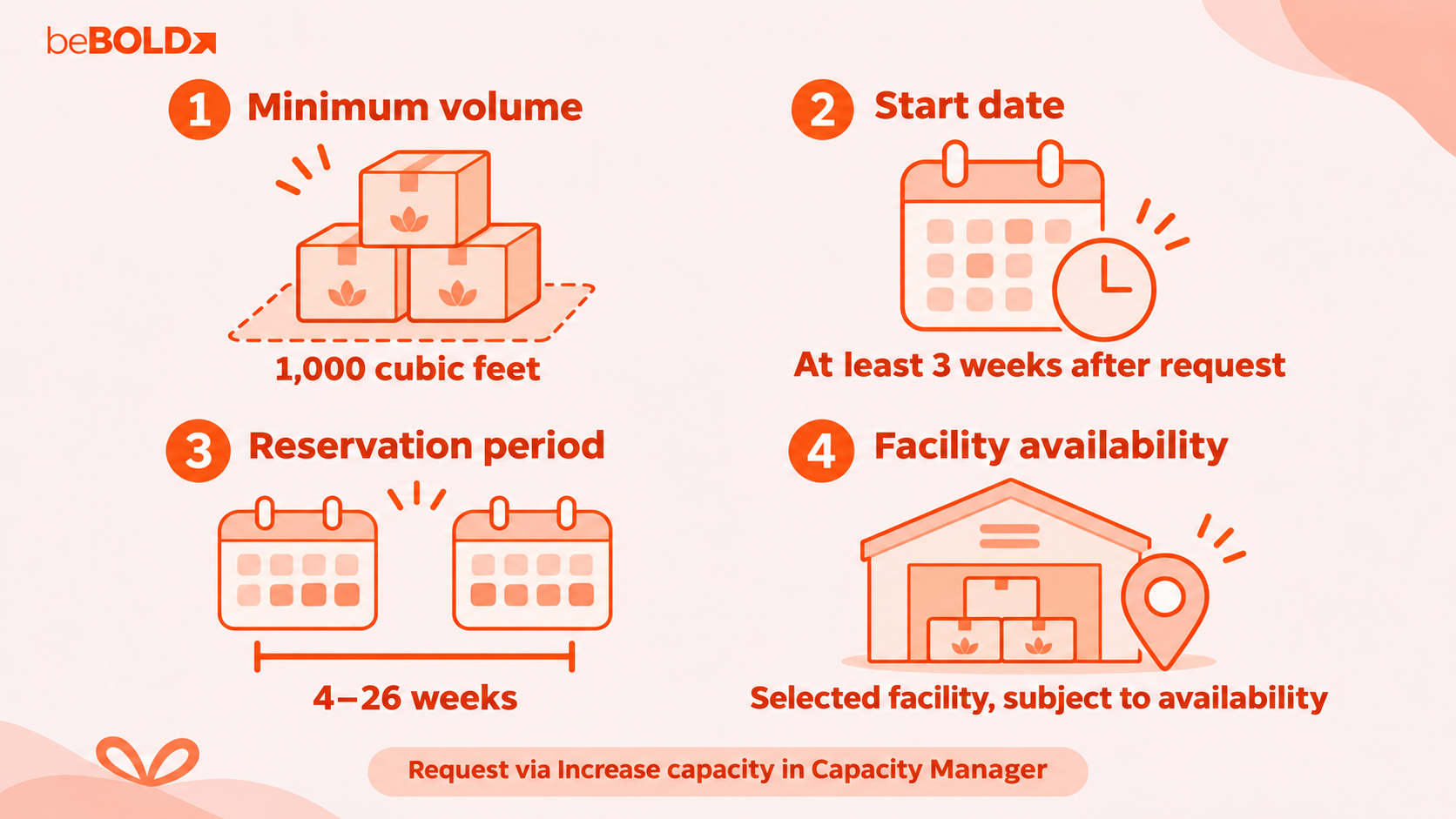
Storage reservations are requested through Increase capacity in the relevant Capacity Manager tab. Amazon’s documentation specifies:
-
A minimum reservation of 1,000 cubic feet.
-
A start date at least three weeks after the request.
-
A reservation period of 4–26 weeks.
-
Capacity secured at a selected facility, subject to availability.
Amazon’s publicly indexed guidance also confirms the three-week notice requirement and reservation duration.
Through January 2027, sellers pay only for reserved space they use. Starting February 1, 2027, billing applies to the committed reservation volume, including unused space. This also affects reservations created in 2026 that extend into that billing period.
That makes forecast accuracy commercially important. A reservation can support a temporary capacity gap, but sellers should assess its volume, duration, and cancellation terms before committing.
Match Storage to the Sales Plan
Treat December 4 as an inventory-planning deadline. Identify which products need additional space, check whether existing stock is moving fast enough, and align January advertising and promotions with replenishment capacity.
A larger allocation is useful when it supports a credible sales plan. Requesting space without reviewing slow-moving inventory can leave the underlying problem unresolved.
Need help coordinating inventory priorities with marketplace growth? Contact beBOLD Digital today to align account operations, advertising, and sales planning.
Sources







Comments