


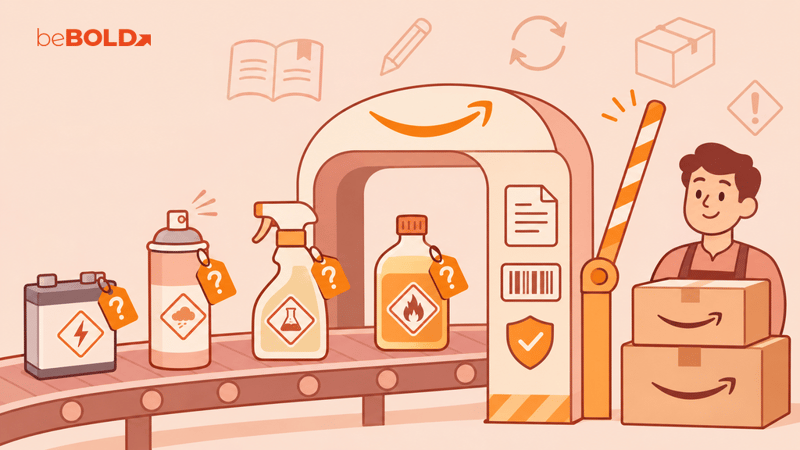
Four Product Groups Face Additional Listing Questions
Amazon has introduced additional dangerous goods compliance questions for selected listings, adding a technical information requirement to the listing creation and editing process.
The announcement identifies four affected product groups:
|
Product group |
Information covered |
|
Refrigerators, air conditioners, freezers, and similar products |
Refrigerant gas properties |
|
Shock absorbers and suspension lift supports |
Shock-absorbing mechanism |
|
Markers and writing instruments |
Ink properties |
|
Pool and spa water treatment products |
Chemical composition and packaging |
Amazon says the information will help identify dangerous goods, support more shipping methods, and reduce unnecessary disposal costs and fees. These are the stated objectives, rather than guaranteed outcomes for individual ASINs.
Prepare Product Facts Before Your Next Catalog Update
For established brands, the practical issue is coordination. A team preparing seasonal copy or product images may need information held by a manufacturer or product development team before it can complete the update.
Amazon’s broader FBA documentation explains why accurate answers matter. Missing required dangerous goods information can prevent listing creation or conversion to FBA. Incomplete, inaccurate, or conflicting information may also result in products being blocked from FBA sales. Amazon may request a safety data sheet (SDS) or an exemption sheet after listing creation.
Those are existing documentation requirements; the October announcement does not establish a new blanket penalty or automatic hazardous classification for every affected product.
beBOLD Digital recommends a focused preparation process:
-
Identify affected ASINs and planned edits. Review your catalog against the four named product groups and flag upcoming changes.
-
Collect product-specific evidence. Obtain manufacturer specifications and, where applicable, SDS and packaging information. Avoid assuming similar-looking products have identical properties.
-
Assign a technical reviewer. Have someone familiar with the product verify the answers before the catalog team submits them.
-
Record the submission and check the result. Keep the supporting documents together and review listing status and any new requests after updating.
If an Amazon listing audit identifies content improvements, include documentation readiness in the implementation plan. This gives the team a clearer path from identifying a problem to publishing the correction.
For brands outside the four named groups, the announcement does not establish a category-wide expansion. Apply its scope carefully while continuing to meet any dangerous goods requirements already relevant to your products.
beBOLD Digital’s Take: Make Documentation Part of Listing Readiness
A catalog update depends on more than finished copy. Our recommendation is to put product documentation, technical review, and submission ownership into the same workflow as content approval.
That preparation can reduce avoidable back-and-forth when commercially important updates are ready to publish. For help coordinating catalog priorities and marketplace operations, explore beBOLD Digital’s Amazon account management services.
Sources
- Amazon Seller Forums, New compliance questions for dangerous goods listings apply October 26
- Amazon Seller Central, Dangerous goods (hazmat) required information and documentation
- Amazon SEO Ranking, Amazon Adds Dangerous Goods Questions to Listing Edits on October 26
- Mr. Jeff, Amazon Dangerous Goods Changes 2026: Seller Guide








Comments