


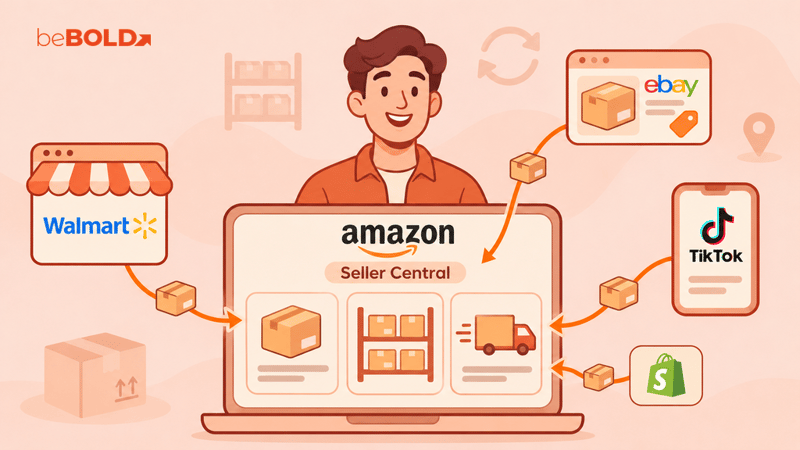
Seller Central Expands Beyond Amazon Orders
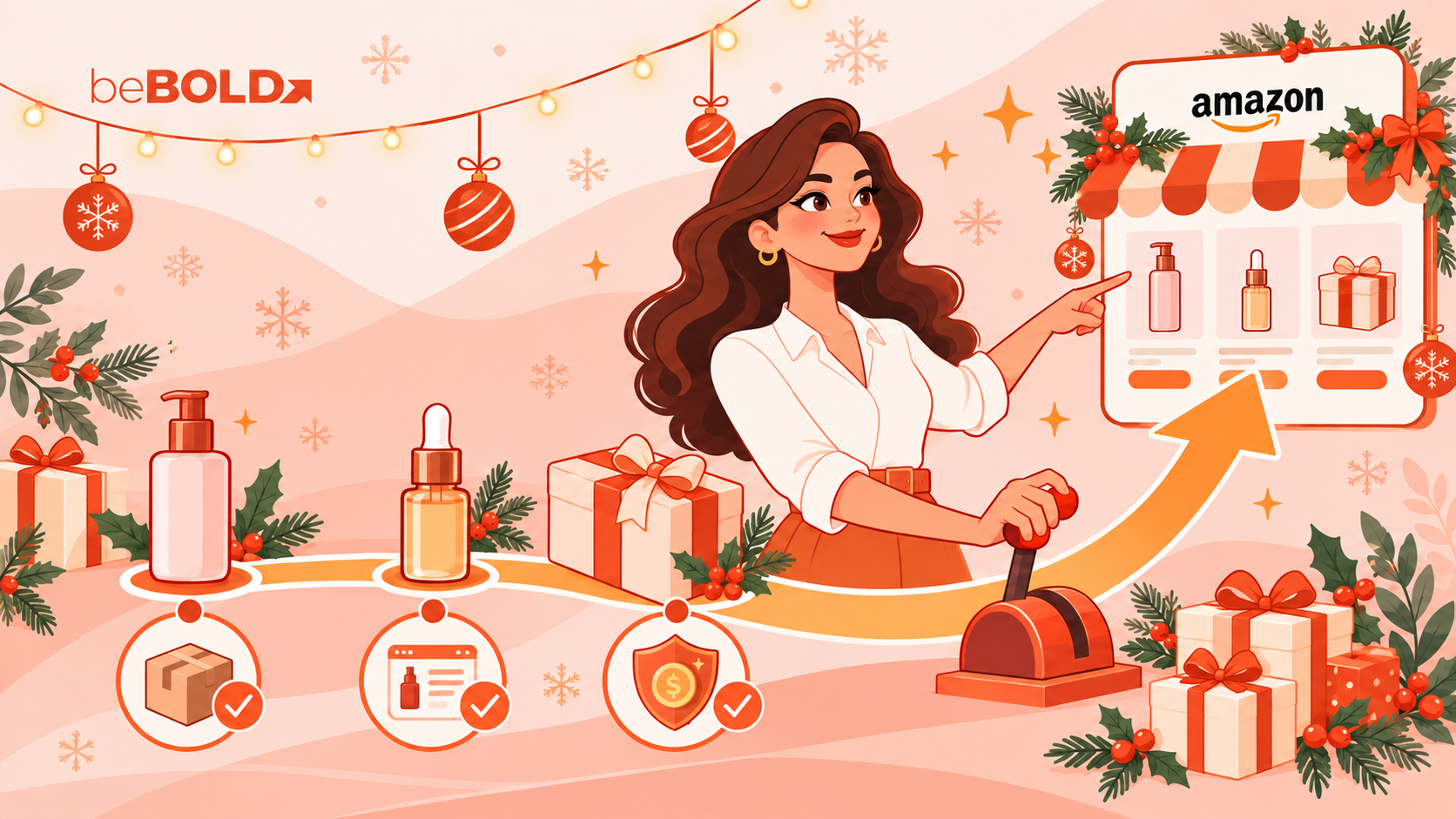
Amazon is turning Seller Central into a workspace for managing sales beyond its own marketplace. Announced September 24, 2026, the multichannel selling tools initially support connecting external accounts, importing and linking listings, viewing sales and orders, and initiating fulfillment across channels. Access remains gradual for sellers in Amazon’s US store.
The initiative also appeared in Amazon’s Accelerate 2026 announcements, where the company positioned multichannel management alongside its broader push to reduce sellers’ operational workload through AI and connected tools.
Amazon’s subsequent Seller Forums announcement highlights three areas:
-
Listing management: Update product descriptions through Manage Products, with formatting adapted to each connected channel.
-
Order management: View orders together and, in Amazon’s Shopify example, send tracking updates back automatically after creating an Amazon fulfillment shipment.
-
Profitability reporting: Bring product earnings, advertising spend, traffic, and sales into a consolidated view.
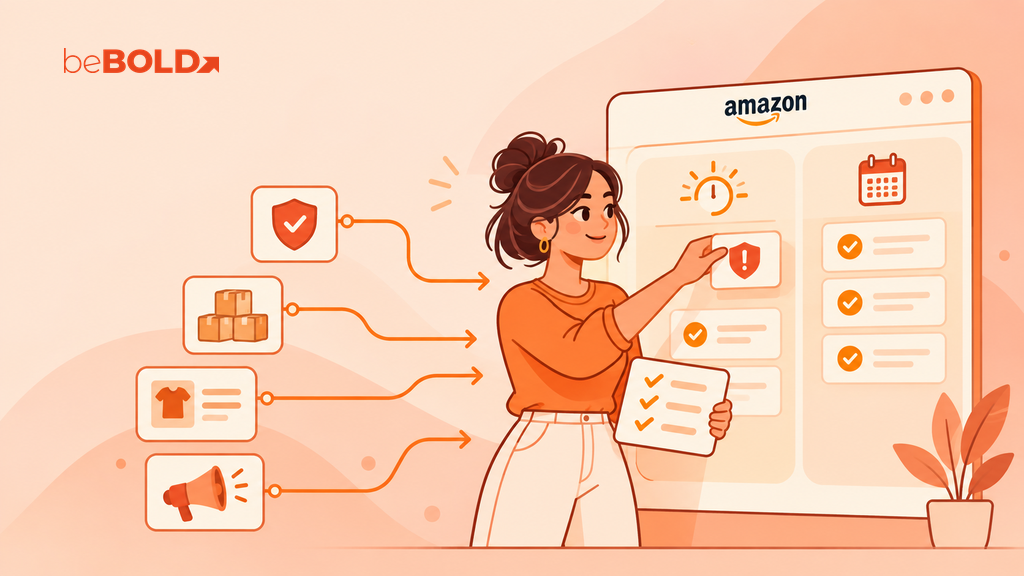
There is an availability distinction worth checking. Amazon’s original announcement describes some listing and profitability functions as forthcoming, while the forum update presents them more directly as features. Neither establishes that every US account has every capability. Sellers can check access through Settings → Multichannel Settings.
A Shared Dashboard Still Needs Channel-Specific Controls
For established brands, the practical opportunity is less repetitive work: fewer dashboards to check, fewer manual content updates, and potentially less time assembling reports.
However, consolidating operations should follow a controlled test.
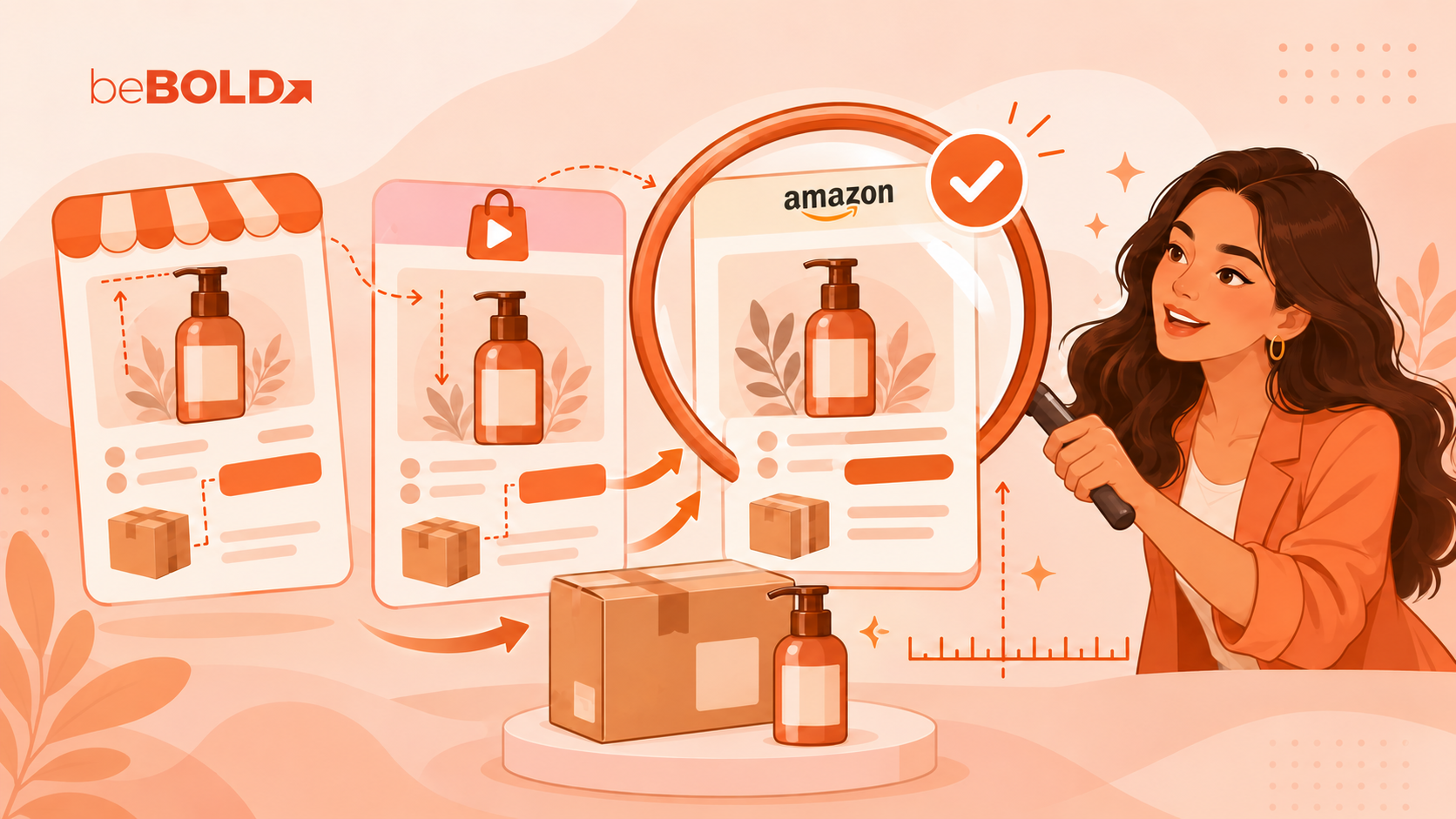
Start with product mapping. A skincare brand may sell a single bottle on Amazon, a bundle on Shopify, and a different pack configuration on Walmart. Confirm that linked listings represent the correct products and quantities before expanding the connection. An Amazon listing audit can help establish an accurate starting point for the Amazon catalog.
Check fulfillment economics separately. Amazon Multichannel Fulfillment serves off-Amazon orders and can draw from the same inventory used for FBA. It remains a paid fulfillment service, and Amazon advises sellers to check each destination channel’s third-party logistics requirements. Free access to the selling tools does not mean free shipping or storage. A shared inventory pool also makes Amazon inventory management an important part of planning demand across channels.
Validate reporting before moving budgets. A consolidated profitability view could help teams compare channels, but brands should first reconcile sample results against their existing reports. Check how product costs, returns, fulfillment charges, and advertising attribution affect the comparison. Apply the same discipline when analyzing Amazon PPC data: evaluate advertising results in the context of business performance.
Review content and data permissions. Formatting a description for another marketplace does not establish that its claims meet that marketplace’s requirements. Beauty and wellness brands should retain approval checks for product benefits and claims. Amazon says sellers choose which channels and data to connect and can disconnect at any time.
beBOLD Digital’s Take: Prove the Workflow Before Expanding It
We see this as an opportunity to simplify marketplace operations, particularly for brands already juggling several sales channels. The strongest starting point is one channel and a manageable product group.
Confirm listing accuracy, order handling, tracking updates, and reporting consistency before broadening adoption. Measure time saved alongside fulfillment costs and operational errors.
For support aligning your Amazon catalog, inventory, and daily workflows with broader channel growth, explore beBOLD Digital’s Amazon account management services or contact us today!

- Amazon Seller Forums: Manage sales across Amazon, eBay, Shopify, TikTok, and Walmart from Seller Central
- About Amazon: Seller Central multichannel selling tools
- Amazon Selling Partners: At Accelerate 2026, Amazon shares new AI tools
- PPC Land: Amazon puts eBay, Shopify, TikTok and Walmart orders inside Seller Central
- Amazon Supply Chain Services: Multichannel Fulfillment FAQs





Comments