


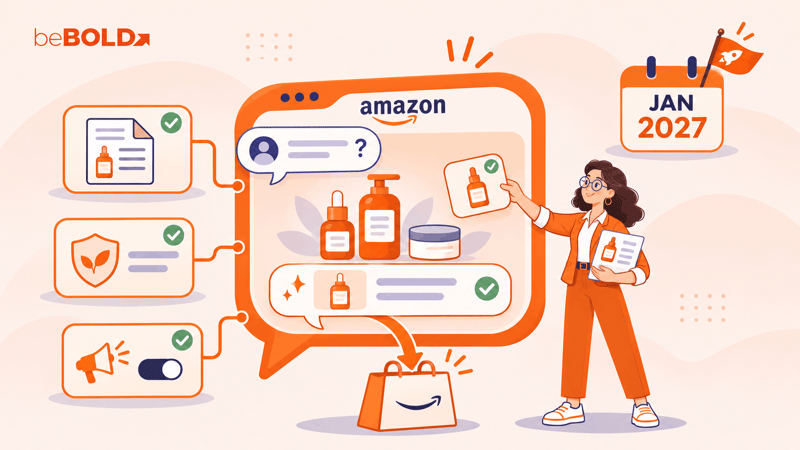
A beauty shopper may know the result they want without knowing which product to buy. Choosing between cleansers or building a skincare routine often requires more explanation than an ad headline can provide.
Branded Conversations will let eligible Sponsored Brands ads open a brand-informed conversation inside Alexa for Shopping. For beauty advertisers, preparation means connecting campaign decisions with accurate product education. Our Amazon advertising services bring those priorities together.
Before the January launch, brands should decide which collections are ready to participate, which information needs approval, and who will monitor the experience.
What Amazon Announced
Branded Conversations is an evolution of Sponsored Brands prompts within Alexa for Shopping. When a shopper taps a prompt on a Sponsored Brands collections ad, they enter a conversation that can draw on the brand’s catalog and brand-provided information, including product guidance and usage tips.
Amazon says brands can use a campaign brief to explain differentiators, connect products to customer needs, introduce a launch, or suggest routines. The conversation is marked as Sponsored, and shoppers can continue asking questions. For a broader look at the assistant itself, see our guide to Alexa for Shopping and Amazon product discovery.
According to Amazon’s launch announcement, the feature is scheduled to become available in January 2027 to U.S. advertisers selling on Amazon who use Sponsored Brands, excluding authors. It will begin with eligible collections campaigns, with additional formats planned.
Amazon says eligible campaigns will use their existing targeting and budgets without additional campaign setup. Advertisers will be charged on a cost-per-click basis for conversation starter prompts, while follow-up turns will be free. Amazon also describes controls to pause individual prompts, provide campaign inputs, and opt out at the campaign or account level.
Those details reflect Amazon’s announcement as of November 2026. Brands should confirm eligibility, controls, and reporting in their own accounts when the feature launches.
Why Beauty Brands Should Pay Attention
Beauty purchases often involve questions that a single product image or headline cannot fully answer. A shopper comparing two cleansers may care about skin type, texture, fragrance, or where each product fits in a routine.
Branded Conversations is designed to help shoppers explore those distinctions through a sponsored conversation. In its announcement, Amazon uses a skincare example in which a brand provides guidance on cleansers for different needs and complementary products for a routine.
The strategic implication is clear: a brand’s preparation should extend beyond a list of benefits. It should explain meaningful differences between products and help shoppers understand when each option may be appropriate.
That does not mean brands should treat conversational advertising as a substitute for sound product information or expect it to solve every conversion problem. The quality of the offer, inventory, pricing, claims, and campaign execution will still matter.
How to Prepare for Branded Conversations
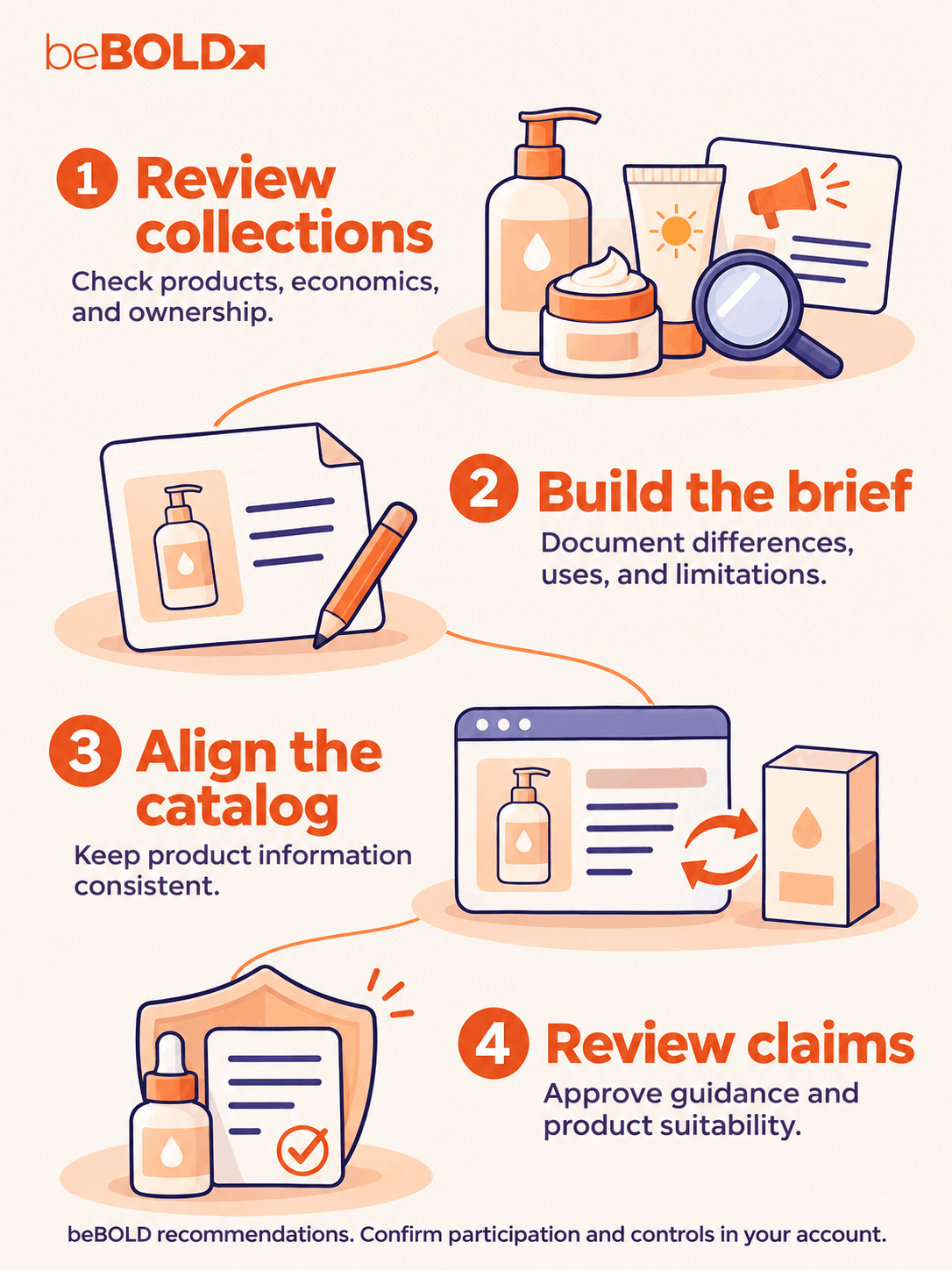
1. Review Your Sponsored Brands Collections
Identify the collections campaigns that may be eligible for automatic enrollment. Review their products, targeting, budget, and current performance, then assign an owner to confirm participation and monitor results.
Each collection should have a clear purpose. A cleanser, moisturizer, and sunscreen might support an approved daily routine. A collection of moisturizers might instead help shoppers compare textures and intended uses. Include products because the relationship is useful to shoppers, with supporting product information.
Use these checks to guide participation:
|
Decision |
beBOLD’s recommended criteria |
|
Prepare to participate |
Product guidance is approved and consistent, products are available, campaign economics are understood, and a named owner can review performance and controls. |
|
Resolve issues before participation |
Claims, directions, product differences, or catalog details are incomplete or contradictory. Correct the source information and decide whether to opt out while issues remain unresolved. |
|
Consider opting out |
Material product-information problems remain unresolved, retail conditions cannot support participation, or no owner can oversee the campaign. Confirm the available opt-out controls in your account. |
These are beBOLD’s operational recommendations, not additional Amazon eligibility requirements. Because eligible campaigns are automatically enrolled, waiting to prepare should not be treated as an opt-out.
For the wider campaign decision, our Sponsored Brands guide for beauty brands covers investment readiness, creative, and measurement.
2. Build a Practical Campaign Brief
Amazon says brands can provide campaign-level input. We recommend preparing that material around the questions a shopper is likely to ask, rather than relying only on a brand positioning statement.
For each product in a proposed collection, document:
-
Its primary purpose and intended user.
-
Meaningful differences from related products.
-
Relevant texture, ingredients, fragrance, and usage details.
-
How it fits into a routine, where the brand has approved guidance.
-
Limitations, cautions, and claims that require careful wording.
A useful brief might explain that one moisturizer has a lightweight texture and another has a richer texture, provided those descriptions are accurate. It should also clarify which product is intended for a particular skin concern only when the brand can substantiate that guidance.
Treat this as an internal preparation exercise until Amazon’s final input requirements are available in your account. A draft brief is not a guarantee that every detail will be used or that the resulting conversation will follow a prescribed script.
3. Align the Catalog With the Guidance
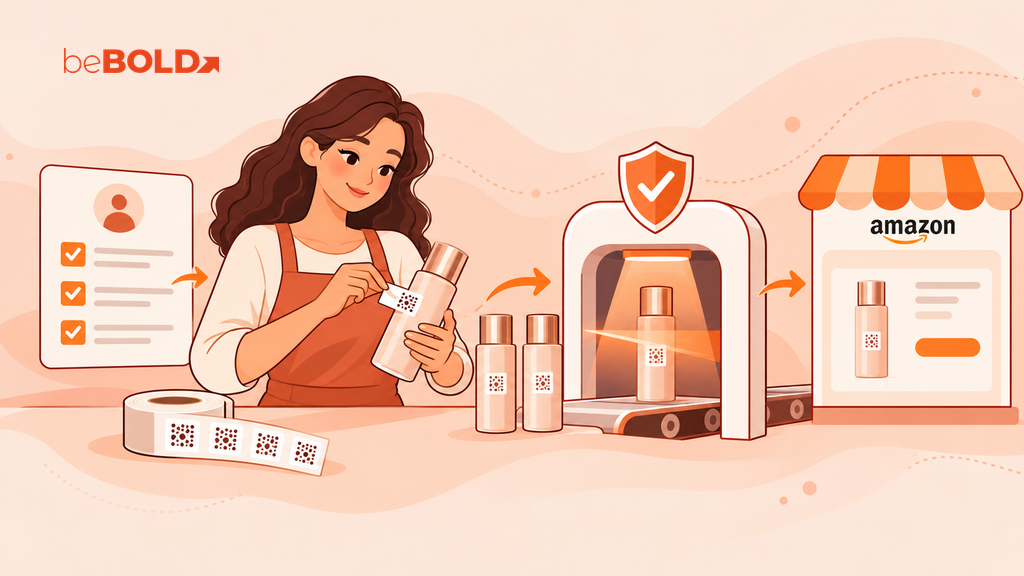
A campaign brief should not contradict the information shoppers see elsewhere. Review titles, bullets, attributes, images, Brand Store content, and product pages for inconsistencies.
Suppose a campaign describes a cleanser as fragrance-free, but an image or older product page says otherwise. Resolve that discrepancy before launch. The same applies to updated packaging, ingredient lists, directions, and product names.
We recommend assigning an owner to approve the source information and a process for updating it when formulas or packaging change. That discipline is valuable beyond this feature: it helps keep the brand’s product story consistent across Amazon and other retail channels.
4. Review Beauty Claims and Product Suitability
Helpful guidance must also be responsible. Beauty brands should review claims with the appropriate legal, regulatory, and product teams before placing them in campaign materials.
Avoid turning a general product description into a medical promise. Be specific about what the product is designed to do, what evidence supports the claim, and any relevant usage limitations. Where a shopper’s situation may call for professional advice, the brand’s guidance should not imply that a sponsored conversation can replace it.
For routine recommendations, verify that suggested products and usage directions are consistent with approved brand guidance. The objective is to help shoppers make an informed choice, not to push every item in a collection into the same regimen.

Plan for Measurement and Oversight
According to Amazon’s launch announcement, advertisers can manage prompts through the advertising console and Amazon Ads API. The documented path is Campaign → Ad Group → Ads → Prompts, where clicked prompts show text, associated ads, impressions, clicks, and orders. Confirm available reporting at launch.
Before launch, record campaign goals, budgets, performance, inventory, and promotions. Assign a reviewer, review schedule, and spending limits.
After launch, check:
- Engagement and economics: Are clicks, orders, and costs consistent with campaign objectives?
- Product readiness: Are products available, appropriately priced, and supported by accurate guidance?
- Required action: Should inaccurate prompts be paused, inputs corrected, or campaigns opted out?
Investigate weak results alongside pricing, promotions, inventory, and other advertising before changing investment. Reported orders alone do not prove incremental sales, and full conversation details may not be visible.
Amazon reported that nearly 20% of shoppers interacting with existing Sponsored Brands prompts continued the brand conversation in early testing. This is context, not a Branded Conversations forecast or advertiser benchmark.
Keep Product Education Consistent
Shoppers may move from a sponsored conversation to a product page to compare benefits, inspect images, or check usage details. The information should remain consistent throughout that journey.
Use the campaign brief and A+ Content to explain the same approved product differences and routines. A+ Content supports visual product education, but brands should not assume it directly determines conversation answers.
Our Amazon A+ Content guide for beauty brands explains how enhanced product pages can support that education.
beBOLD’s Take: Make Participation a Deliberate Decision
Automatic enrollment makes preparation a campaign-management priority. Beauty brands should decide which collections have accurate guidance, dependable availability, and an owner who can review the experience.
At beBOLD Digital, we recommend treating the January launch as a controlled learning opportunity. Prepare the source information now, confirm controls when available, and use campaign results alongside retail conditions to decide whether continued participation makes commercial sense.
To coordinate your Amazon advertising and product-content preparation, schedule a call with beBOLD Digital.
Sources


Comments