

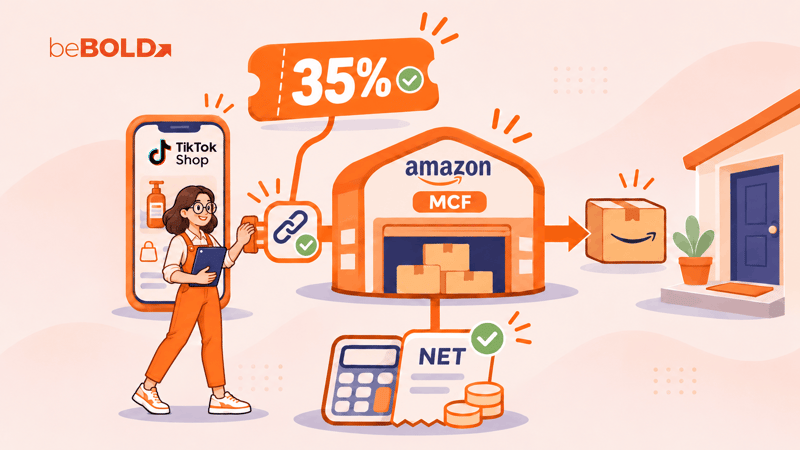
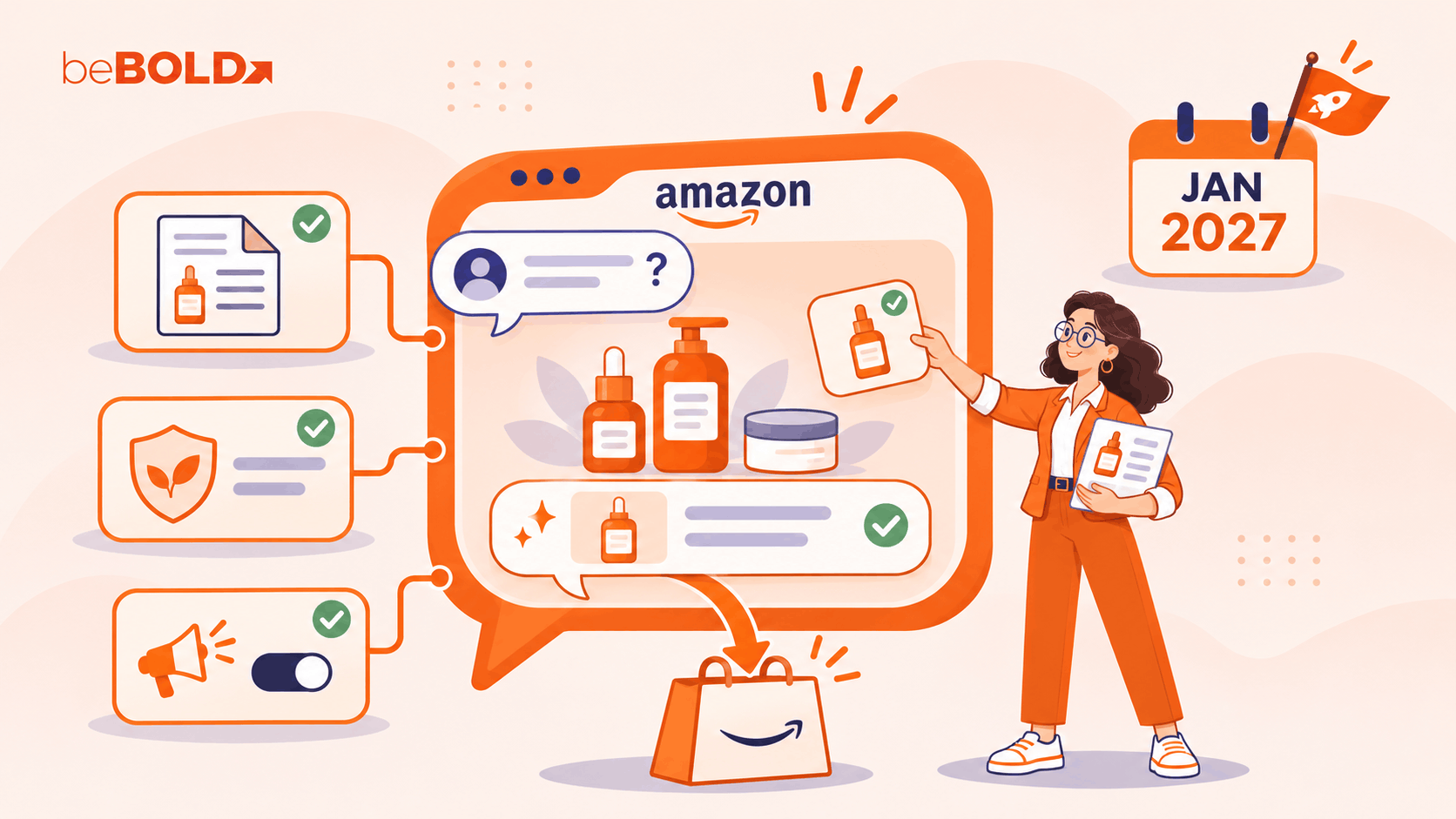
Amazon’s Multichannel Fulfillment (MCF) app gives U.S. TikTok Shop sellers a way to fulfill orders from inventory already held in Amazon’s U.S. network. The app is free to use, while qualifying orders can receive 35% off eligible MCF fulfillment rates.
For brands managing inventory and profitability across channels, the opportunity is worth assessing alongside a broader marketplace account management strategy. The decision should start with the actual order workflow and net cost, not the headline discount alone.
The app connects orders, inventory and tracking
Amazon’s app supports U.S.-registered TikTok Shop stores with inventory in Amazon’s U.S. fulfillment network. After installation, sellers connect the appropriate accounts, dedicate a TikTok Shop warehouse to MCF, select Seller Shipping, and review SKU mappings.
The app submits orders assigned to that warehouse after TikTok Shop’s one-hour buyer-remorse hold. It also sends tracking back to TikTok Shop and syncs inventory in Amazon’s Available status. Reserved and inbound inventory are excluded.
Sellers can set SKU-level inventory buffers to reserve stock for other channels. That matters when the same inventory pool supports Amazon and TikTok Shop: an increase in demand on one channel can reduce what is available to the other.
There are operational limits to check. If MCF cannot fulfill an entire order from available inventory, the app rejects it rather than shipping part of it. The app also does not support MCF returns; sellers must provide their own return address.
Amazon advises against overlapping integrations because they can cause duplicate fulfillment. Brands already routing TikTok Shop orders through an order management system or Shopify should check their existing workflow before connecting the app.
The 35% discount depends on attribution
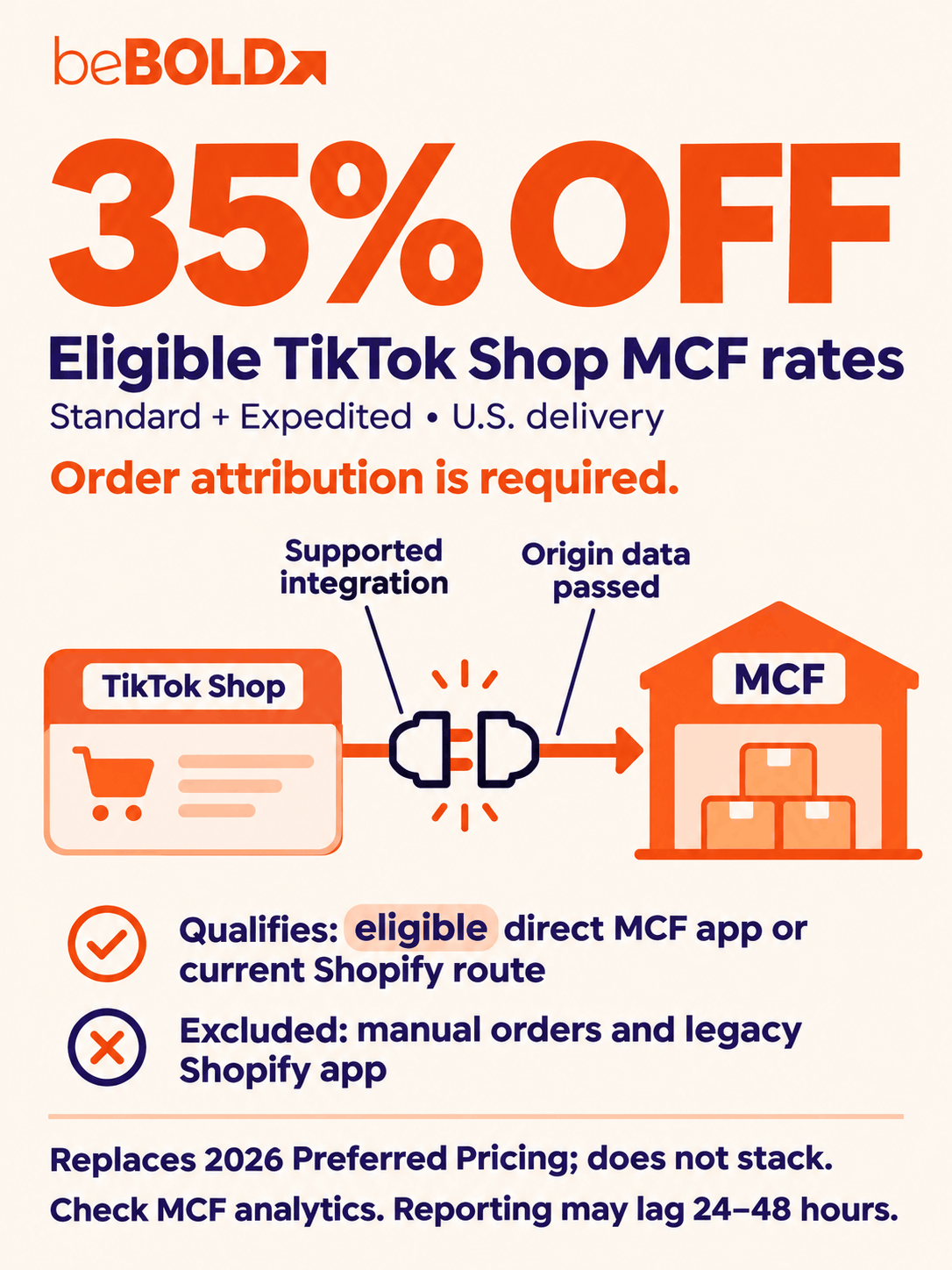
Amazon says the promotion began July 16, 2026, and applies automatically to eligible Standard and Expedited MCF fulfillment rates for TikTok Shop orders delivered to U.S. addresses. No separate enrollment is required, but orders must be identified as TikTok Shop orders through a supported integration. Manually submitted Seller Central orders do not qualify.
The direct MCF app is one route. Amazon also says TikTok Shop orders routed through the MCF and Buy with Prime app for Shopify can qualify, provided the Shopify connector passes the order-origin data. The legacy Multi-Channel Fulfillment app for Shopify does not qualify.
Amazon says it plans to offer the promotion for at least 12 months, but reserves the right to change or discontinue it without notice. The 35% offer replaces, rather than stacks with, the 2026 Preferred Pricing discount on attributed TikTok Shop orders.
Sellers can check their benefit in Amazon’s MCF analytics dashboard. Amazon notes that reporting may lag by 24 to 48 hours.
Model the cost after peak rates and surcharges
The promotion reduces eligible outbound fulfillment fees, not the complete cost of selling an order. Amazon’s peak MCF fulfillment rates apply October 15, 2026, through January 14, 2027, and its pricing page says a 3.5% fuel and logistics surcharge applies to U.S. MCF fulfillment fees. Amazon has also published a new rate card effective January 15, 2027.
Before shifting volume, compare the estimated and actual charges for representative SKUs and order sizes. Include applicable storage and other surcharges, TikTok Shop selling costs, returns, and any shipping revenue or subsidy. Compare that total with the current fulfillment arrangement and the value of any pricing benefit being replaced.
Test the Workflow Before Scaling
The most useful test is not whether 35% sounds attractive. It is whether correctly attributed orders arrive on time and improve contribution margin without exposing Amazon inventory or creating duplicate shipments.
Start with a controlled group of mapped SKUs, verify the discount in reporting, and review actual costs and service performance before expanding. For help connecting marketplace operations with profitable growth, explore beBOLD Digital’s marketplace services.
Sources

Comments