


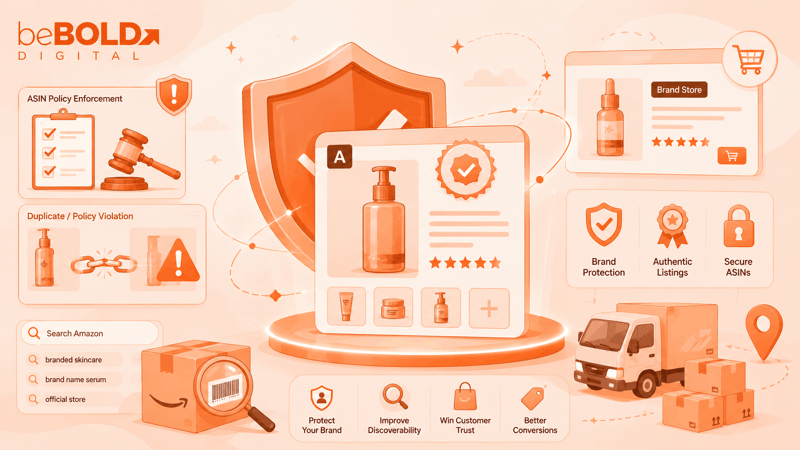
Amazon Is Tightening ASIN Creation Authorization for Branded Products
Sellers are reporting 30-day notices tied to ASIN creation violations on branded listings.
The main issue appears to be unauthorized creation of ASINs for Brand Registered products.
Amazon is asking affected sellers to provide proof such as invoices or a letter of authorization from the brand.
For resellers, distributors, and brands with messy catalog history, this is turning into a catalog-control and account-health problem, not just a listing problem.
Amazon Is Increasing Enforcement of Branded ASIN Creation Rules
Amazon sellers are reporting a sharper enforcement wave around ASIN creation for branded products, with some listings receiving 30-day deactivation notices under Amazon’s ASIN Creation Policy. The clearest public signal came from a May 2026 Seller Forums thread in which a seller said Amazon flagged listings for “creating ASINs for Brand Registered products without brand authorization.”
That forum discussion lines up with recent industry coverage describing the same pattern: Amazon is tightening who can create branded ASINs, what documentation is acceptable, and how quickly sellers need to respond when a listing is challenged. In practice, the message is simple. If a seller created a branded detail page without clear authorization, Amazon may now expect proof such as invoices from the brand or an authorized distributor, or a formal letter of authorization.
This also fits a broader catalog-control trend. Amazon’s existing ASIN creation policy already limits branded ASIN creation and gives Amazon room to restrict new listings. Recent listing-attribute updates going live in late May and late June 2026 add another layer of stricter catalog enforcement for sellers using feeds or API-based listing workflows.
Catalog Ownership and Documentation Are Becoming Bigger Risks
For established brands and marketplace operators, this is bigger than a one-off compliance warning. It signals that Amazon is putting more weight on catalog ownership, listing accuracy, and brand authorization at the detail-page level.
The highest-risk groups are resellers, distributors, and sellers operating older catalogs where branded ASINs may have been created years ago without clean documentation. It also matters for aggregators and agencies managing large product catalogs, because a single unauthorized listing issue can spread into a much broader cleanup project.
The commercial risk is immediate. A 30-day deactivation notice can remove a live ASIN during a key sales window, break ad momentum, and disrupt ranking and conversion on a hero product. And while the current reporting centers on listing removal, sellers are treating this as a wider account-health issue because unresolved ASIN creation violations can escalate beyond a single SKU.
Brands should also read this as a warning against loose catalog practices. Duplicate branded ASINs, unclear ownership, weak sourcing records, and outdated listing workflows all become more dangerous when Amazon starts enforcing authorization more aggressively. For teams that need to revisit their identifier setup, understand what an ASIN is on Amazon, or tighten how to list products on Amazon, this is the kind of policy shift that deserves immediate attention.

Why Sellers Should Audit Catalog Authorization and Listing Controls
This is really a catalog governance story. Amazon is making it harder for sellers to treat branded ASIN creation as a casual operational task, and the brands that win will be the ones with tighter documentation, cleaner catalog structure, and stronger control over who creates and edits product pages.
Now is the time to audit branded ASINs your team created, verify invoices and authorization records, and clean up any listing workflows that rely on shortcuts. Sellers should also make sure Amazon Brand Registry access, listing ownership, and product-page standards are aligned before Amazon forces the issue through deactivations or suppression. If your catalog has authorization gaps, duplicate listing risk, or branded ASINs that may not hold up under review, contact beBOLD Digital for a consultation.
Sources
Amazon Seller Forums, “Major Policy Shift You Need to Know About (ASIN Creation Crackdown)”
Hinge Commerce, “New ASIN Creation Policy on Amazon”
Nova Analytics, “Amazon ASIN crackdown: 30-day deactivation notices”
Amalert, “Update: May updates to listing attribute usage and enumeration values”









Comments