


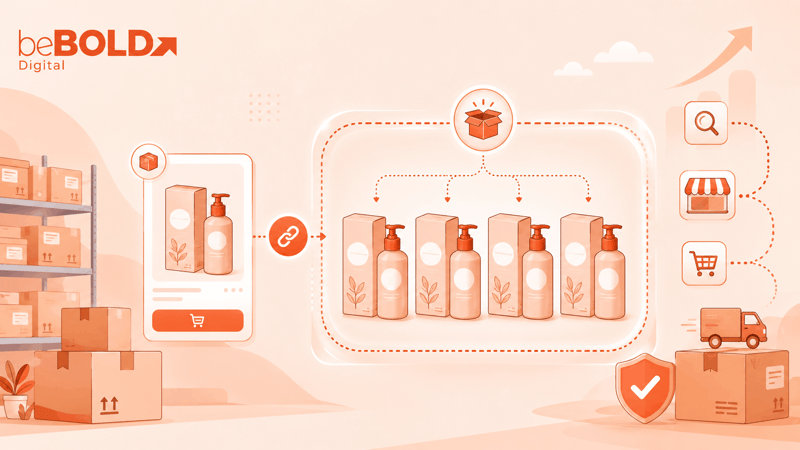
Amazon will soon create virtual multipack listings for certain FBA brand-owned products with high demand for multi-unit purchases. This lets sellers offer multiple units without bundling them together. While this can boost average order value and make repeat buying easier, sellers should review these listings carefully. Amazon will automatically generate them by July 27, 2026. Sellers have until August 9, 2026, to edit or delete these listings before they go live for customers on August 10, 2026.
What Happened: Amazon Introduces Virtual Multipacks for FBA Brands
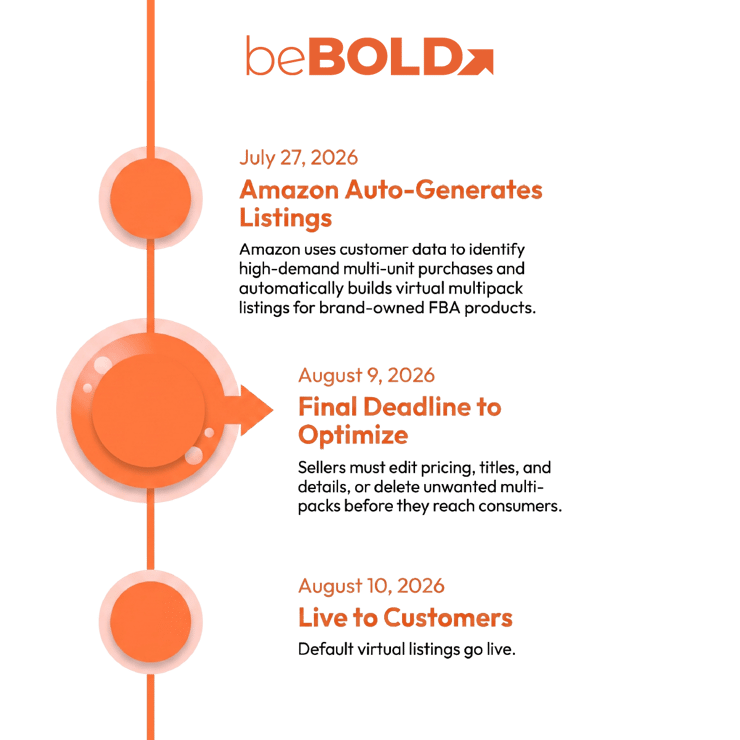
Amazon announced that it is creating virtual multipack listings for some brand-owned FBA cproducts where customer demand suggests shoppers may want to buy more than one unit at a time.
In simple terms, Amazon may take a single-pack product and create a multi-unit offer around it.
Examples
- A 1-pack shampoo may get a 2-pack or 3-pack option.
- A single pet treat bag may get a 4-pack version.
- A single skincare item may get a multi-unit replenishment option.
- A household product may become available as a bulk-style listing.
Virtual multipacks will show up as variations on the original single-pack product page. Each multipack will have its own ASIN and SKU. Amazon will set the default price based on the current per-unit price, but sellers can change the price, title, and description. Sellers can also offer discounts, run coupons, or advertise the multipack.
This is important because Amazon’s third-party seller ecosystem is both large and valuable. According to The Wall Street Journal, third-party seller services made up about $172 billion in net sales last year, or around 24% of Amazon’s revenue. An Amazon spokesperson told Business Insider that independent sellers make up about 60% of sales on Amazon’s store.
When Amazon changes how sellers create catalog offers, the effects can go well beyond a single product page.
What Is an Amazon Virtual Multipack?
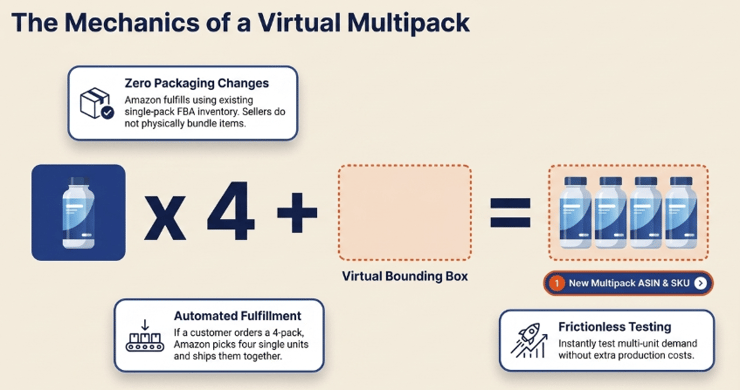
An Amazon virtual multipack is a listing that lets customers buy multiple units of the same FBA product as one offer.
The keyword is “virtual.” Sellers do not need to physically bundle products or create new packaging. Amazon fulfills the order using existing single-pack FBA inventory.
For those new to the model, Amazon FBA means sellers send inventory to Amazon, and Amazon handles storage, packing, shipping, and customer service. For example, if a customer orders a 4-pack, Amazon will pick four single units and ship them together.
How Virtual Multipacks Work for FBA Sellers

Source: Adobe Stock
From a seller operations view, virtual multipacks are designed to reduce friction.
Sellers do not have to make physical bundles, change packaging, send special units, or manage separate inventory. Amazon uses existing single-pack FBA inventory to fulfill multipack orders. This makes it easier to test demand for multi-unit purchases without extra production.
However, sellers should still review each listing. Amazon multipacks can impact pricing, inventory, search visibility, and how customers see your products.
Sellers can find these listings in Manage All Inventory by filtering for the VMP_ prefix, where they can edit or delete them before launch.
Having a clear review process is important. If titles, pack counts, or pricing are confusing, your results may drop. Brands should see this as part of a bigger Amazon listing refresh strategy, not just a simple update.
Virtual Multipack vs. Virtual Bundle
Amazon virtual multipacks and Amazon virtual bundles sound similar, but they serve different purposes.
|
Feature |
Virtual Multipack |
Virtual Bundle |
|
Product type |
Multiple units of the same product |
Multiple different products |
|
Example |
4-pack of the same shaving foam |
Shampoo and conditioner set |
|
Inventory setup |
Uses existing single-pack FBA inventory |
Uses existing FBA inventory from different ASINs |
|
Customer use case |
Replenishment, bulk buying, value packs |
Cross-sell, routine building, complementary products |
|
Main strategy |
Increase unit volume and AOV |
Increase basket size and product discovery |
A virtual multipack is about quantity. A virtual bundle is about product combination.
That distinction matters for brands that already use Amazon virtual product bundles. A shampoo and conditioner set may still make sense as a virtual bundle. A 3-pack of the same shampoo is a virtual multipack.
Both options can help build a stronger product lineup, but they need different management. Sellers should look at bundles with cross-sell strategies in mind, while virtual multipacks should be reviewed for replenishment, price-per-unit, and inventory planning.
Why Amazon Is Creating These Listings Automatically

Source: Adobe Stock
The main point is that Amazon is using customer behavior data to create new offer formats that make shopping faster.
If shoppers often purchase multiple units, Amazon can present a multipack option directly on the product page instead of requiring them to adjust quantities manually.
Amazon’s Goals
- Make bulk and repeat purchases easier.
- Increase basket size.
- Improve product page choice architecture.
- Help shoppers compare price-per-unit value.
- Create more purchase options without waiting for sellers to build physical bundles.
This move is part of a bigger trend at Amazon. Instead of just reacting to what sellers upload, Amazon is now using shopper demand data to shape how products are shown in the catalog.
This can help brands, but it also means more responsibility for catalog management. Sellers now have to watch both the listings they create and the ones Amazon creates or suggests for their products.
What Sellers Should Review Before August 10, 2026
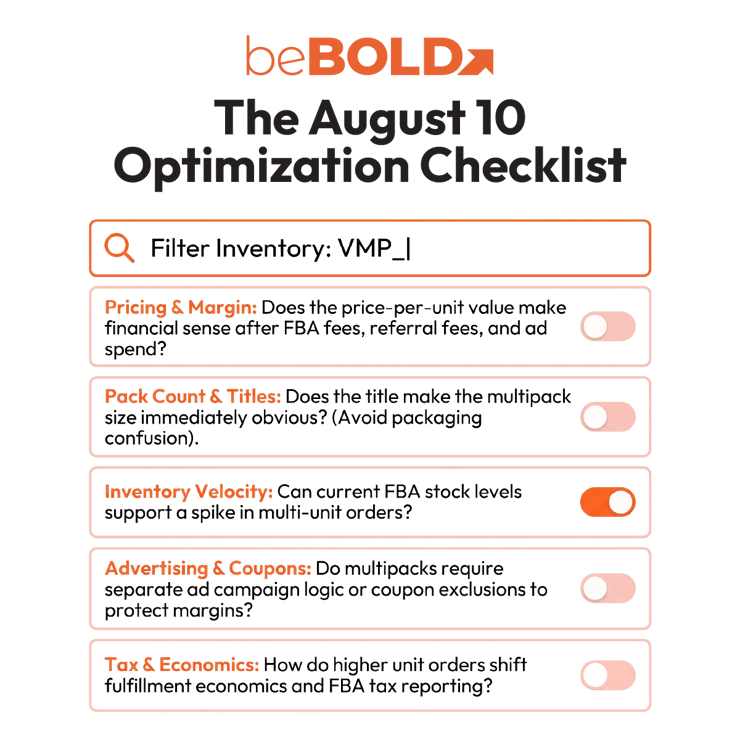
Sellers should not wait until the listings are live.
Before August 10, sellers should go to Manage All Inventory, filter for VMP, and review every Amazon virtual multipack created for their products.
Key Checks
- Pack count accuracy: Make sure the number of units is clear and correct.
- Title clarity: The title should make the multipack size obvious to shoppers.
- Description accuracy: The content should not imply different packaging if the product is fulfilled from single units.
- Price-per-unit value: Customers should understand why the multipack is worth buying.
- Margin after fees: The offer should still make financial sense after referral fees, FBA fees, coupons, and ad spend.
- Inventory impact: A successful multipack can drain single-pack FBA inventory faster.
- Variation display: The new option should not make the product page confusing.
- Coupon strategy: A coupon may help conversion, but it can also weaken margin.
- Ad strategy: Multipacks may need separate campaign logic, bids, or exclusions.
- Tax and accounting impact: Sellers should understand how higher unit orders, discounts, and fulfillment economics affect reporting. For broader FBA cost planning, brands should also review Amazon FBA taxes and seller obligations.
This review should include more than just the catalog team. Teams handling pricing, advertising, inventory, and finance should all take part.

The Upside for Beauty, Health, Pet, Baby, and Household Brands
Virtual multipacks are especially useful for replenishable categories like beauty, health, pet, baby, and household products, where items are used regularly, and shoppers often prefer buying multiple units at once for convenience or family use.
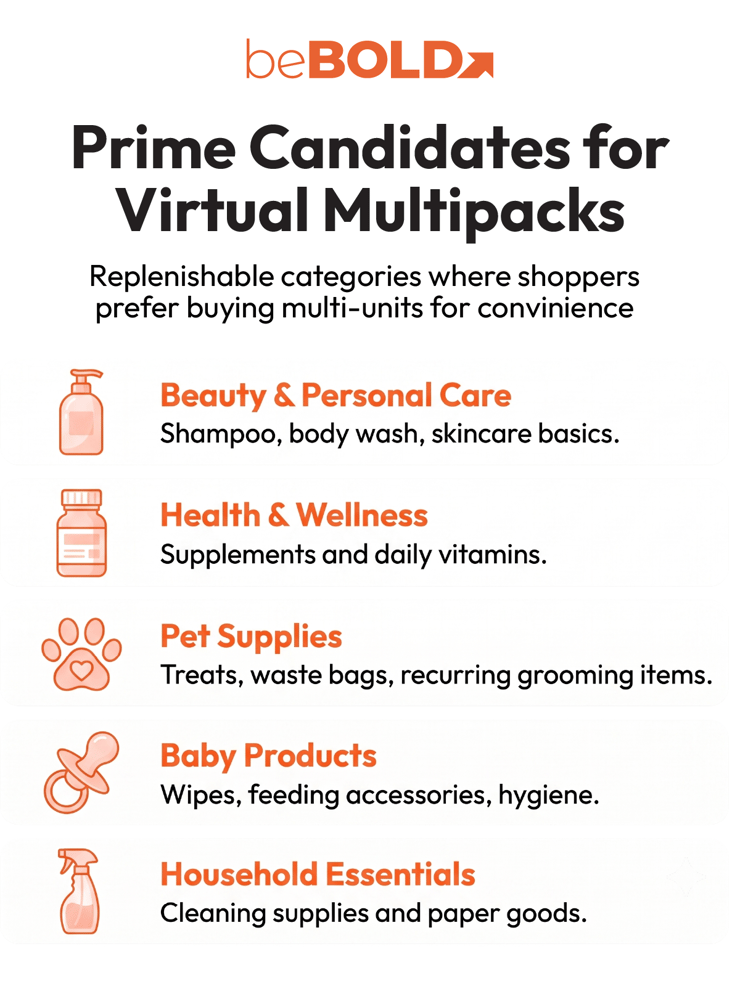
Relevant product types
- Shampoo, conditioner, body wash, and skincare basics.
- Supplements and wellness products.
- Pet treats, waste bags, grooming items, and recurring pet supplies.
- Baby wipes, feeding accessories, and hygiene products.
- Cleaning products, paper goods, and household essentials.
For these categories, the benefits are clear. A well-priced Amazon multipack can raise average order value without needing new packaging. It also lets brands test which pack sizes customers prefer before making physical bundles.
This is especially important when looking at fulfillment options, since FBA and FBM have different costs and benefits. Sellers should understand the tradeoffs between Amazon FBA and FBM, especially as order size, inventory speed, and fulfillment costs change.
The Risks: Pricing, Margin, Inventory, and Catalog Control
A virtual multipack can be helpful, but it is not always profitable. The biggest risk is margin control. If Amazon sets the multipack price based on the current per-unit price, it might not be a good enough deal for customers. Too much discounting can increase sales but hurt profits.
Risks to Monitor
- Weak default pricing
- Over-discounting
- Coupon stacking
- Higher ad cost per order
- Faster inventory depletion
- Single-pack cannibalization
- Confusing variation structures
- Inaccurate title or description details
- Poor pack-size merchandising
There is also a catalog control issue. If a brand already has physical multipacks, bundles, Subscribe & Save offers, or size variations, adding a virtual multipack can make the product page harder to understand and hurt conversion.
It can also create reporting confusion if teams do not separate single-pack and multipack performance. For Amazon brands, the takeaway is simple: more listings do not always mean more growth. Better-controlled listings usually matter more.
Should Sellers Keep or Delete Amazon-Created Virtual Multipacks?
Sellers should not automatically keep every virtual multipack, but they should also avoid deleting every listing without review.
This simple decision framework can help.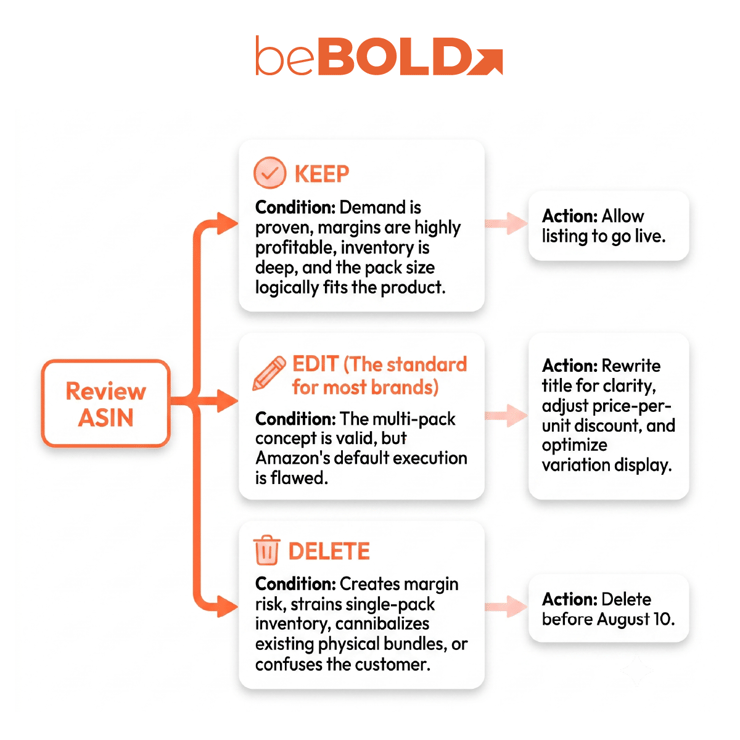
For many brands, the best answer will be “edit.”
The default listing may be directionally useful, but sellers should still optimize the offer. That includes title clarity, pack-size messaging, price-per-unit value, and ad strategy.
Brands should also review whether the multipack supports their broader marketplace acquisition model. For example, FBA sellers using marketplace growth alongside off-Amazon acquisition channels may need to think through how multi-unit offers affect customer value, affiliate economics, and sales attribution.
This comparison of affiliate marketing vs. Amazon FBA provides helpful context for brands balancing marketplace fulfillment with customer acquisition strategy.
Here's How beBOLD Digital Looks at It
Amazon virtual multipacks show that Amazon is now shaping seller catalogs based on customer demand. This brings both new opportunities and more responsibility for brands.
Multipacks can help raise average order value and encourage repeat purchases without needing new packaging. However, sellers need to make sure these listings protect margins, fit their inventory strategy, and keep the customer experience clear.
beBOLD Digital suggests reviewing every Amazon-created virtual multipack before the August 10 launch. Pay close attention to pricing, listing clarity, variation structure, inventory effects, and profitability.
Partner with beBOLD Digital
Brands in beauty, health, pet, baby, and household categories should pay special attention, since these products often depend on repeat purchases. A well-managed multipack can help your business grow, but a poorly managed one can lead to lost margins and a confusing catalog.
This update is a reminder that listing optimization never stops. Sellers should keep reviewing and improving how their products are shown, especially as Amazon adds new offer types. Improving your Amazon listing optimization can help your catalog stay competitive and ready to convert. If you need help reviewing your catalog or building a better multipack strategy, contact beBOLD Digital to see how we can support you.
FAQs
What is an Amazon virtual multipack?
An Amazon virtual multipack is a listing that lets customers buy multiple units of the same FBA product as one offer. Amazon fulfills the order using existing single-pack inventory, so the seller does not need to physically bundle the products.
Are Amazon virtual multipacks the same as Amazon virtual bundles?
No. Amazon virtual multipacks contain multiple units of the same product, while virtual bundles combine different products into one offer.
Do sellers need to physically package virtual multipacks?
No. Amazon uses existing single-pack FBA inventory to fulfill the virtual multipack order.
Can sellers delete Amazon-created virtual multipacks?
Yes. According to Amazon’s release, sellers can review or delete these listings before they become available to customers on August 10, 2026.
Should sellers advertise Amazon virtual multipacks?
Some sellers should, but only after reviewing pricing, margin, inventory, and conversion potential. Advertising a weak multipack can create wasted spend if the offer is not priced or presented clearly.






Comments