

Key Summary
- Holiday shoppers are more distracted yet highly motivated. Retargeting keeps your brand top-of-mind. 🎯
- Amazon DSP offers cross-channel reach to bring back browsers who left before buying. 🔁
- Dynamic creatives with festive messaging drive urgency and emotional engagement. 🎁
- Tracking ROAS, VTC, and frequency ensures efficiency and prevents ad fatigue. 📊
- Post-holiday DSP retargeting captures gift-card redeemers and repeat buyers. 🔄
As the year heads into the holiday frenzy, the advertising battlefield on Amazon becomes increasingly crowded. Brands that rely solely on search and PPC are playing catch-up. To truly win holiday mindshare and recover abandoned intent, you need more than just visibility: you need a retargeting system that follows shoppers across channels, reminds them of high-intent signals, and converts them before the big gifting moment.
In this article, we’ll dive into how to build a robust Amazon DSP retargeting framework, why Amazon DSP holiday ads deserve their own playbook, and how to execute with precision.

Why Holiday Shoppers Demand a Unique Amazon DSP Retargeting Strategy
During the holiday season (Q4, Black Friday, Cyber Week, post-gift-return windows), shopping behaviors shift dramatically. Shoppers are under pressure, budgets surge, and competition for attention skyrockets. There are several reasons why Amazon DSP holiday ads become critically important:
- Volume & velocity: Browsing spikes, holiday list-making begins early, and many will abandon carts or compare across brands. Retargeting can intercept those drop-offs.
- Multi-channel journeys: Shoppers may view on Amazon, leave, and revisit later on a different device. Amazon DSP retargeting follows them off and on Amazon.
- Crowded media landscape: Sponsored Ads get saturated. To maintain presence, brands need constant messaging across platforms.
- High-intent signals: During holidays, actions like product views or cart additions are stronger conversion indicators. Retargeting those signals yields higher ROI.
In short, an Amazon DSP retargeting strategy for holiday shoppers isn’t just another ad tactic. It's a conversion recovery and amplification engine.
Key Audiences to Target with Amazon DSP Retargeting This Holiday

Transitioning from strategy to execution, defining your audiences is crucial. Here are the most effective segments for the holiday window:
- Product Viewers (No Purchase) – Re-engage shoppers who visited your product detail page but didn’t buy. Use dynamic creatives that remind them of benefits or offer incentives.
- Cart Abandoners – Target those who loaded carts but got distracted. Use urgency-based messaging like “Last day for free Prime shipping.”
- Competitor Viewers or Similar Product Viewers – Show why your product is better through social proof, features, or exclusive offers.
- Past Customers or Repeat Purchase Prospects – Cross-sell or upsell to loyal buyers. Offer bundle or gift options.
Creative, Messaging & Offer Best Practices for Amazon DSP Holiday Ads
Having identified audiences, now design creatives that capture the holiday spirit and drive urgency.
Dynamic creatives with real-time data
Use Amazon’s dynamic ecommerce templates to automatically pull current pricing, reviews, coupons, and product details into ads. Highlight delivery cut-offs such as “Order by Dec 15 for guaranteed Christmas delivery.” Dynamic creative optimization ensures every ad feels timely and relevant.
Holiday-specific visuals and copy
Build a cohesive festive identity. Integrate warm color palettes (reds, golds, greens) and phrases like “Perfect Gift for Him/Her” or “Holiday Must-Have.” Evoke emotion with copy centered on joy, gratitude, and togetherness to align with seasonal sentiment.
Urgency & scarcity signals
Deploy persuasive cues like “Limited stock,” “Free shipping ends tonight,” or “Arrives before Christmas.” Reinforcing urgency encourages faster conversions, especially for shoppers comparing multiple options.
Frequency capping and rotation
Balance visibility with user experience. Set impression limits, such as 3 to 5 per shopper weekly, and refresh creatives every 7 to 10 days to prevent banner fatigue and maintain engagement.
Cross-device and omnichannel placements
Extend your reach beyond Amazon’s marketplace by leveraging DSP placements across IMDb, Fire TV, and third-party sites. This approach strengthens your brand presence throughout a shopper’s journey, from browsing on mobile to streaming on TV.
Segmented offers by audience type
Personalize incentives. Provide cart abandoners with shipping discounts or coupons, retarget past buyers with bundle or upgrade promotions, and entice new audiences with introductory offers or holiday bundles. The right offer aligns with each user’s shopping intent.
Incorporate storytelling and motion
Consider short-form videos or GIF-style motion creatives showing unboxing moments or holiday gifting experiences. Visual storytelling improves recall and connection.
Maintain brand consistency
Use your brand’s tone and logo consistently across DSP, Sponsored Brands, and social platforms to create a unified festive experience that reinforces trust.
Together, these tactics create a well-rounded, emotion-driven Amazon DSP retargeting strategy for holiday shoppers that turns awareness into meaningful conversions.
DSP Retargeting Key Metrics to Look Out For

To ensure your Amazon DSP holiday ads perform at peak efficiency, a clear metrics and performance framework is crucial. Successful advertisers continuously monitor campaign health, attribute results accurately, and optimize daily decisions based on data.
Profitability and sales
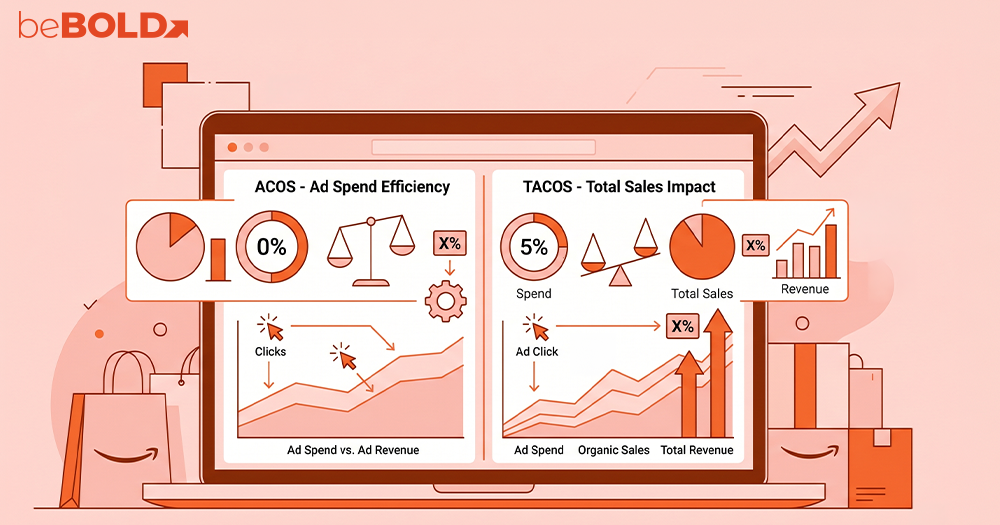
- ROAS & ACoS: Evaluate profitability compared to advertising costs. During Q4, expect higher costs per impression but also higher revenue potential; aim for ROAS benchmarks 20 to 30% above non-holiday averages.
- View-Through Conversions (VTC): Capture indirect influence. Many shoppers see your ad on Fire TV or third-party sites and purchase later without clicking. Include these in your attribution models to reveal the true impact of your DSP campaigns.
- New-to-Brand Purchases: Measure how many first-time customers DSP brings in, which is critical for post-holiday retention strategies.
- Incremental Sales & Lift Studies: Use Amazon Marketing Cloud (AMC) and Brand Lift Studies to quantify how your DSP influenced awareness and conversion versus organic traffic.
User engagement and intent
- Detail Page View Rate (DPV): Track how often users revisit your product detail page after being served an ad. A strong DPV signals effective ad recall and audience relevance.
- Frequency & Reach: Balance reach and repetition; too few impressions and shoppers forget you, too many and fatigue sets in. The sweet spot for holiday retargeting is typically 3 to 5 impressions per week per shopper.

Your Implementation Checklist for Amazon DSP Holiday Campaigns
Here’s a practical checklist you can follow to launch your Amazon DSP holiday ads, along with more detailed explanations for each step to ensure a successful rollout:
Before Campaign (Budgeting, Goals, Historical Data Research)
- Audit Product Performance – Review your ASIN portfolio to identify top sellers, seasonal performers, and any underperforming listings that might need optimization. Confirm adequate stock levels and shipping timelines to prevent mid-campaign stockouts.
- Define Your Holiday Budget – Determine a dedicated DSP budget separate from Sponsored Ads, typically $10,000–$15,000 per month for meaningful results. Allocate funds based on campaign goals—awareness, consideration, or conversion.
- Build Audience Segments – Create granular audience pools: recent product viewers (last 30 days), cart abandoners, competitor ASIN viewers, repeat customers, and modeled lookalikes. The more refined your segmentation, the stronger your ROAS.
Content and Creatives (Ad Formats, Deals, Hero Products, Imagery)
- Develop Holiday-Specific Creatives – Craft dynamic ad variations with festive visuals, holiday color palettes, and urgency language (e.g., “Arrives Before Christmas,” “Last-Minute Gifts”). Tailor messages by audience type to ensure relevance.
Campaign Optimization (Keyword Strategy, Bidding)
- Set Strategic Flight Dates – Launch campaigns early in October to allow DSP’s algorithmic learning curve before the holiday rush. Align flights with major retail peaks such as Black Friday, Cyber Monday, and post-holiday gift card surges.
- Configure Frequency Caps & Bidding – Establish impression limits (3 to 5 per user per week) to prevent fatigue. Test bid strategies to maintain efficiency as ad competition rises.
- Launch and Optimize Early – Expect an initial learning phase of 2 to 4 weeks where the system tests placements and bids. Begin early enough to analyze and adjust before peak dates.
Monitoring (Post-Holiday Optimization, Real-Time Monitoring)
- Monitor KPIs Daily – Track ROAS, CTR, DPV rate, and new-to-brand metrics. Use dashboards or AMC for a unified view of cross-channel performance.
- Adjust Mid-Flight – Refresh creative weekly, exclude converted users, reallocate budgets to top-performing audiences, and sync with inventory data. Use bid adjustments to stay competitive as demand fluctuates.
- Post-Holiday Optimization – Continue retargeting past buyers with replenishment, bundle, or subscription offers. Conduct a campaign performance audit to extract insights for Q1 and plan next year’s DSP improvements.
By following this step-by-step checklist, advertisers can confidently build a data-driven Amazon DSP retargeting strategy for holiday shoppers, ensuring every impression works toward capturing peak-season conversions and long-term brand growth.
Client Scenarios: How beBOLD Digital Elevates Holiday DSP Performance
To illustrate the impact of DSP campaigns, here are real-world client-style scenarios that demonstrate how beBOLD Digital helps brands maximize sales during the holidays:
Recovering Abandoned Carts for a Home Décor Brand
A mid-sized décor retailer saw thousands of shoppers browse but fail to purchase in early November. beBOLD implemented an Amazon DSP retargeting strategy that served dynamic ads featuring the exact items left in shoppers’ carts, paired with limited-time discount messaging. The result? A 45% uplift in conversion rate within two weeks of Black Friday.
Expanding Reach for a Beauty Brand
A skincare company wanted to reach shoppers browsing competitor products. Using DSP’s audience modeling and competitive ASIN targeting, beBOLD delivered highly visual, emotion-driven ads with “gift-ready” packaging. During Cyber Week, the brand achieved a 3.8x ROAS and 25% increase in new-to-brand sales.
Re-engaging Post-Holiday Buyers
After the holiday rush, an electronics brand faced lower January sales. beBOLD used DSP to retarget past buyers with accessory bundles and extended warranties. This post-holiday campaign increased repeat purchases by 32% and helped the brand maintain sales momentum into Q1.
These scenarios highlight how beBOLD Digital’s strategic use of Amazon DSP holiday ads helps clients not only convert browsers into buyers during the busiest shopping season but also nurture loyalty long after the holidays.
Common Mistakes to Avoid in Holiday DSP Retargeting

Even experienced advertisers can make costly missteps during the busy Q4 period. Understanding these pitfalls can help brands maintain efficiency and protect profit margins.
- Launching campaigns too late: Amazon DSP typically requires 2 to 4 weeks for its machine-learning algorithms to optimize bidding and audience targeting. Late launches can result in limited data, slower performance learning, and missed peak shopping periods.
- Ignoring creative fatigue or frequency caps: Overexposure causes audience fatigue, leading to higher CPMs and lower engagement. Refresh your creative assets weekly and enforce frequency limits to maintain relevance and prevent burnout.
- Overlooking shipping cut-offs and stockouts: Nothing damages trust faster than promoting unavailable or undeliverable items. Align campaign pacing with fulfillment capabilities and pause ads for out-of-stock products.
- Failing to exclude converted users: Continuing to serve ads to shoppers who already purchased wastes budget and can frustrate customers. Set up audience exclusions or post-conversion windows to prevent redundancy.
- Running DSP in isolation from Sponsored Ads: Treat DSP as a complement to Sponsored Products and Brands. Integrating the two ensures cohesive messaging across the funnel, from awareness to conversion, and provides more complete attribution insights.
- Neglecting post-holiday retargeting: After Christmas, many customers return with gift cards or look for accessories. Keeping DSP campaigns active captures this valuable secondary demand.
By avoiding these common mistakes, advertisers can maximize the effectiveness of their Amazon DSP retargeting strategy for holiday shoppers and sustain performance through the entire holiday season.
beBOLD Tip: Holiday spikes reward preparation—review the best holiday products to sell so you can stock fast-moving SKUs and avoid missed sales during peak shopping weeks.
Partner with beBOLD Digital for Holiday DSP Success
The holiday season is both the most profitable and competitive time for Amazon sellers. With standard PPC ads alone, you’ll struggle to recapture high-intent shoppers and capitalize on festive buying energy. A well-executed Amazon DSP retargeting strategy for holiday shoppers gives you the edge to convert browsers into buyers across every channel. By launching early, optimizing daily, and crafting emotionally resonant Amazon DSP holiday ads, your brand can dominate Q4 and carry momentum well into the new year.
Ready to elevate your holiday advertising performance? Contact beBOLD Digital today to create a data-driven Amazon DSP strategy tailored to your brand. Let our team help you turn seasonal traffic into lasting revenue and make this your most successful holiday yet!
Frequently Asked Questions (FAQ)
What is Amazon DSP retargeting?
It’s a form of programmatic advertising where you use Amazon’s Demand-Side Platform to run display, video and audio ads to users who have already engaged with your brand. These ads reach shoppers both on Amazon’s ecosystem and off-Amazon, giving you a second (or third, or fourth) chance to convert high-intent visitors.
How is Amazon DSP different from Sponsored Ads on Amazon?
While sponsored ads (like Sponsored Products or Sponsored Brands) appear within Amazon’s search or product result pages, Amazon DSP offers broader placements, and targeting based on behavior and browsing history.
How long does it take to see results from a retargeting campaign using DSP?
Because DSP involves audience building and cross-channel placements, the learning phase can take 2 to 4 weeks before you begin to see stable results. For very specific retargeting (cart abandoners, product viewers) it might shorten; for broad awareness/prospecting it may take longer.
Can I use DSP if I’m not selling on Amazon?
Yes. According to Amazon, you do not need to be an Amazon seller to use DSP Brands, agencies or non-Amazon sellers can still leverage Amazon’s first-party data to reach relevant audiences.
Is Amazon DSP worth it for holiday campaigns specifically?
Absolutely, especially during the holiday season when shopper intent is high, cart abandonment surges, and competition is fierce. A well-executed DSP retargeting play can capture shoppers who leave Amazon, chase them across channels, remind them of your brand, and convert them before shipping cut-offs.





Comments