


Canada Sets a September 8 Start for Matching Tariffs
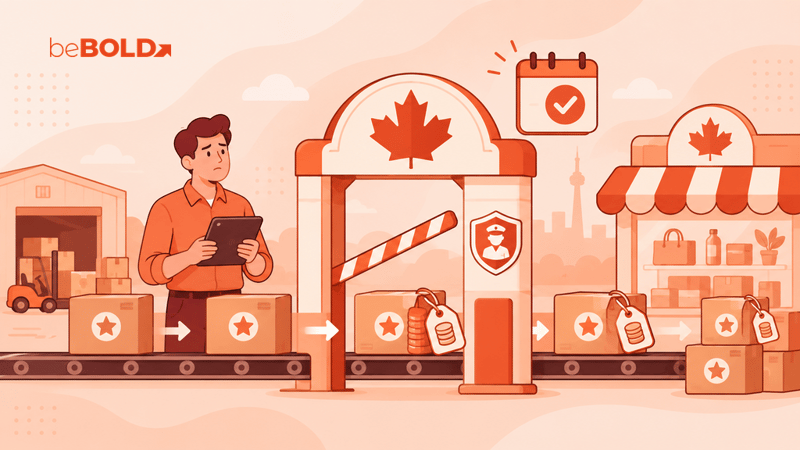
Canada will impose retaliatory tariffs on selected U.S.-origin products beginning at 12:01 a.m. on September 8, 2026. The measures respond to the United States’ 50% tariffs on C$27.6 billion in Canadian goods, which took effect on August 22 under Section 338 of the Tariff Act of 1930.
The Canadian government says it will match the U.S. measures dollar for dollar. Individual products will face tariffs of 15%, 25%, or 50%, based on the corresponding U.S. rate applied to equivalent Canadian goods under Section 338 and Section 232.
Canada’s list contains 629 tariff items and spans steel, dairy, appliances, agricultural equipment, pulp and paper, electronics, apparel, and other consumer goods. Certain products already subject to a 25% tariff will move to 50%.
The rules apply specifically to goods originating in the United States under Canada’s country-of-origin marking regulations. A product shipped from a U.S. warehouse is not necessarily U.S.-origin, making origin documentation as important as the shipping location.
Beauty, Home, and Electronics Brands Need an SKU-Level Review
 Source: Pexels
The headline sectors do not show the full ecommerce impact. The official list includes perfumes and toilet waters, lip and eye makeup, manicure and pedicure products, hair preparations, plastic household goods, paper packaging, apparel, and electronics.
That creates potential exposure for established brands selling through Amazon.ca, wholesale partners, direct-to-consumer stores, or Canadian distributors.
The tariff list is organized by Harmonized System codes, so brands should not make decisions based on broad category labels alone. Before September 8, affected businesses should:
-
Confirm the HS classification and documented origin of every Canada-bound SKU.
-
Identify shipments that may qualify for the in-transit exception and preserve supporting records.
-
Recalculate landed cost at the applicable 15%, 25%, or 50% rate.
-
Review Canadian retail prices, promotional plans, distributor terms, and contribution margins.
-
Consult a customs broker when classifications, origin rules, or tariff treatment remain uncertain.
For a more in-depth plan on how to outsmart tariffs, head over to our guide here: How to Outsmart Tariffs: Scalable Strategies for Global Trade
Rework Landed Cost Before Reworking Advertising
For marketplace teams, the tariff itself is only the first calculation. Higher landed costs can reduce the amount a brand can afford to spend on advertising while maintaining its contribution-margin target.
Brands should model the impact at the SKU level before cutting Amazon Ads budgets or raising prices across an entire catalog. A product with strong Canadian inventory coverage, healthy margins, or non-U.S. origin may require a different response from an affected U.S.-origin product approaching replenishment.
Inventory positioning also matters. The in-transit exemption may protect qualifying goods already moving toward Canada when the measures begin, but future replenishment orders should be evaluated using the new cost assumptions.
beBOLD Digital’s Take: Protect Margin Before Chasing Volume
The immediate priority is not a broad price increase. It is an accurate exposure map connecting product origin, HS classification, tariff rate, inventory timing, marketplace pricing, and advertising economics.
Brands that isolate the affected ASINs can make more controlled decisions about pricing, promotions, replenishment, and ad efficiency without weakening unaffected products.
If the new tariff structure is changing your Amazon.ca economics, explore beBOLD Digital’s Amazon account management services to align marketplace pricing, inventory planning, advertising, and growth decisions around updated costs, or contact our team today for a conversation!
 Sources
Blake, Cassels & Graydon LLP: U.S.–Canada Tariffs—Timeline of Key Dates and Documents









Comments