



The Amazon affiliate program for sellers is not one seller-controlled program. Amazon pays Associates for qualifying purchases, while brands receive product sales. Sellers can also use Creator Connections for campaigns, Amazon Attribution for measurement, Brand Referral Bonus for eligible referral-fee credits, or a seller-managed affiliate program for greater partner control.
Creator-led commerce already influences purchasing beyond Amazon. In Sprout Social’s 2024 survey of 2,000 consumers in the US and UK, 49% said influencer posts lead them to make a purchase at least monthly, while 86% reported making an influencer-inspired purchase at least once a year. These findings are not Amazon-specific, but they help explain why creator traffic warrants structured measurement.
Is There an Amazon Affiliate Program Specifically for Sellers?
There is no single Amazon affiliate program that covers every seller objective. The right option depends on whether a brand needs broad creator discovery, campaign control, off-Amazon measurement, referral-fee credits, or direct partner management.
|
Option |
Who controls and pays |
Best seller use |
|
Amazon Associates and the Amazon Influencer Program |
Amazon approves creators, sets standard rates, and pays eligible commissions |
Earning organic exposure without operating a private program |
|
Eligible brands create campaigns and may fund bonus commissions |
Giving participating Associates a stronger reason to feature selected ASINs |
|
|
Amazon Attribution and Brand Referral Bonus |
Amazon measures tagged off-Amazon traffic; eligible US brands may receive credits |
Measuring external campaigns and improving qualifying campaign economics |
|
Seller-managed program |
The brand recruits partners, sets terms, and funds compensation |
Building direct relationships and partner-level reporting |
The Amazon Associates program and Influencer Program are primarily creator monetization programs. Sellers do not choose every Associate who links to an ASIN or negotiate Amazon’s standard rates. Creator Connections and direct programs provide more structure, but availability, eligibility, and features can vary.
How Does Amazon Associates Work for Sellers and Brands?
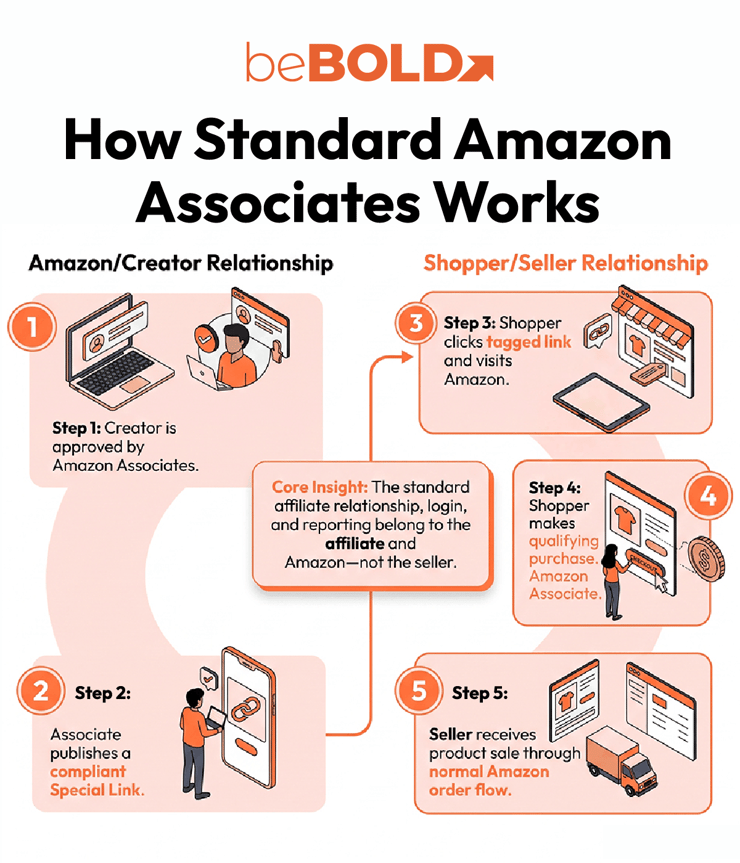
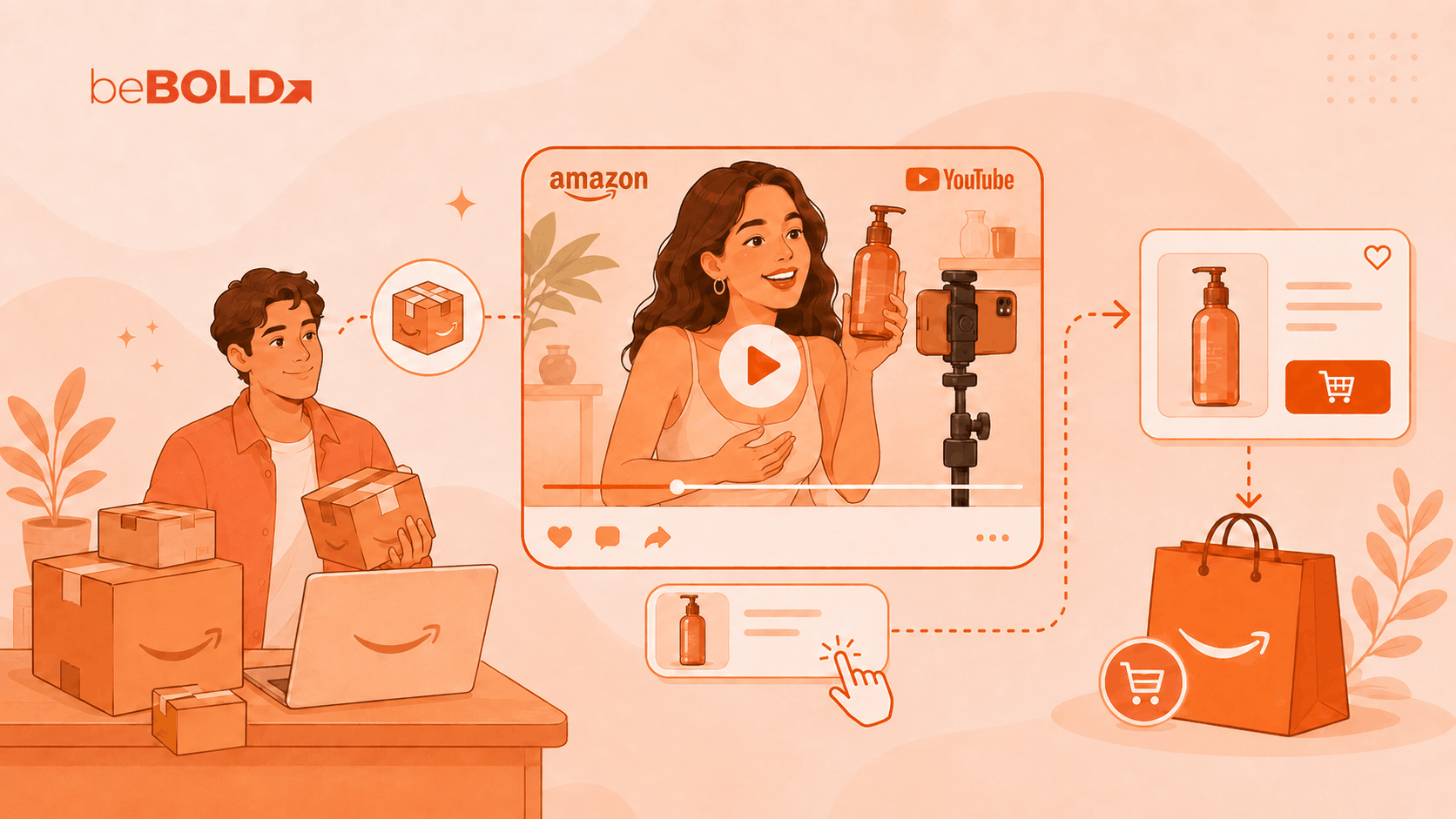
Amazon Associates connects Amazon with eligible content creators, publishers, bloggers, and influencers that recommend products using Special Links. For the brand, the typical path is:
-
A creator completes the Amazon affiliate program sign-up process and Amazon approves the account.
-
The Associate publishes a compliant Special Link on an approved website, app, or social channel.
-
A shopper clicks the tagged link and visits Amazon.
-
The shopper makes a qualifying purchase under Amazon’s current program rules.
-
Amazon pays the Associate; the seller receives the product sale through the normal Amazon order flow.
The Amazon affiliate login and Associates reporting belong to the affiliate, not the seller. A seller may separately learn how to become an Amazon affiliate and apply as a publisher if eligible, but that account is distinct from operating an Amazon selling account.
How to Set Up an Amazon Associates Account in 2026: Step-by-Step Guide
These instructions are for a seller, creator, or publisher who wants to become an Amazon Associate. Completing them does not create a seller-controlled affiliate program or connect Associates reporting directly to a Seller Central account.
1. Start an Amazon Associates Application
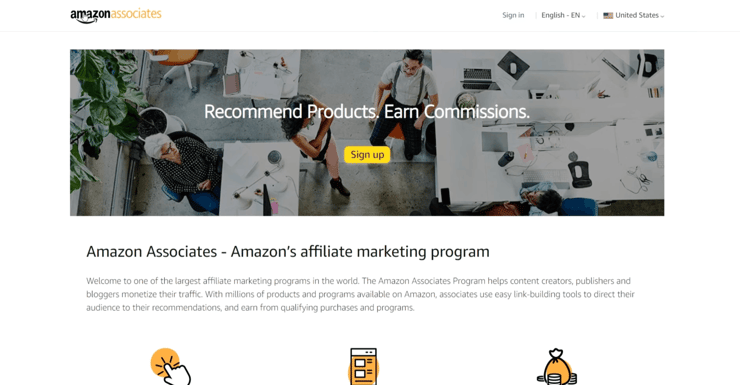
Visit the US Amazon Associates homepage and select the current signup option. Sign in using an existing Amazon account or create one. Businesses should use an account that an authorized team member can maintain.
2. Provide Account and Payee Information
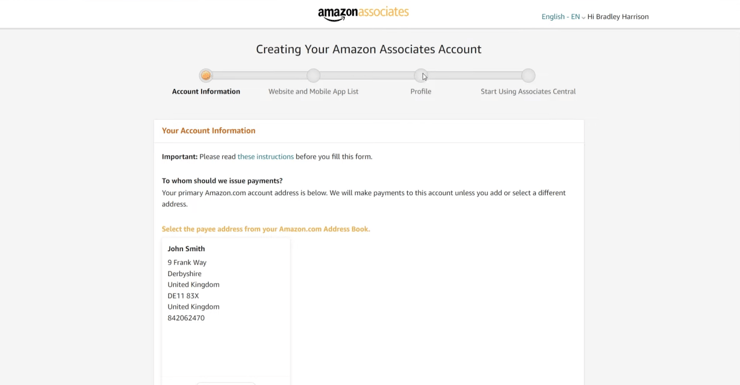
Enter the requested payee name, mailing address, primary contact, and phone information. The payee information should be consistent with the applicant’s banking and tax records.
3. Add Your Website, App, or Social Channel
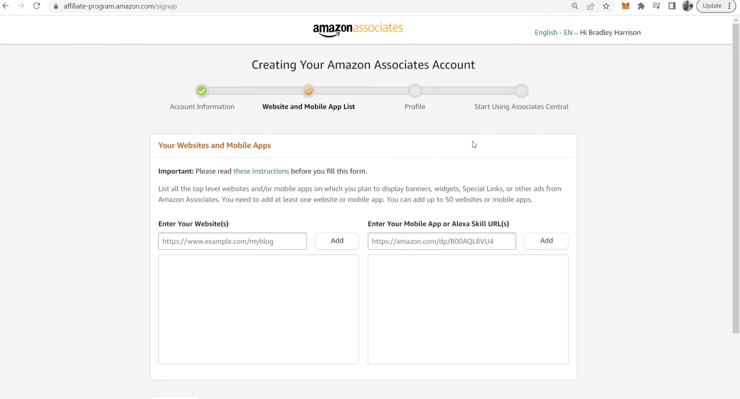 List the exact URLs of the properties where Amazon affiliate links will appear. These may include qualifying websites, mobile apps, or eligible public social media pages. Only list properties the applicant controls, and keep the account’s site list current.
Amazon’s public application guidance currently recognizes eligible pages on platforms including Facebook, Instagram, X, YouTube, TikTok, and Twitch, subject to its content, audience, and accessibility requirements. Because form limits can change, follow the maximum displayed in the live application instead of publishing a fixed number.
4. Choose a Store ID and Describe Your Content
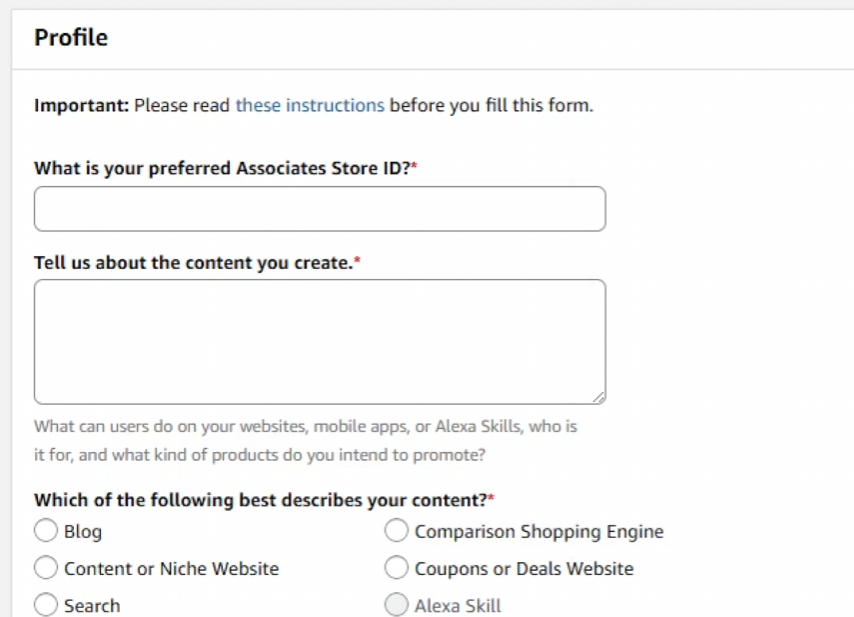
Choose a preferred Store ID and explain the applicant’s content, audience, and relevant product topics. Amazon uses an Associate or tracking ID within tagged links to connect qualifying activity with the account.
5. Explain How You Attract Visitors
Complete the questions about traffic sources, content creation, link-building methods, monetization, and approximate audience size. Answers should accurately describe how visitors discover and engage with the declared properties.
6. Complete the Required Verification
Complete any phone, security, or identity verification Amazon requests. Do not assume the process will always involve an automated phone call, because the available verification method or interface may change.
7. Complete Tax and Payment Information
Amazon requires Associates to complete and validate its online tax interview before receiving commission payments.
US Associates can currently choose from direct deposit, an Amazon gift card, or check, subject to Amazon’s payment thresholds and processing rules. Direct deposit is generally the most straightforward option for an eligible US bank account.
8. Add Disclosures and Create Special Links
Once the account provides access to the linking tools, create tagged Special Links and place them only on declared, compliant properties. Amazon requires the following identification to appear clearly on the Associate’s site:
As an Amazon Associate I earn from qualifying purchases.
Affiliate recommendations also need a clear, conspicuous link-level disclosure such as “paid link,” “#ad,” or “#CommissionsEarned,” as appropriate. Review Amazon’s disclosure guidance and applicable FTC requirements before publishing.
9. Generate Qualifying Sales and Complete Review
Creating an account is not the same as receiving final approval. Amazon reviews an application after it generates at least three qualifying sales within the first 180 days. Personal orders do not qualify.
Amazon evaluates the websites, apps, and social pages listed in the application for original content, public accessibility, policy compliance, and customer value. Applicants should therefore prepare their content and disclosures before distributing Special Links.
Who Pays Amazon Affiliate Commissions?
.jpg?width=740&height=493&name=pexels-karola-g-5942601%20(2).jpg) Source: Pexels
Source: Pexels
Amazon pays standard Associates commissions according to its current US Commission Income Statement. Sellers do not set those rates. As of August 2026, the statement lists 10% for Luxury Beauty, 3% for Beauty, Pet Products, and Baby Products, and 1% for Health & Personal Care. Rates and qualifying-purchase rules can change, so verify the live statement before publishing campaign economics.
For broader context on how commissions, creator behavior, content formats, and program policies are evolving, read our analysis of Amazon Affiliate Program Trends that Drive Success in 2026.
A brand may have separate expenses. Creator Connections can include brand-funded bonus commissions, while a direct affiliate agreement may include negotiated commissions, flat fees, samples, software costs, or content-usage rights.
Can Amazon Sellers Track Affiliate Sales?
Standard Amazon Associates reporting does not give sellers full visibility into every publisher or creator linking to their ASINs, which is a common limitation. In practice, affiliate traffic is often fragmented unless a structured measurement system is in place.
For more reliable tracking, eligible advertisers can use Amazon Attribution, Amazon’s free measurement tool for non-Amazon search, social, display, video, email, and affiliate or influencer campaigns. It provides a 14-day attribution window and metrics such as clicks, detail page views, purchases, units sold, product sales, and new-to-brand activity.
In our experience as an Amazon beauty agency, more advanced brands may also use direct affiliate or creator management tools for partner-level visibility like clicks, payments, and contracts. However, even with improved tracking, attributed sales should not be treated as fully incremental—performance should always be validated against baseline sales, branded search lift, and total account performance to account for multi-touch customer journeys.
 Can Sellers Work With Amazon Affiliates and Creators?
Treat affiliate marketing as a coordinated sales channel, not a link-distribution task. The seven-step process below connects partner selection with catalog readiness, measurement, and profit.
1. Choose the Right Program
Use Associates for participation; Creator Connections for eligible campaigns; Attribution for measuring seller-owned external traffic; or a direct program when the brand needs partner approval, custom compensation, and direct reporting.
2. Confirm Eligibility and Prepare Retail-Ready ASINs
Check program access in the relevant US account. Then confirm inventory depth, Featured Offer availability, competitive pricing, review health, listing compliance, and conversion performance. Creator traffic cannot compensate for an unclear detail page. Strengthen weak ASINs with Amazon listing optimization before increasing reach.
3. Enroll in Measurement and Eligible Credit Programs
Set up Amazon Attribution before links go live. Eligible US professional sellers enrolled in Brand Registry can also evaluate Brand Referral Bonus. Amazon describes the bonus as credits that offset future referral fees and average about 10% of qualifying sales, not as an affiliate commission.
4. Set Program Economics
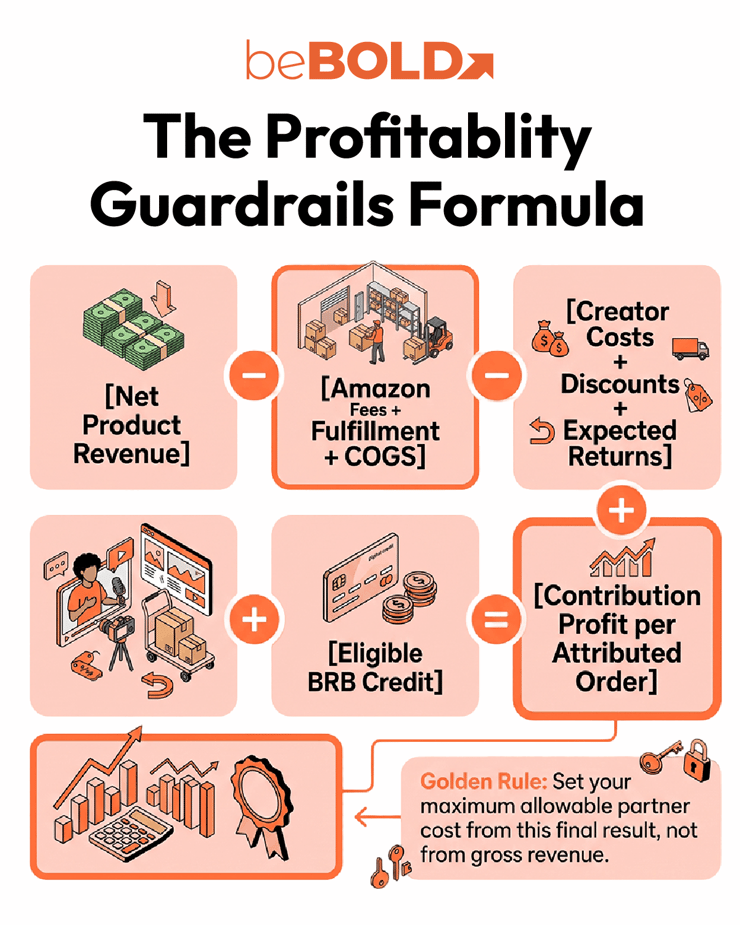
Model contribution profit, not revenue alone:
Contribution profit per attributed order = net product revenue - Amazon fees - fulfillment - COGS - creator costs - discounts - expected return cost + eligible referral-fee credit.
Set a maximum allowable partner cost from that result. Include flat fees, bonus commissions, software, samples, and content rights.
5. Recruit Relevant Partners
Evaluate audience fit, category authority, content quality, engagement quality, disclosure habits, and brand safety rather than follower count alone. Use beBOLD’s process for finding Amazon influencers and storefronts to build a focused prospect list.
6. Prepare a Compliant Brief
Provide approved facts, prohibited claims, required disclosures, assets, deliverables, deadlines, usage rights, and the correct tracking link. Keep creator compensation separate from customer reviews. Never require a positive Amazon review in exchange for payment or free product.
7. Track and Optimize Profit
Review qualified traffic, attributed sales, conversion rate, returns, creator costs, contribution profit, inventory impact, and content quality. Pause or adjust campaigns when stock risk, compliance issues, or partner costs exceed the guardrails established before launch.
Benefits and Limitations of Amazon Affiliate Marketing
.jpg?width=740&height=494&name=pexels-ivan-s-8117815%20(2).jpg) Source: Pexels
Source: Pexels
|
Benefits |
Limitations |
|
Creator content can introduce products through trusted, category-relevant voices. |
Standard Associates offers sellers limited creator-level control and visibility. |
|
External links can reach shoppers on search, social, video, and publisher sites. |
Partner fees, discounts, samples, and returns can compress margin. |
|
Attribution tags can make eligible campaigns more measurable. |
Overlapping touchpoints make incrementality harder to prove. |
|
Seller-managed programs allow custom partner terms and reporting. |
Recruitment, payments, disclosures, claims, and brand safety require active management. |
Searches for affiliate marketing Amazon often blur creator monetization with seller strategy, so brands must match the program model to their reporting needs.
Important Considerations Before Launching
-
Eligibility and availability: Confirm the marketplace, selling plan, Brand Registry status, advertising-console access, and program requirements in the account. Do not assume every feature is universally available.
-
Link ownership and disclosure: Associate Special Links and seller-created Attribution links serve different users. The FTC says material connections, including payment or free products, must be disclosed clearly where people will notice them. Associates must also follow Amazon’s identification and link-placement rules.
-
Reviews and incentives: Do not condition compensation, samples, or continued partnership on a positive customer review. Creator endorsements must reflect honest experience, and claims requiring substantiation cannot be invented.
-
Inventory, margin, and brand safety: Define stock thresholds, ASIN-level cost ceilings, prohibited claims, content-usage rights, and pause criteria before launch. A traffic spike that causes a stockout or loses money is not a successful campaign.
Common Amazon Affiliate Mistakes
The most common mistake is confusing an Associate’s earnings with a seller’s product revenue.
Other failures include:
-
Promoting non-retail-ready ASINs
-
Using unsupported product claims
-
Supplying the wrong link type
-
Skipping clear disclosures
-
Measuring revenue without accounting for returns and partner costs
-
Quoting outdated commission rates
Brands also overestimate control within standard Amazon affiliate marketing. It is important to decide who owns:
-
Recruitment
-
Approvals
-
Reporting
-
Payment
-
Compliance review
-
Inventory monitoring
These responsibilities should be defined before the first creator publishes.
Considerations for Category Fit and Building a Measurable Amazon Affiliate Strategy
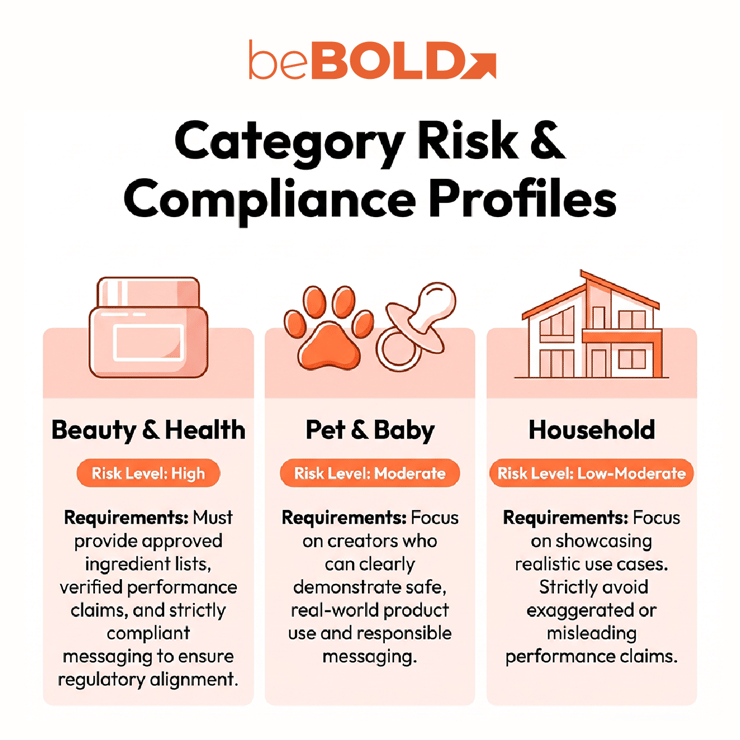
Category fit directly impacts both risk and economics when working with creators and affiliate partners. Different product types require different levels of compliance, messaging control, and creator expertise:
-
Beauty and health brands: Provide approved ingredient lists, performance claims, and compliant messaging to ensure accuracy and regulatory alignment.
-
Pet and baby products: Work with creators who can clearly demonstrate safe, real-world product use and responsible messaging.
-
Household products: Focus on showing realistic use cases and avoid exaggerated or misleading performance claims.
Across all categories, brands should evaluate key business and operational factors before scaling affiliate or creator activity:
-
Shelf life and product stability
-
Variation availability (sizes, colors, bundles)
-
Inventory depth and fulfillment readiness
-
Return rates and customer satisfaction trends
-
ASIN-level contribution profit and margin health
It is also important to note that Amazon’s standard Amazon Associates affiliate program rates vary by category. While sellers do not control these rates, they can influence which products creators prioritize based on earning potential.
To turn these considerations into a scalable system, brands should build a measurable Amazon affiliate strategy that aligns product readiness with creator selection, tracking, and profitability. beBOLD Digital helps established brands choose the appropriate creator model, prepare retail-ready listings, coordinate affiliate and influencer activity, implement Amazon Attribution, and optimize toward profitable marketplace growth. Explore Amazon affiliate management services to evaluate which approach fits your catalog, margins, and operational capacity - or contact us for a free consultation!
 Frequently Asked Questions
What is the Amazon affiliate program for sellers?
It is an umbrella term for seller participation in Amazon Associates exposure, Creator Connections campaigns, Attribution measurement, Brand Referral Bonus, or a directly managed affiliate program.
Who pays Amazon affiliate commissions?
Amazon pays standard Associates commissions. Brands may separately fund Creator Connections bonuses, direct affiliate commissions, flat creator fees, samples, software, or content rights.
Can Amazon sellers become Amazon Associates?
Yes. A seller may apply separately if it meets Amazon’s eligibility and policy requirements. The Associates account remains distinct from the Amazon selling account.
Can sellers choose which affiliates promote their products?
Not across standard Associates. Creator Connections and direct partnerships offer more campaign structure or partner control, subject to program access and individual agreements.
Can sellers track Amazon affiliate sales?
Sellers can use Amazon Attribution for eligible off-Amazon campaigns and direct-program reporting for partner data, but standard Associates does not expose every affiliate relationship.
What is the difference between Amazon Associates and Creator Connections?
Associates is Amazon’s broad publisher program. Creator Connections lets eligible brands create campaigns in which participating Associates may earn additional brand-funded commissions.
What is Amazon Brand Referral Bonus?
It is an eligible US seller program that provides referral-fee credits on qualifying sales measured with Amazon Attribution. It is not an affiliate commission.
How much do Amazon affiliates earn per sale?
Earnings vary by product category and qualifying-purchase rules. Check Amazon’s current, date-stamped US Commission Income Statement rather than relying on a fixed range.





Comments