



Amazon affiliate marketing has evolved from publisher links and product-review blogs into a creator-commerce ecosystem spanning social video, storefronts, livestreams, Creator Connections, cross-channel measurement, and AI-assisted workflows. In 2026, brands can improve results by prioritizing credible expertise, audience-product fit, retail readiness, transparent disclosures, and profit-aware measurement rather than treating affiliate traffic as an isolated channel.
How Has Amazon Affiliate Marketing Evolved?
 Source: Adobe Stock
The Publisher and Product-Review Era
Amazon launched Amazon.com Associates in July 1996 so websites could recommend books and earn referral fees. The model remains: under the current U.S. Associates agreement, creators and publishers use tagged Special Links and may earn commission income from qualifying purchases or actions. Early affiliate marketing centered on blogs, buying guides, comparison pages, and search traffic.
The Social Creator and Storefront Era
YouTube, Instagram, and TikTok shifted product discovery toward personalities, demonstrations, routines, and community trust. The Amazon Influencer Program added storefronts where approved creators curate recommendations on Amazon, complementing links in external content. Brands gained more voices but also had to assess quality, disclosures, claims, and audience relevance.
The Creator-Commerce Era
Today, discovery can move among social video, Amazon storefronts, Amazon Live, Prime Video, and off-Amazon content. With US social commerce sales projected to well surpass the $100 billion mark in 2026, the modern buying journey is highly fragmented. Creator Connections helps eligible brands structure campaigns and offer incentives to participating creators, while Amazon Attribution and Amazon Marketing Cloud support different layers of measurement.
Amazon Affiliate Marketing Trends Brands Should Watch in 2026
1. Creators Are Becoming Commerce Partners, Not Just Traffic Sources
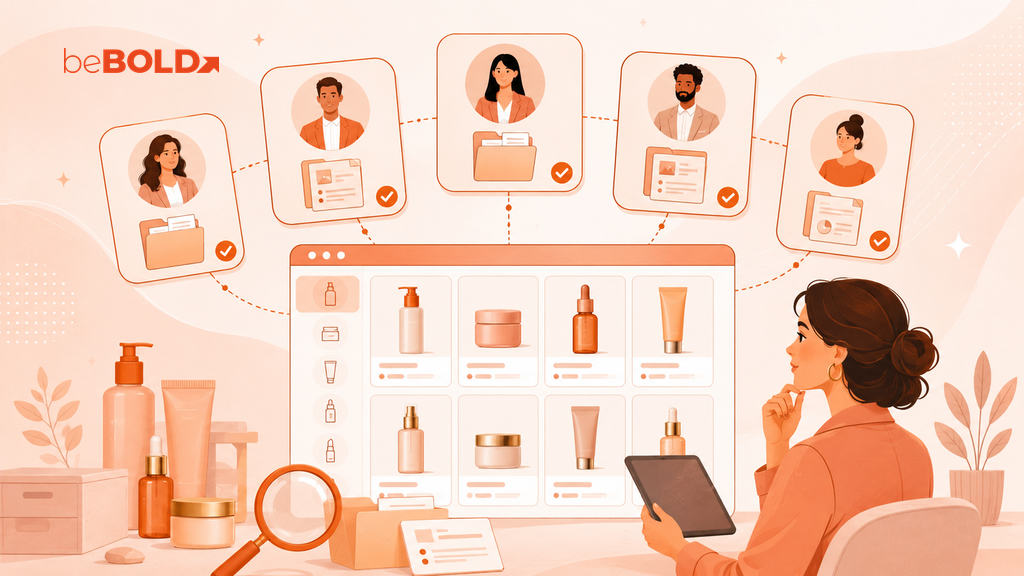
Amazon Ads describes creators as community builders who can support livestreams, idea lists, shoppable posts, and full-funnel storytelling. That makes a creator's value broader than clicks. For sellers, the question is whether a partner can educate shoppers, produce reusable content, and represent the category credibly while still driving measurable activity.
2. Short-Form Video Is Replacing the Single Affiliate Link
Unboxings, routines, comparisons, and “Amazon finds” videos show a product in context before the shopper sees a link. Brands should give creators accurate product information, clear claim boundaries, and room to adapt the story for TikTok, Instagram Reels, YouTube Shorts, and Amazon-native placements.
3. Niche Authority Matters Alongside Follower Reach
Large audiences can create awareness, but category alignment can make a smaller creator more persuasive. In fact, industry benchmarks consistently show that micro-influencers often drive significantly higher engagement and conversion rates for niche products than macro-influencers. Review product knowledge, audience fit, content quality, disclosure habits, comment relevance, and past brand safety—not follower count in isolation. beBOLD's guide to finding Amazon influencers offers a practical starting point.
4. Creator Connections Is Formalizing Brand-Creator Campaigns
Amazon Creator Connections gives eligible brands a structured environment for campaign offers and creator incentives. Availability, budgets, rates, and participation rules can change, so verify the current requirements inside Amazon Ads before planning. Treat the platform as an execution layer; strategy still requires a precise brief, suitable products, and realistic economics.
5. Livestreaming and Shoppable Entertainment Are Expanding the Funnel
Amazon Live combines product demonstrations with a shopping experience, and Amazon has extended shoppable programming to a free Amazon Live channel on Prime Video. As livestream commerce continues its double-digit year-over-year growth in Western markets, this format perfectly suits products that benefit from explanation, styling, comparison, or real-time questions.
6. Affiliate Discovery Is Becoming Cross-Platform
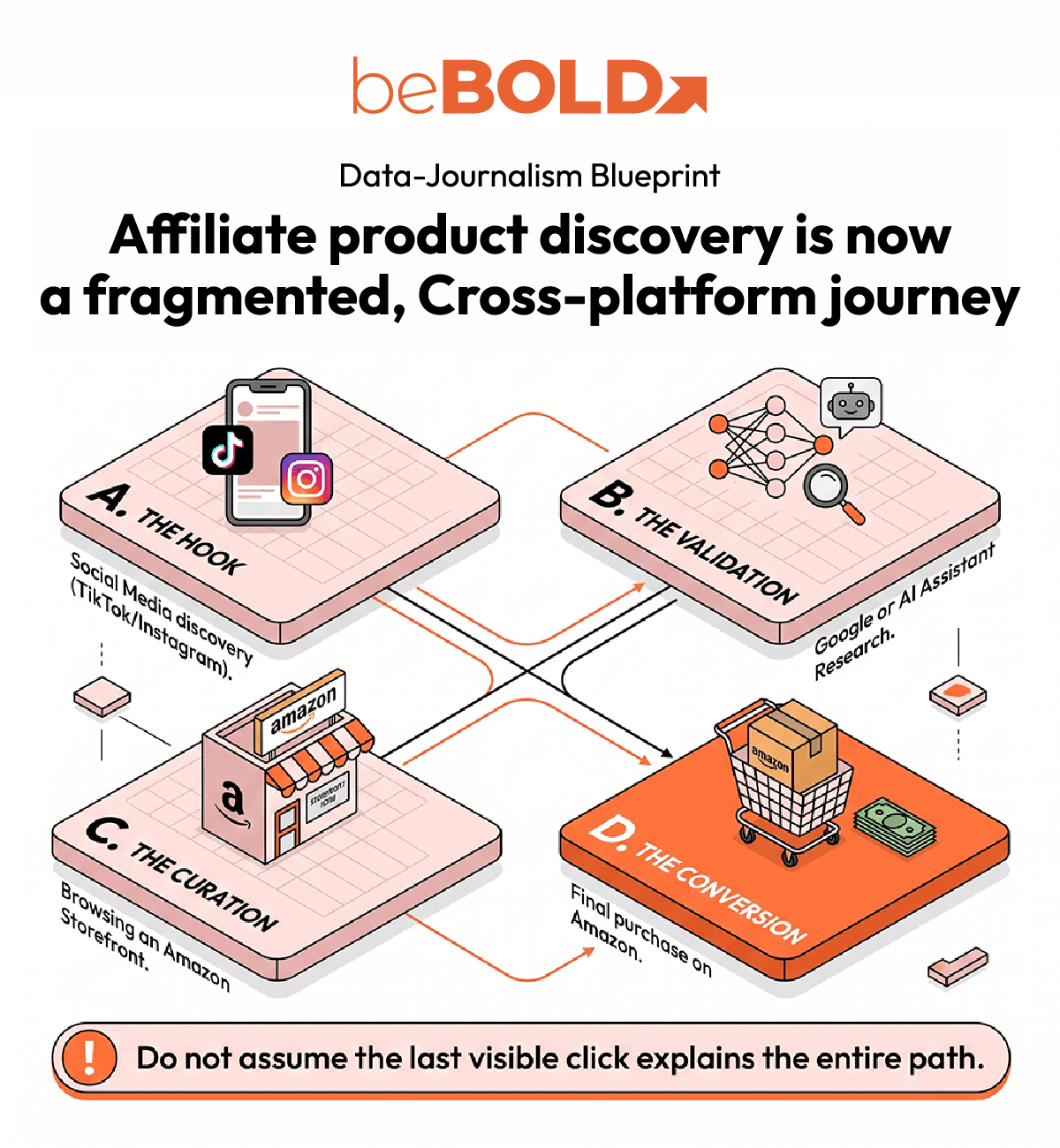
A shopper might first encounter a creator on social media, research the item through Google or an AI assistant, browse an Amazon storefront, and convert later. Plan consistent product facts, creative hooks, and landing-page readiness across those moments. Do not assume the last visible click explains the entire path.
7. Measurement Is Moving Beyond Last-Click Revenue
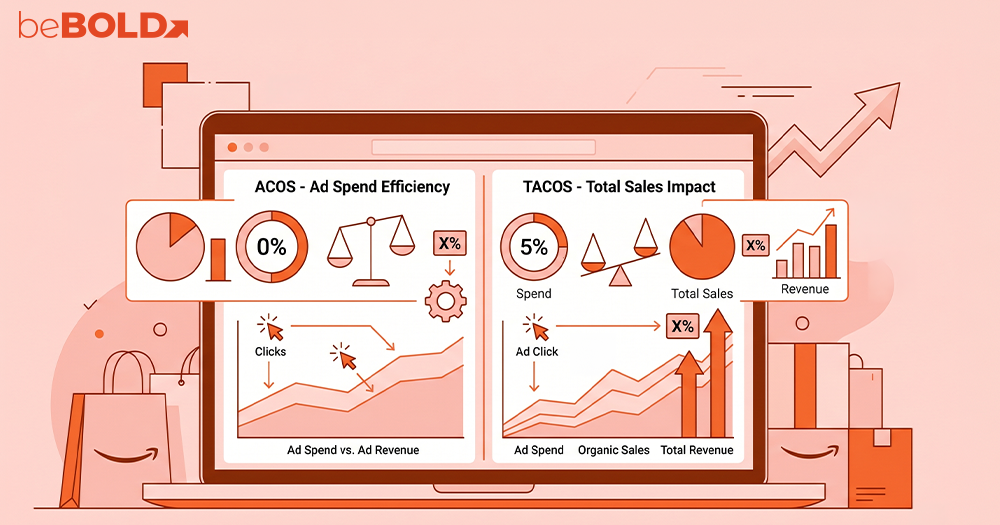
Track attributed sales and conversion, but also returns, partner costs, contribution profit, inventory effects, new-to-brand indicators where available, and the reuse value of creator assets. Amazon Attribution can measure eligible non-Amazon channels, including social and influencer activity. Use results to compare creatives and partners, not to claim incrementality the data cannot prove.
Amazon Creator Examples and What Brands Can Learn From Them
These examples are not endorsements by beBOLD Digital. Verify current creator activity before outreach.
Alix Earle: Lifestyle Influence Connected to Beauty Commerce
@alixearle These and so many more on sale now for Amazon Prime Day (today - June 26th) @Amazon @Amazon Influencer Program #amazonpartner ♬ original sound - Alix Earle
Alix Earle's 2026 Prime Day beauty coverage shows how a lifestyle creator can connect a timely retail event with routines, familiar product categories, and curated recommendations. The lesson for beauty brands is not to copy celebrity scale. It is to give a well-matched creator a credible occasion and a clear reason for the product to appear in her existing content.

Paige DeSorbo: From Social Personality to Shoppable Entertainment
Source: Amazon
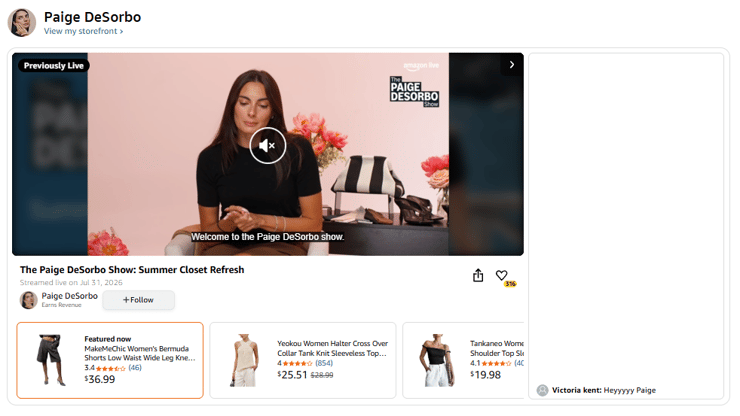
Amazon has featured Paige DeSorbo in creator-led Amazon Live programming on its Prime Video channel, and 2026 coverage documented another Amazon Live fashion haul. Her example shows how entertainment, demonstration, and shopping can work together when the creator's voice and the product category naturally fit.
Mary Kate Morrissey: Niche Expertise Can Create Commercial Demand
Source: Amazon
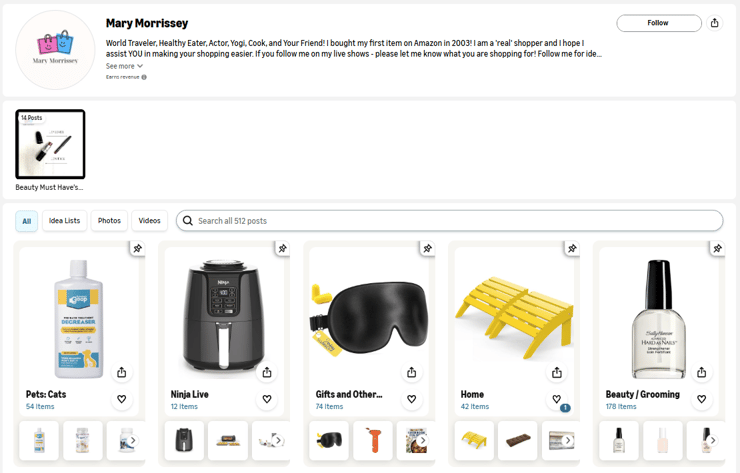
Business Insider reported that audience interest in Broadway performer Mary Kate Morrissey's behind-the-scenes performance tools led fans to request an Amazon storefront. This is one of the more useful Amazon Associates success stories because demand followed genuine expertise. For brands, the takeaway is to look for creators whose real work makes product education believable.
Creator Selection Takeaway
Famous creators may bring reach and cultural relevance, but smaller specialists may offer tighter audience-product fit. Compare content quality, conversion economics, claim risk, disclosure discipline, availability, and expected asset value before choosing either model.
How Is AI Used in Amazon Affiliate Marketing?

Product and Trend Research
AI can cluster customer questions, surface content gaps, organize product themes, and summarize seasonal signals. It is useful for triage, not truth. Human teams should verify outputs against Amazon data, current product detail pages, customer feedback, and reliable external sources before acting.
It can also suggest relationships among search intent, seasonality, and content format.
Creator Discovery and Campaign Matching
AI-assisted workflows can categorize creators, compare audience signals, screen content, prioritize outreach, and flag potential brand-safety concerns. They cannot independently determine trust, authentic influence, or incrementality. A human reviewer should assess context, recent content, conflicts, and claim behavior.
Briefs, Scripts, and Content Variations
Generative tools can propose hooks, outlines, captions, comparison angles, localizations, and format variations. The safest model is hybrid: use AI to accelerate options, then have people validate product facts, brand voice, originality, disclosures, and platform requirements. The same principle applies to AI-assisted UGC for TikTok ads.
Performance Analysis and Optimization
AI can summarize reports, find patterns, flag anomalies, and suggest tests across partners or creative formats. Decisions should still use verified sales, costs, returns, inventory, and campaign terms. Correlation can identify what to test next; it does not prove that a creator caused every observed sale.
Where AI Should Not Replace Humans
AI cannot truthfully claim personal product experience. Do not use it to fabricate testimonials, before-and-after results, identities, or unsupported health and performance claims. Obtain permission for likeness use, protect confidential data, and require human approval before publication.
Important Considerations Before Launching an Amazon Affiliate Campaign
Searches for Amazon Associates success stories earnings or an Amazon Associates program success rate imply a benchmark that Amazon does not publish as one universal number. Outcomes vary with category, price, commission structure, conversion, returns, traffic quality, creator compensation, and execution. Build a brand-specific forecast and test plan instead of borrowing another publisher's earnings.
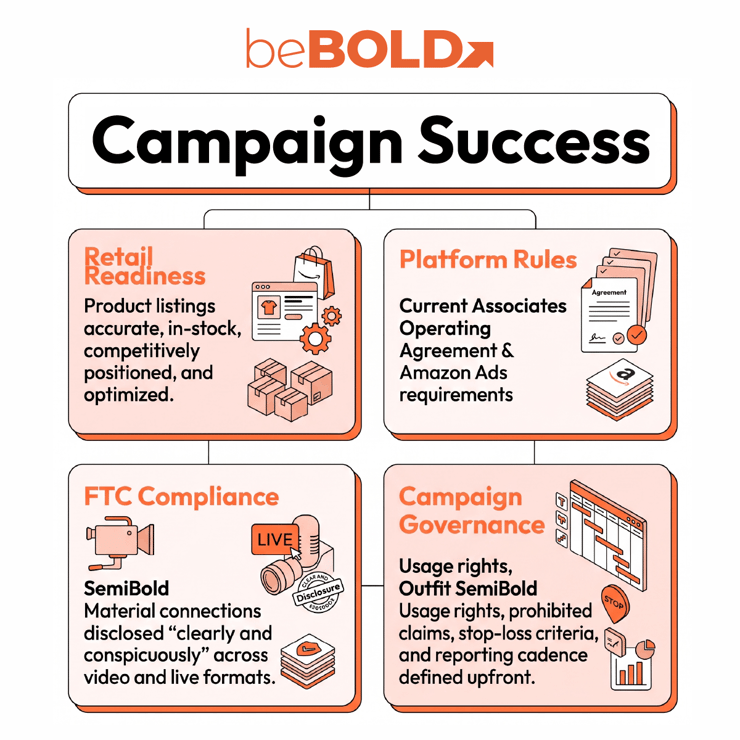
Confirm that your Amazon Affiliate Program’s foundation is solid before paying for traffic. Instead of doing a quick check after content goes live, ensure the following are locked in before you launch:
-
Retail Readiness: Product listings must be accurate, in stock, competitively positioned, and optimized to convert.
-
Platform Rules: Review the current Associates Operating Agreement, Creator Connections terms, and relevant Amazon Ads requirements.
-
FTC Compliance: Amazon requires Associates to identify themselves clearly, and the FTC mandates that material connections be disclosed "clearly and conspicuously." Disclosures must be adapted for all formats, including short-form video and livestreams.
-
Campaign Governance: Define ownership of creator assets, approval steps, prohibited claims, usage rights, reporting cadence, and stop-loss criteria upfront. Compliance is part of campaign design, not an afterthought.
Build a Future-Ready Amazon Affiliate Strategy With beBOLD Digital
beBOLD Digital helps Amazon brands plan creator selection, Creator Connections campaigns, retail readiness, affiliate management, and profit-aware measurement. If you want a strategy that connects credible creator content with marketplace execution, book a call with beBOLD Digital to discuss your category, economics, next test, and a tailored, practical 2026 roadmap.
 Asked Questions
How has Amazon affiliate marketing changed?
Affiliate marketing expanded from review blogs into storefronts, social video, livestreams, structured creator campaigns, and AI-assisted workflows connecting discovery, education, and purchase across multiple touchpoints.
What are the biggest Amazon affiliate marketing trends in 2026?
Key trends are creator commerce, short-form demonstrations, niche authority, Creator Connections, shoppable entertainment, cross-platform discovery, AI assistance, and profit-aware measurement that considers returns and content value.
How is AI used in affiliate marketing?
Teams use AI for research, creator categorization, content planning, localization, reporting, anomaly detection, and test ideas. People must verify facts, protect data, and approve decisions.
Can AI create Amazon affiliate content?
AI may assist production, but content should remain original, truthful, useful, disclosed, and compliant. It must not invent personal experience, testimonials, or unsupported product claims.
Are Amazon Live and creator storefronts the same thing?
No. A storefront curates a creator's recommendations. Amazon Live centers on shoppable video and livestream programming. An eligible creator may use both in one strategy.
Do famous influencers perform better than micro-influencers?
Not automatically. Results also depend on audience fit, trust, category knowledge, product relevance, campaign economics, creative quality, timing, disclosures, and brand retail readiness before launch.
What should Amazon brands measure in affiliate campaigns?
Measure attributed sales, conversion, returns, partner costs, contribution profit, inventory effects, new-to-brand indicators, content reuse value, and compliance. Define metrics before comparing partners across reporting periods.




Comments