



South Korea’s growth in beauty is about more than just skincare trends. It now includes trade, manufacturing, e-commerce, and brand strategy.
According to Korea Biomedical Review, South Korea surpassed the United States in 2025 to become the world’s second-largest cosmetics exporter, behind only France. Korean cosmetics exports rose 11.8% year over year to reach $11.4 billion, while Korean cosmetic trade generated a $10.1 billion surplus for the first time.
This matters for beauty companies because K-beauty’s export growth shows what today’s beauty shoppers value most:
- Fast product innovation
- Ingredient-first education
- Strong marketplace distribution
- Social proof from real users
- Skincare-led brand ecosystems
For Amazon sellers, the lesson is clear. Korean beauty brands succeed not just because they are Korean, but because they know how shoppers research, compare, trust, and buy beauty products online.
This is the approach that global beauty brands should pay attention to.
K-Beauty Export Growth Is Now a Structural Shift
The first global wave of K-beauty was all about newness. People found BB creams, sheet masks, essences, snail mucin, glass skin routines, and multi-step skincare. These products seemed fresh, affordable, and easy to share.
But things have changed in the current wave.
Now, Korean beauty companies like COSRX, Beauty of Joseon, Anua, Skin1004, Round Lab, Laneige, and Medicube are building strong global brands. They do not just rely on being from Korea. Instead, they build trust with their formulas, reviews, routines, and marketing that fits each platform.
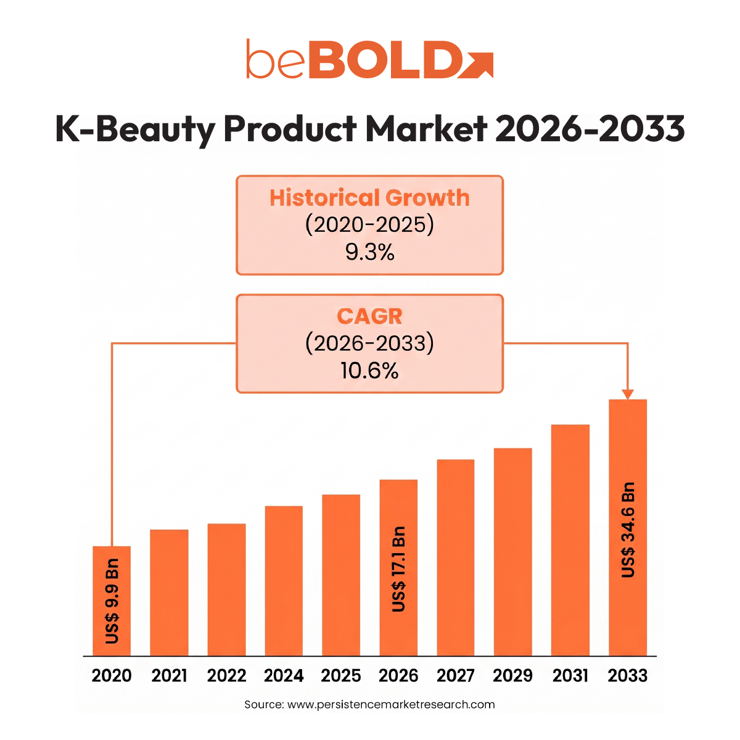
Source: Persistence Market Research
The numbers show how much the market has changed:
- Korea is now poised to reach $34.6 billion in product market share by 2033.
- Korea became the No. 2 cosmetics exporter globally in 2025.
- Korean cosmetics exports reached $11.4 billion.
- Korea's cosmetic trade recorded a $10.1 billion surplus.
- The U.S. became Korea’s largest beauty export destination, reaching $2.2 billion.
- Skincare accounted for $8.53 billion, or 74.7%, of Korean cosmetics exports.
- The number of countries importing Korean cosmetics increased from 172 to 202.
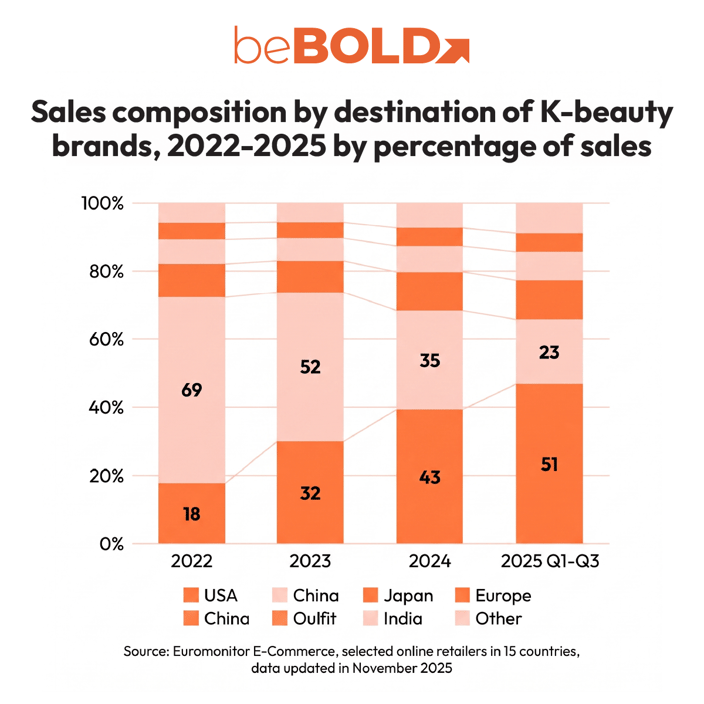
Source: Euromonitor International
That’s why global beauty brands should not see K-beauty trends as just quick social media fads. The Korean beauty export story is now about long-term retail growth, new products, teaching customers, and selling internationally online.
For premium brands looking to grow on Amazon, this change means they need to stand out more in the marketplace. Partnering with an Amazon beauty marketing agency can help brands turn these trends into better product listings, stores, content, and ad strategies.
Five Competitive Advantages Behind Korea’s Beauty Dominance
Korea’s Korea’s beauty success comes from many factors working together. Product development, manufacturing, content, retail, and teaching customers all play a part.s what makes the model difficult to copy.
1. Faster Innovation Cycles
Source: Adobe Stock
Korean beauty brands move quickly from trend detection to product execution.
When consumers show interest in calming ingredients, brands respond with centella, heartleaf, mugwort, and barrier-support formulas. When shoppers want “glass skin,” the market answers with toners, ampoules, collagen creams, overnight masks, and lightweight gels. When TikTok pushes PDRN, spicules, or exosome-style skincare into the conversation, Korean brands are often among the first to make those concepts commercially visible.
Speed is important because beauty trends now change as fast as the marketplace does.
On Amazon, keyword trends, review language, TikTok virality, and competitor launches can shift buyer expectations within weeks. A slow product pipeline creates a visibility gap. A fast pipeline creates topical relevance.
For sellers, this means Amazon SEO is not just a one-time task. It should change as search habits, categories, and customer language change. A good Amazon SEO plan helps brands keep their listings in line with what shoppers are looking for.
2. Ingredient-Led Marketing

Source: Adobe Stock
K-beauty brands are strong at turning ingredients into clear consumer benefits.
This is one reason why Korean skincare does well online. Shoppers do not have to guess what a product does. The product name, main image, bullet points, and social posts usually explain the ingredient and how to use it.
Real-life examples include:
- A centella serum positioned for redness, sensitivity, and barrier support
- A snail mucin essence marketed around hydration, bounce, and skin repair
- A rice toner framed around glow and uneven tone
- A heartleaf toner positioned for calming acne-prone or stressed skin
- A collagen jelly cream tied to plumping, firmness, and glass skin
This type of marketing works well on Amazon because shoppers compare products quickly. They look at images, ingredient claims, reviews, and A+ Content before deciding if a product meets their needs.
For example, a Korean toner should do more than just say “Heartleaf 77%.” It should also explain how it helps, like “helps calm visible redness,” “supports stressed skin,” or “lightweight hydration for oily and combination skin.”
The same idea works for Amazon A+ Content. Beauty brands can use comparison charts, routine graphics, ingredient highlights, and clear instructions to help shoppers feel more confident before buying.
3. Manufacturing Excellence

Source: Cosmax
Korea’s rise is also powered by its manufacturing base.
ODM and OEM leaders such as Cosmax, Kolmar Korea, and Cosmecca Korea help brands move from concept to finished product with speed and technical sophistication. In 2025, Cosmax ranked first among original development manufacturing companies in Korea, followed by Kolmar Korea and Cosmecca Korea.
This is important because beauty products are becoming more technical.
Shoppers now care about texture, absorption, ingredient mixes, product stability, packaging, and how products fit into their routines. Brands that see manufacturing as just a background task are missing out. Today, how a product is made is part of its marketing.
For Amazon sellers, product quality shows up in reviews. If a serum pills, a sunscreen leaves a white cast, or a moisturizer feels sticky, shoppers will mention it. These reviews then affect sales, rankings, and how well ads work.

4. Social Commerce Integration
Source: Adobe Stock
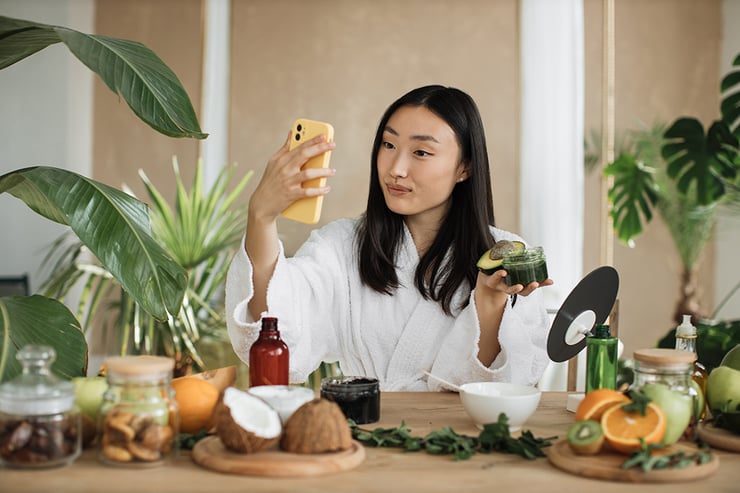
K-beauty brands know that shoppers often discover products before they get to Amazon, but they might decide to buy on Amazon.
TikTok, Instagram, YouTube Shorts, Reddit, Amazon reviews, and creator storefronts all shape the buying journey. Vogue Business has reported that K-beauty’s resurgence is being fueled by TikTok virality, ingredient-focused skincare, and stronger storefront strategies on Amazon and TikTok Shop.
This creates a connected funnel:
- TikTok introduces the product.
- UGC validates the claim.
- Reviews reduce skepticism.
- Amazon captures demand.
- A+ Content and storefronts complete the education loop.
Beauty brands should keep their social content and Amazon content connected. The same messages should appear on all platforms. If TikTok creators show how a toner fits into a calming routine, Amazon images should show that routine too.
Strong visual branding optimization for beauty brands helps make that connection clearer across thumbnails, PDPs, storefronts, and ads.
5. Skincare-First Strategy
Source: Adobe Stock
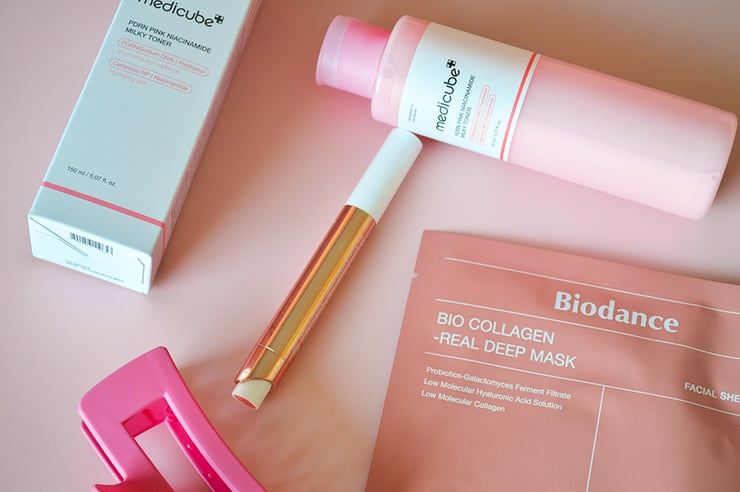
K-beauty also benefited from anticipating the global shift toward skincare. This is not by chance. Korean brands have always promoted beauty as a daily care system, not just a single product.
This gives them a major advantage in retention.
A shopper might start with a cleanser, then add a toner, serum, moisturizer, mask, sunscreen, and even a device. The brand becomes part of their routine, not just a single product.
This is an important lesson for Amazon sellers. While hero products are important, top brands often win by creating connected systems. Bundles, Subscribe & Save, easy-to-use storefronts, comparison tools, and routine-based A+ Content can turn one purchase into a longer customer journey.
Why Korean Brands Are Winning on Amazon
Korean beauty brands do well on Amazon because they understand how shoppers think about risk when buying beauty products.
Beauty shoppers want proof before they buy. They want to know what the product does, who it is for, how to use it, and if people like them have had good results.
Education Before Selling
K-beauty content often teaches first and sells second.
COSRX: Ingredient Education Through Snail Mucin
Real TikTok examples show this well. COSRX’s snail mucin became popular as creators showed its texture, how to layer it, its hydration benefits, and how it fits into routines. Most of the content explains what snail mucin is, who should use it, and how it helps with skin hydration and barrier health.
Anua: Calming Ingredients and Barrier Care
Anua’s TikTok often highlights calming ingredients like heartleaf, routines that support the skin barrier, and solutions for sensitive or acne-prone skin. Their educational videos explain what each ingredient does and show how to layer products in a full routine.
These examples are effective because they make things clearer for shoppers.
On Amazon, the same educational approach should appear in:
- Main images that identify the skin concern
- Infographics that explain hero ingredients
- A+ modules that show routines
- FAQs that address skin type, usage, and compatibility
- Storefront pages grouped by concern
This is especially important as Gen Alpha beauty consumers and Gen Z shoppers become more influenced by social-first skincare education. Younger consumers often learn about beauty through short-form videos before they ever read a product description.
Community Before Advertising
Korean beauty brands also gain from proof that comes from their communities.
User-generated content, tutorials, reviews, reaction videos, 'get ready with me' routines, and product comparison videos make buying feel more like getting advice from friends. In beauty, this kind of trust can be more powerful than polished brand ads.
Examples include:
Medicube: Leveraging UGC and Product Demonstrations
Medicube has built a strong community presence by encouraging creators and customers to share authentic product experiences. Much of the brand's TikTok visibility comes from users demonstrating the texture of products such as the Collagen Jelly Cream, documenting their skincare routines, and sharing glow-focused results.
How Medicube builds community:
- Encourages before-and-after style content from real users
- Features customer testimonials and routine demonstrations
- Uses creator partnerships to showcase product application techniques
- Creates highly shareable content around visible skincare results
This approach helps shoppers feel more confident because they can see how products work in real skincare routines.
Beauty of Joseon: Education Through User Experiences
Beauty of Joseon has cultivated a loyal community by combining ingredient education with user-generated reviews. On TikTok, creators frequently discuss sunscreen texture, finish, wearability under makeup, and suitability for different skin types.
How Beauty of Joseon builds community:
- Encourages creators to explain product benefits in their own words
- Relies heavily on authentic sunscreen reviews and wear tests
- Uses routine-building content that shows where products fit within a regimen
- Amplifies customer experiences rather than relying solely on branded messaging
This strategy builds trust because shoppers hear from real people who have used the products. It creates a community-driven content system that keeps building credibility and helping people discover new products.
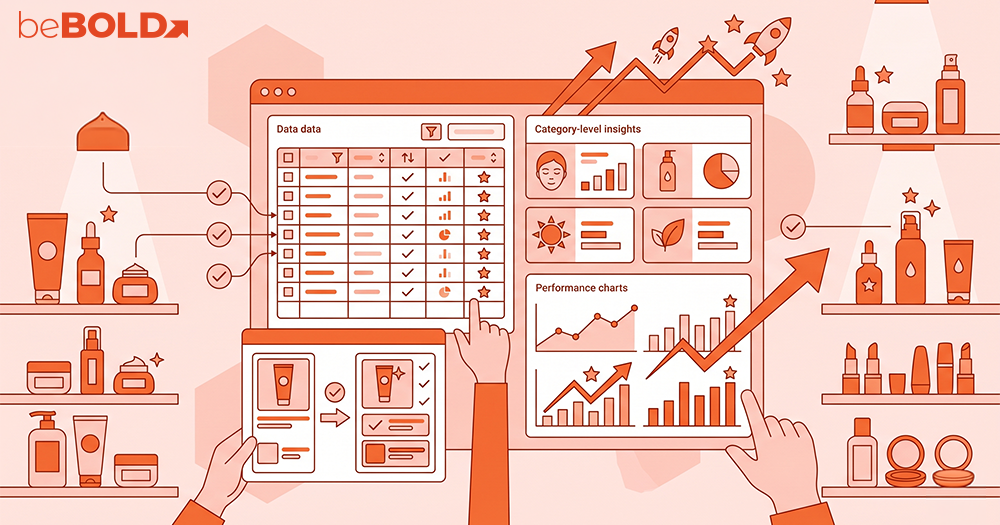
For Amazon sellers, community proof should be part of the retail plan. Reviews, creator content, influencer opinions, and customer feedback should shape product listings and images. beBOLD Digital’s work with premium beauty brands shows that Amazon growth is about more than just traffic. Product page quality, conversion tools, SEO, ads, storefronts, and brand trust all need to work together, as shown in this premium beauty Amazon growth case study.
What Beauty Brands Should Learn From Korea
Korea’s rise offers a practical roadmap for beauty companies competing in crowded markets.
The lesson is not to copy every K-beauty trend, but to learn from the way these brands operate and grow.
Beauty brands should focus on five priorities:
- Build products around clear consumer concerns.
- Translate ingredients into understandable benefits.
- Move quickly when search and social demand shift.
- Treat Amazon as a brand-building channel, not only a sales channel.
- Use content to educate before pushing conversion.
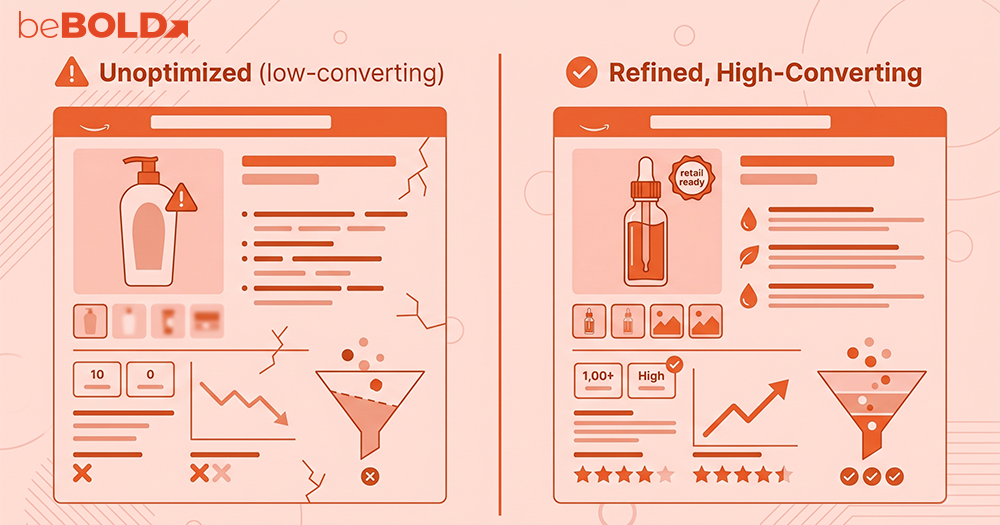
This is where many Amazon sellers struggle. They might have great products, but their marketplace communication is weak. Ingredients are hidden, images do not show the routine, A+ Content looks generic, and ads bring traffic, but the page does not answer shoppers’ questions.
K-beauty brands are setting a higher standard.
The next stage of competition will reward brands that combine product credibility, social proof, retail readiness, and strong marketplace SEO. Korea’s growth as a beauty exporter shows that global demand is shifting toward brands that are quick, educational, and skilled online.
The Future of Beauty and the Lasting Impact of K-Beauty
The Korean beauty industry is growing beyond skincare into beauty devices, biotech ingredients, AI-powered diagnostics, and personalized treatments. Brands like Medicube show how product innovation, social commerce, and ecommerce can work together to drive growth. For Amazon sellers, this means making educational, clear content that works well on search engines and AI-driven platforms.
The K-beauty export boom shows that beauty brands now compete through innovation, ingredient education, social proof, and strong digital strategies. Instead of just following K-beauty trends, brands should use the systems that helped Korea become a top beauty exporter and global leader.
Want to grow your beauty brand on Amazon? beBOLD Digital helps brands boost visibility, increase conversion rates, and achieve long-term growth with Amazon SEO, better content, advertising, and marketplace strategy. Reach out to our team to see how we can help your brand grow.





Comments