


The beauty industry remains one of the fastest-changing industries today, and it’s not just because of new products. Recent industry analyses estimate the industry’s value at approximately $450 billion, with alternative market measurements placing it as high as $646.2 billion in 2024.
For beauty brands selling on Amazon or other platforms, taking advantage of this rapid expansion is crucial to getting your brand ahead of competitors.
What Are the Driving Beauty Industry Trends in 2026?
Several forces are reshaping the beauty business in 2026. By learning how to navigate these trends, you can easily anticipate where the market is heading and how to position your products online.

Source: Adobe Stock
Skincare Is Taking the Lead
According to industry research, skincare now represents the largest share of the global beauty market. Consumers are choosing products that support long-term skin health, especially those with proven, dermatologist-backed ingredients. Skincare routines now focus on prevention, barrier repair, and visible results over time.
Clinical skincare products with dermatologist endorsements and proven efficacy are gaining ground.

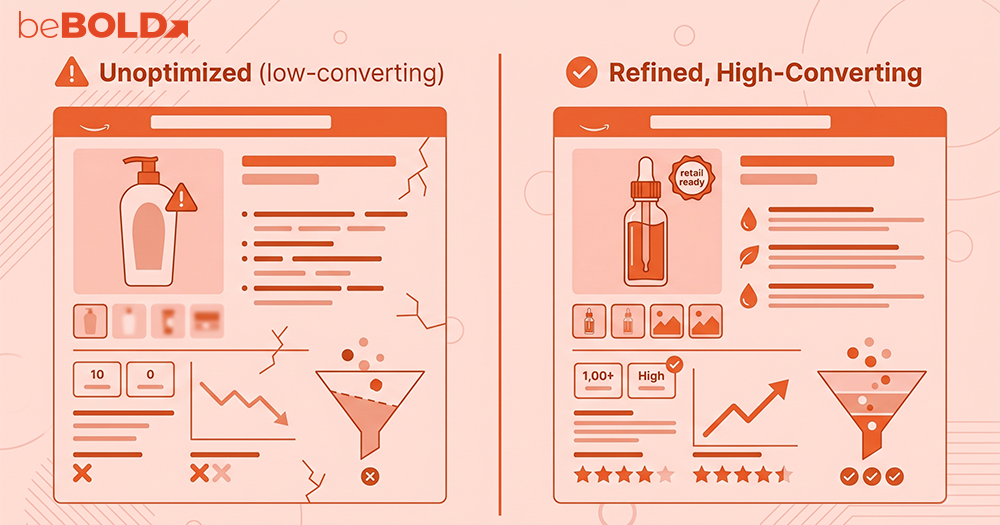
What to Do: Highlight clinical results and active ingredients clearly in your product descriptions. Use A+ Content to show transparency and build trust. You should also learn how to optimize your visual branding to communicate premium positioning effectively.
Influence of Gen Z and Gen Alpha Consumers

Source: Adobe Stock
Gen Z and Gen Alpha are now fast becoming the major forces in the beauty industry, with Gen Alpha now accounting for 49% of skincare sales growth. But aside from their purchasing power, they behavior is also shaping how we see the beauty industry.
Gen Z and Gen Alpha do their homework. They search TikTok for skincare advice, research ingredients on ChatGPT, and reward brands that are honest and science-backed. Polished marketing alone doesn’t cut it. They want facts, not fluff.
Technology and Personalization in Beauty
From AI skin analysis tools to virtual try-ons and personalized regimens, beauty tech has gone mainstream. Brands that use these tools to offer tailored recommendations are seeing better engagement and conversions. Major brands like L'Oréal and Amorepacific have actually stepped up in this avenue, recently unveiling AI diagnostic mirrors and personalized formulation systems at CES 2026, allowing beauty enthusiasts to get professional-level assessments at home or in-store.
Additionally, 77% of beauty professionals believes that AI chat bots or agents offer unmatches potential for creating tailored interactions in this skincare and beauty industry.
Top Beauty Industry Trends Transforming the Market
The cosmetics industry is being reshaped by five major trends that every beauty brand should understand and address.
Science-Backed and Biotech Beauty

Source: Adobe Stock
Lab-grown ingredients, microbiome-supporting formulas, and peptides are replacing outdated skincare. Premium beauty brands that show real results through clinical data are gaining market share.
beBOLD Client Scenario: A clinical skincare brand partnered with beBOLD Digital to reposition their Amazon presence around their peptide technology. By restructuring their product listings to highlight clinical trial results and ingredient efficacy, the brand saw a 47% increase in conversion rate within three months. The key was translating complex science into clear, benefit-driven copy that resonated with both consumers and Amazon's search algorithm. You can explore similar case studies to see how strategic optimization drives results.
Beauty Tech and At-Home Devices

Source: Adobe Stock
Poised to increase CAGR by 11% in 2026, home-use beauty devices are now seeing robust growth. LED masks, smart tools, and red-light therapy products are now household staples.

Source: Finance Yahoo
But they need more education to sell effectively, especially on Amazon. Use clear instructions, videos, and comparison charts to reduce returns and build confidence. You can also create beauty infographics to improve conversion rates for these technical products.
Sustainability and Clean Beauty Evolution
Refillable packaging, clean sourcing, and verified claims are now baseline expectations. Consumers and regulators alike are cracking down on vague environmental messaging. Back your sustainability story with real data. It is projected that the sustainable beauty industry will reach $326.8 billion by 2031.
Social Commerce and Viral Beauty Trends

Source: Adobe Stock
TikTok trends, live shopping, and creator-led launches are speeding up product discovery. Inn fact, 71% of consumers today note that they find new skincare products through social media. Because of this, brands must react quickly to capitalize on viral moments and make sure their listings and inventory can keep up.

Cosmetic Industry Trends Changing Makeup
While skincare dominates growth, the makeup industry is evolving in distinct ways that reflect broader cultural shifts.

Source: Pexels
Skin-First Makeup
Hybrid makeup-skincare products are in, with the market seeing a steady increase in demand since 2020. Tinted moisturizers with SPF, foundation with peptides, and so on are seeing a sharp increase in purchases, and it’s thanks to the recent shift to in-depth skincare instead of masking imperfections through make up.

Source: Grand View Research
Self-Expression and Creative Makeup
Creative expression is back. Gen Z loves bold looks, from glitchy glam to mismatched nails and Y2K throwbacks.
Inclusive Beauty and Shade Expansion
Inclusive shade ranges and diverse representation aren’t trends—they’re expectations. Brands that reflect this win deeper loyalty.
Many of the top beauty brands in 2026 are winning by combining skincare authority, social visibility, marketplace execution, and strong brand positioning.
Skincare Industry Trends Defining the Next Decade

Source: Adobe Stock
Three trends are shaping the future of skincare innovation and consumer expectations.
Barrier Repair and Microbiome Skincare
Barrier repair and microbiome health are driving innovation. Consumers want products that support skin at the foundational level.
Preventative and Longevity Skincare
Longevity-focused skincare is replacing reactive treatments. Younger shoppers are starting earlier and looking for long-term results.
Medical Aesthetics and Skincare Convergence
The line between skincare and medical aesthetics is blurring, with at-home clinical treatments and more dermatologist partnerships.
How AI and Search Are Reshaping Beauty Discovery on Amazon and Beyond
Search is no longer just keywords. AI tools like ChatGPT, Google AI, and TikTok are changing how people discover products. That means your Amazon listings need to be built for natural language and real questions. But what works now? Here are some things you should change now:
- Use conversational bullet points and plain language.
- Include ingredient breakdowns and answers to common questions.
- Keep content updated to reflect trending topics and concerns.
- Build a compelling storefront to strengthen brand presence across discovery channels.
How Can Beauty Brands Adapt to These Trends?
Adapting to the evolving beauty market requires strategic focus across several areas.
Invest in Clinical Proof and Ingredient Education
Products with clinical backing and transparent ingredient lists outperform competitors. Amazon shoppers increasingly research before purchasing, and listings that educate convert better.
Build Creator-Driven Marketing Strategies
Partnering with authentic creators who align with brand values generates trust and reach. Micro-influencers often deliver higher engagement than celebrity endorsements.
Focus on Skincare Innovation
Even makeup brands should consider skincare benefits in new product development. Hybrid products and skincare-first positioning resonate with current consumer priorities.
Optimize for AI and Search Discovery
Ensure product listings are structured for AI readability. Include comprehensive FAQs, use natural language, and update content regularly to reflect current trends and terminology.
Stay Ahead of These Beauty Trends With beBOLD Digital
The brands that win the next decade won’t just follow trends. They’ll build around them. That means delivering honest, effective products and showing up clearly across every discovery channel, from TikTok to Amazon to AI search. If you’re ready to adapt, now’s the time to move. Partner with an experienced Amazon agency, like beBOLD Digital, and we’ll help you stay ahead of these trends so you’re always adapting and investing in the best approaches for your brand.
Frequently Asked Questions
What is the biggest beauty industry trend right now?
Skincare dominance and preventative beauty represent the most significant trend. Consumers are prioritizing long-term skin health over short-term coverage, driving growth in clinical skincare, biotech actives, and barrier repair products.
Why is the skincare industry growing faster than cosmetics?
Skincare growth reflects a shift toward health-focused consumption. Consumers view skincare as an investment, and the rise of science-backed formulations and at-home devices has expanded the category's appeal.
What cosmetic industry trends are dominating social media?
TikTok-driven discoveries, "Glitchy Glam" aesthetics, and ingredient transparency dominate social conversation. Viral moments can launch products overnight, but authenticity determines long-term success.
How is AI changing the beauty industry?
AI powers personalized diagnostics, virtual try-on experiences, and search discovery. Consumers use AI tools to research ingredients and compare products, making AI optimization essential for brand visibility.





Comments