


The myth that costs brands the most
A lot of brands believe advertising on their own name is a waste. The logic sounds reasonable:
"Those shoppers already know us and are searching for us — why pay for a click we'd get for free?"
So they shift all their ad budget to non-branded and competitor keywords, chasing "new" customers.
This is one of the most expensive mistakes a brand can make on Amazon. Here's why, in plain terms.
First: there are NO FREE sales on Amazon
Imagine you own a popular coffee shop on a busy street. You assume everyone walking toward your door is already coming to you. But there's nothing stopping a competitor from setting up a sign right in front of your shop that says "Cheaper coffee — this way!" Some of the people headed to you will peel off and follow it.
That's exactly what happens when you stop advertising on your own brand name. When someone searches for your brand, competitors can run ads that sit above your own listing — and steal a sale you thought was guaranteed.
Worse, over time, if those competitors keep winning clicks and sales on your branded search, Amazon starts showing them organically under your brand name too.
So branded spend isn't really "paying for free sales." It's buying the cheapest sales you'll ever get — and protecting territory that's already yours. The shoppers searching your name convert at very high rates, which makes these the most efficient dollars in your entire ad budget.
Second: Branded Spend secretly boosts your Non-branded ranking too
This is the part most brands miss.
Amazon's A9 algorithm decides who ranks where. And if you look at what it actually rewards most, two things tower over everything else:
- Sales Velocity (how fast you're selling right now) — by far the single biggest factor
- Conversion Rate (the % of clicks that turn into sales)
In typical ranking breakdowns, recent sales velocity and conversion rate together make up roughly half of what drives a product's rank — more than title, bullets, reviews, and description combined.
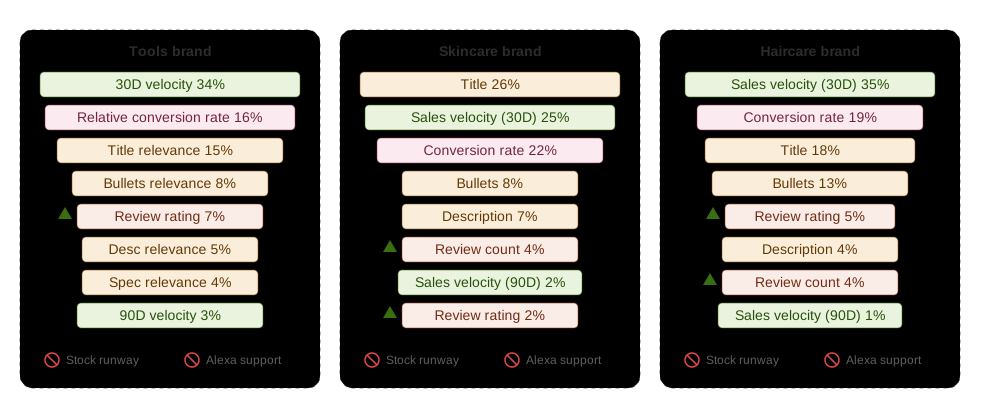
Across categories, sales velocity (30D) and conversion rate are the two largest boxes — the factors branded campaigns feed directly.
Here's why that matters: branded searches convert better than any other traffic you can buy. Someone typing your exact brand name is ready to purchase. So when you advertise on branded terms, you pour high-converting, fast sales into your product — and the A9 algorithm reads that as "this product is hot, people love it" and rewards it with better organic rankings across ALL keywords, including the non-branded ones you actually wanted to grow.
A simple way to picture it: branded spend is the kindling that lights the fire. It's cheaper and faster to ignite, and once the product is "hot" in Amazon's eyes, it ranks higher organically on the bigger, non-branded terms — so you win those sales without paying full price for every click.
Branded vs. Non-Branded Amazon Ads: Quick Comparison
Branded Amazon ads target shoppers already searching for your brand, while non-branded ads target broader category, competitor, or problem-based searches. A healthy Amazon PPC strategy usually uses branded ads to defend high-converting demand and non-branded ads to expand reach.
| Campaign Type | Best For | Risk If Ignored | Main KPI |
|---|---|---|---|
| Branded | Defense, efficiency, repeat demand | Competitors intercept demand | CPC, CVR, branded impression share |
| Non-branded | Discovery and category growth | Overpaying for cold traffic | TACoS, new-to-brand sales, organic rank lift |
| Competitor | Conquesting | Low conversion, higher CPC | Incremental sales, ACoS, share gain |
A 30-second primer: CTR, CVR, and CPC
If you're not an ads person, these three numbers are all you need to follow the argument:
- CTR — Click-through rate: of the people who see your ad, how many click it. Up is good.
- CVR — Conversion rate: of the people who click, how many buy. Up is good.
- CPC — Cost per click: what you pay each time someone clicks. Down is good.
With simple numbers: if 100 shoppers see your ad and 5 click, that's a 5% CTR. If those clicks are cheap and many of them buy, your CVR is high and your CPC is low.
The kicker is that CTR and CVR drive CPC — when more people click and buy, Amazon treats your ad as more relevant and lowers the price you pay per click, while raising your organic rank.
The kicker: CTR and CVR drive CPC. When more people click (CTR up) and buy (CVR up), Amazon rewards you with cheaper clicks (CPC down) and better rank.
Why branded keywords: shoppers searching your own brand name already want you, so branded ads earn very high CTR and CVR. Amazon reads that as "highly relevant" and hands you its cheapest clicks (lowest CPC).
And it compounds: those fast, high-converting branded sales also push your organic rankings up — on branded and non-branded terms alike. Spend accurately, and CTR, CVR, CPC, and rank all move in your favor.
This is exactly why we lean on branded keywords. Shoppers searching your own brand name already want you, so branded ads earn very high CTR and CVR. Amazon reads that as "highly relevant" and hands you its cheapest clicks — and those fast, high-converting sales push your organic rankings up on branded and non-branded terms alike.
How it compounds
Once you see the chain reaction, it's hard to unsee. One branded click sets off a sequence that ends in sales you never paid full price for:
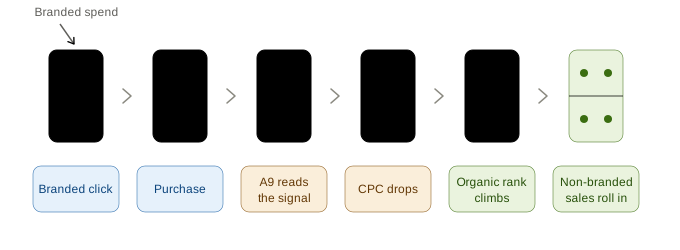
Branded spend gives the First Push → Branded Click → Purchase → A9 reads the signal → CPC Drops → Organic Rank Climbs → Non-Branded sales roll in.
And it doesn't happen just once — it's a flywheel. Every turn makes the next turn cheaper and bigger:
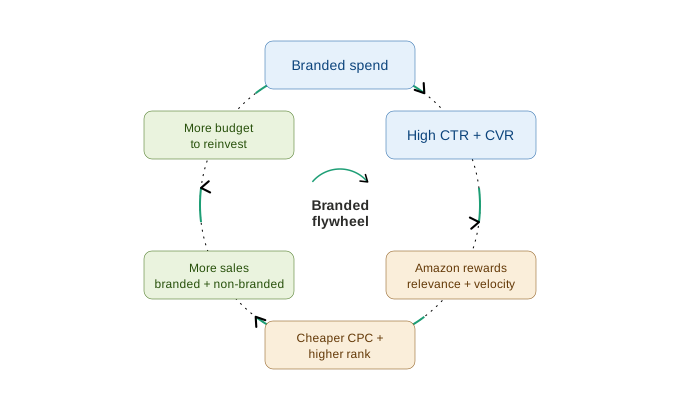
Spend More vs. Spend Accurately
Here's the whole argument in one picture. Same shopper, same budget — two very different strategies and outcomes: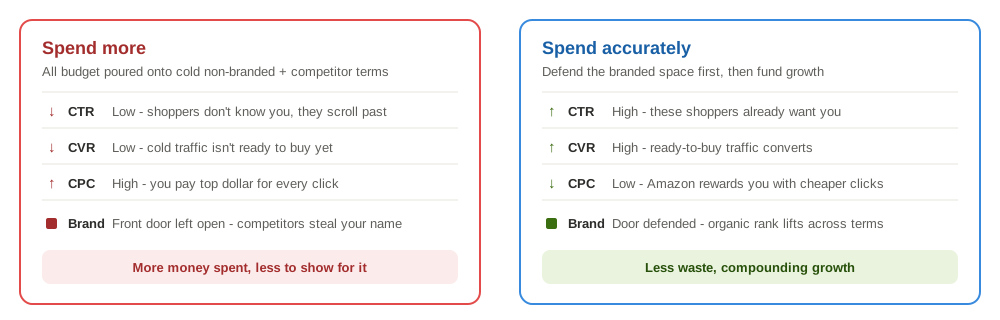
Brands that pour everything into non-branded and competitor terms are trying to start the fire with wet logs — spending more, on lower-converting traffic, while leaving their own front door wide open for competitors to walk through.
~ Max, VP of Advertising
How beBOLD® uses branded spend
We use branded spend two ways:
- Defense — protecting your branded search results so competitors can't steal sales that are already yours, or creep into your branded space organically. These are the cheapest sales available, but they still have to be bought to be owned.
- Offense — using those high-converting branded sales to "hack/influence" the A9 algorithm, stimulating organic ranking on non-branded terms so you show up more often, for free, where it counts.
Done right, branded spend is the most efficient — and usually the fastest — way to lift total sales across both branded and non-branded terms.
The bottom line
Branded spend isn't a tax on sales you'd get anyway. It's the cheapest traffic you can buy, the strongest signal you can send Amazon's algorithm, and the spark that lifts your rankings everywhere else. The brands that win on Amazon aren't the ones spending the most — they're the ones spending accurately.
Frequently Asked Questions
Isn't advertising on my own brand name just paying for sales I'd get for free?
No — on Amazon there are no guaranteed free sales. If you don't run ads on your branded searches, competitors can place their ads above your listing and peel off shoppers who were looking for you. Branded clicks are the cheapest and highest-converting traffic you can buy, so you're protecting sales that are genuinely at risk, not paying twice for the same sale.
How does spending on branded keywords help my non-branded (organic) rankings?
Amazon's A9 algorithm rewards sales velocity and conversion rate more than almost any other factor. Branded ads generate fast, high-converting sales, which signals to A9 that your product is in demand. That signal lifts your organic rank across keywords — including the non-branded terms you actually want to grow.
What are CTR, CVR, and CPC, and why do they matter?
CTR (click-through rate) is how many people who see your ad click it. CVR (conversion rate) is how many of those clickers buy. CPC (cost per click) is what you pay for each click. Higher CTR and CVR tell Amazon your ad is relevant, which lowers your CPC and improves your rank. Branded keywords naturally produce high CTR and CVR, so they earn the cheapest clicks.
Will branded ads cannibalize sales I'd make organically?
Some overlap is normal, but the protection and ranking benefits almost always outweigh it. Defending branded search keeps competitors from intercepting your buyers, and the velocity from those sales strengthens your organic position. The net effect is usually more total sales, not fewer.
Should I stop advertising on non-branded and competitor terms?
No. Non-branded and competitor campaigns are how you reach new customers and expand reach. The point isn't branded-only spending — it's the right balance. Defend your branded space first (your cheapest, highest-converting sales), then fund non-branded growth from a position of strength.
How quickly will I see results from branded spend?
Branded spend is usually the fastest lever you have. Because the traffic is warm and converts quickly, you'll often see efficiency gains (lower ACoS, cheaper clicks) within days, and the organic ranking lift on non-branded terms typically follows over the next few weeks as velocity builds.
How do I know if I'm spending accurately versus just spending more?
Watch the direction of your core metrics. Rising CTR and CVR with a falling CPC and improving organic rank means your spend is accurate and compounding. Flat or declining CTR/CVR with rising CPC means budget is going to traffic that isn't converting — a sign to rebalance toward where relevance and conversion are strongest.


Comments