


To start selling beauty products on Amazon, you need to pick the right product strategy, meet compliance rules, set up your seller account, and launch with a solid SEO and advertising plan. This guide explains each step to help brands sell cosmetics on Amazon and build a scalable, compliant, and profitable business.

Key Summary
- Selling beauty products on Amazon can be very profitable, but you need to follow strict rules, stand out from competitors, and create well-optimized listings.
- To succeed, focus early on three things: following regulations, positioning your product well, and creating content that drives sales.
- Private labels are usually the best way to grow long-term and keep control over your brand.
- Compliance is essential. You must follow FDA rules, label products accurately, and avoid making claims that sound like drug treatments.
- Beauty is a partially restricted category on Amazon. You may need approval for certain products, brands, or subcategories.
- Listings that convert well use the right keywords, focus on product benefits, and include strong visuals.
- Advertising is a must. Many brands spend 20 to 40 percent of their revenue on ads during the launch phase.
- To avoid delays or rejections, make sure your products are packaged, labeled, and prepared correctly for fulfillment.
- To stay profitable, keep track of Amazon fees, advertising costs, and aim for a healthy margin, usually 30 to 50 percent before ads.
- Advanced strategies include ingredient-focused SEO, subscription options, and social platforms like TikTok.
- Brands that see Amazon as a main growth channel, not just a side option, are more likely to grow successfully.
Step 1: Decide What Kind of Beauty Brand You’re Bringing to Amazon

Before you list any products, decide on a clear business model. This choice will impact your profit margins, compliance needs, and how much you can grow.
Most brands fall into three categories:
- Private label: Creating your own branded products
- Wholesale/reselling: Selling existing brands with authorization
- DTC expansion: Bringing an established brand onto Amazon
Private label is still the best way to scale on Amazon because it gives you full control over pricing, branding, and marketing.
Many brands struggle early on with choosing the right products. The best listings usually focus on:
- Problem-solution positioning (e.g., acne, hyperpigmentation)
- Ingredient-led demand (e.g., retinol, niacinamide)
- Emerging trends influenced by younger audiences, especially Gen Z buyers
Product strategy should also consider whether an item serves a qualifying healthcare need. Certain personal-care products may be included in Amazon’s FSA/HSA eligibility program, while conventional cosmetic products may not qualify. Confirm each ASIN’s status before positioning eligibility as a product benefit.
beBOLD Digital Expert Tip:
Don’t enter crowded categories unless you have a unique angle. Even small differences in your formula or branding can significantly affect conversion rates.
Look at top-performing beauty brands to see how they position themselves. This can help you spot gaps in messaging and product strategy.
Even after launch, brands may run into catalog errors, compliance flags, or account problems that require help with Amazon Seller Support issues.
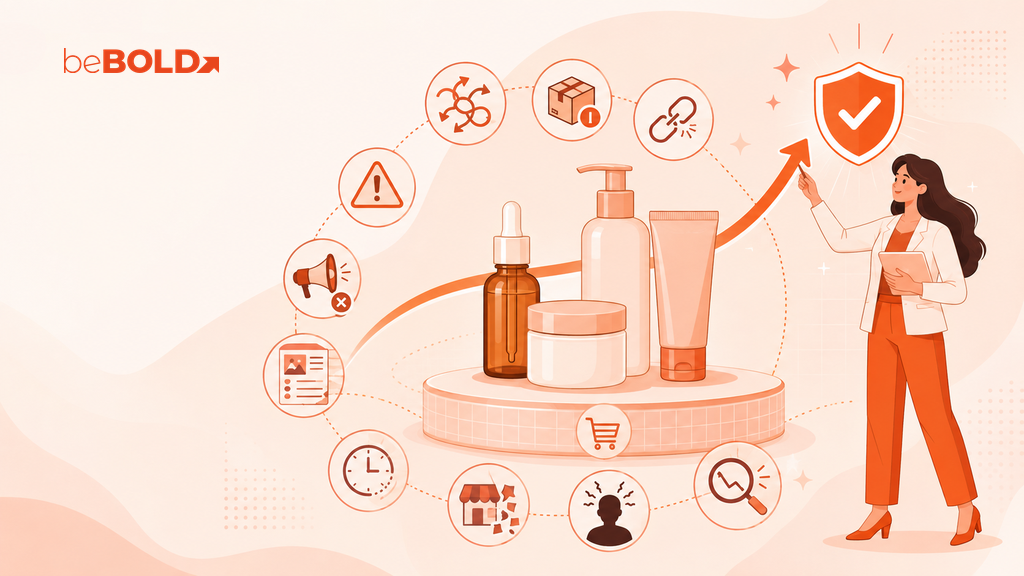
Step 2: Ensure Compliance and Prepare Your Products

After you confirm your product idea, focus on compliance. This is where many sellers run into problems.
Amazon requires beauty products to follow:
- FDA cosmetic guidelines
- Proper ingredient labeling
- Accurate claims and product descriptions
Be careful with your product claims. For example, saying a product “treats acne” could make it count as a drug rather than a cosmetic, subjecting it to more regulations.
In practice, compliant listings include:
- Full ingredient lists
- Manufacturer details
- Clear usage instructions
- No misleading or medical claims
Packaging matters too. Make sure your products are sealed, leak-proof, and labeled correctly before sending them to Amazon’s fulfillment centers.
To better understand how brands navigate these requirements, see this guide on Amazon beauty category challenges.
Client Scenario:
A skincare brand approached beBOLD Digital after repeatedly experiencing takedowns of their product listings. The issue was not related to marketing effectiveness, but to noncompliant statements within their bullet points that violated Amazon’s and the FDA’s regulatory requirements. Once these claims were revised to align with FDA guidelines, the brand’s listings were reinstated. In addition to regaining listing stability, the brand observed a sustained increase in conversion rates over the following quarter, indicating that compliant, transparent messaging not only ensured regulatory compliance but also enhanced consumer trust and purchasing behavior.
For beauty brands, getting retail-ready on Amazon is one of the most important steps before investing heavily in advertising, influencer traffic, or storefront growth.
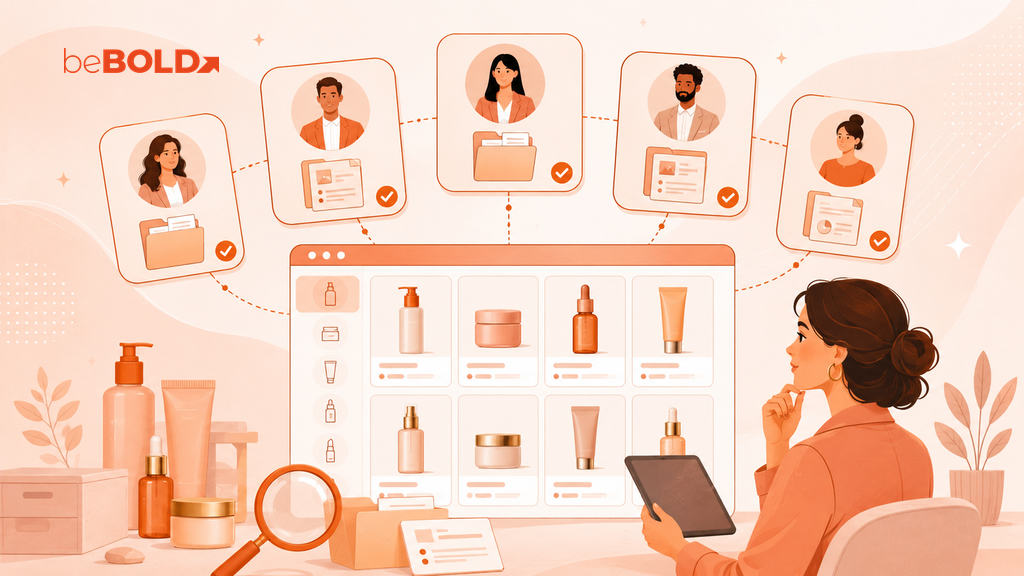
Step 3: Set Up Your Amazon Account and Get Approved
With compliant products ready, the next step is to set up your account. Once your products meet compliance rules, you'll be approved.
- Set up your Amazon Seller Central Account (Professional plan recommended)
- Apply for category approval if required.
- Register your brand through Amazon Brand Registry.
Many sellers wonder how to get approved to sell beauty products on Amazon. The answer depends on what kind of product you have.
You may need:
- Supplier invoices
- Product images
- Certificates of authenticity
- Compliance documentation
Approval doesn’t always cover the whole Beauty category. Even after you’re approved, some subcategories or brands may still require additional approval.
For beauty brands, an Amazon supply chain strategy for beauty brands helps prevent stockouts, protect rankings, support Subscribe & Save, and keep best-selling SKUs available.
beBOLD Digital Expert Tip:
Send in clear, consistent documents to improve your chances of approval. If your invoices or branding don’t match, you’re more likely to get rejected.
For a broader overview of account setup, refer to this complete Amazon selling guide.
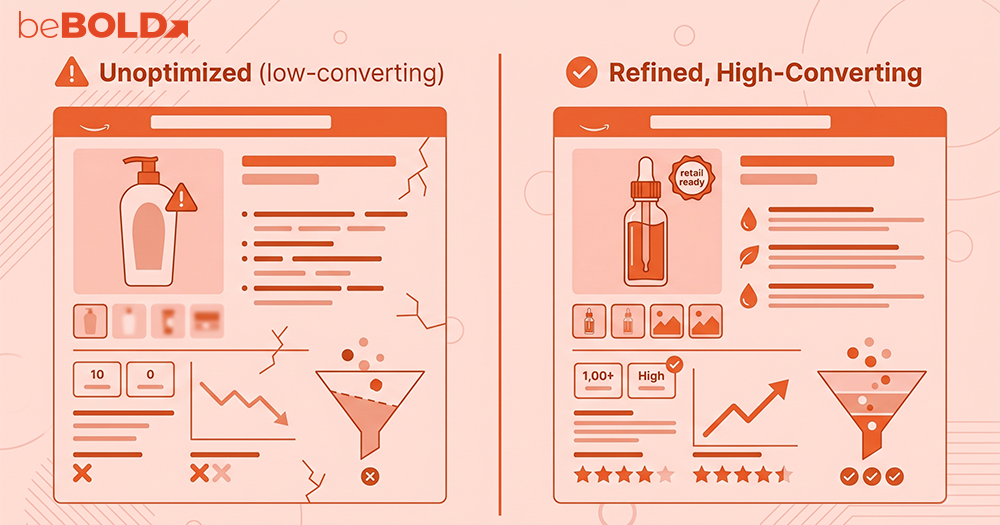
Step 4: Build a High-Converting Amazon Listing

After you’re approved, your listing is your main tool for making sales.
Effective listings balance SEO (discoverability) and CRO (conversion optimization).
Key elements include:
- Keyword-optimized titles targeting “selling beauty products on Amazon” and related terms
- Benefit-driven bullet points focused on outcomes.
- Backend keywords for additional indexing
- High-quality images that show product texture, usage, and results
In beauty, visuals often lead to more sales than text. Showing lifestyle images and highlighting ingredients helps build trust fast.
EU fragrance allergen labeling deadline; new EU beauty labeling requirements; fragrance allergen rules for beauty brands; July 31 EU labeling deadline
A+ Content further enhances listings by:
- Improving brand storytelling
- Increasing conversion rates (often by 5–10%)
- Differentiating from competitors
beBOLD Digital Expert Tip:
Use keywords based on ingredients and benefits. This helps your product show up better in Amazon searches and on other platforms.
For beauty brands, Amazon listing keywords should reflect product type, ingredients, skin concern, scent, texture, usage occasion, and shopper intent without making the listing feel over-optimized.

Step 5: Launch and Scale With a Ranking Strategy
Once your listing is live, your growth depends on how visible you are and how well you convert visitors into buyers.
A successful launch strategy typically combines:
- Amazon PPC advertising
- Keyword ranking optimization
- Review generation strategies
- External traffic sources (TikTok, influencers)
Marketplace data shows that independent beauty brands often spend 10-20% of their revenue on advertising during the launch phase.
Performance should be monitored continuously:
- Conversion rate
- Click-through rate
- Cost per acquisition
To grow, keep adjusting your ads and targeting based on the data.
Scaling a beauty brand also requires the flexibility to respond quickly to changing consumer demand and channel performance. Estée Lauder’s recent “Indie Mode” turnaround shows how faster decision-making, sharper brand-level execution, and greater use of channels such as Amazon can help restore growth.
Before entering the category, brands should study the top beauty brands selling online to understand the level of competition across skincare, cosmetics, personal care, and marketplace channels
What Are Amazon Beauty’s Requirements and Approval Explained

Knowing what’s needed for approval helps you avoid delays and problems.
The beauty category is partially gated. Approval may be required at:
- Category level
- Subcategory level (e.g., skincare, topical products)
- Brand level
Amazon may request:
- Invoices from suppliers
- Product safety documentation
- Compliance certifications
Established brands can usually handle these requirements, but new sellers often don’t realize how much documentation is needed.
Beyond category setup and compliance, brands also need strong beauty listing optimization to improve visibility, trust, and conversion on Amazon.
When selling beauty products on Amazon, brands should position products around real routines, including run club beauty and wellness demand for SPF, deodorant, cleansing wipes, body care, and post-workout recovery.
What Are the Costs, Fees, and Profit Margins for Beauty Sellers?

Your costs have a big impact on how profitable your business will be.
Typical expenses include:
- Referral fees (usually around 15%)
- FBA fees (storage, fulfillment)
- Advertising costs
- Product manufacturing and packaging
Many brands forget to factor in advertising costs. In competitive markets, you can’t skip spending on ads.
For a detailed breakdown, review how much it costs to sell on Amazon.
Brands developing ingredient-led products should also study the K-beauty growth model, where rapid innovation, education-first content, and social demand support international expansion.
How Do Amazon Beauty Sellers Navigate Fulfillment, Packaging, and Inventory Prep?
Fulfilling orders has gotten more complicated in recent years.
Amazon requires:
- Proper labeling (FNSKU)
- Secure packaging (especially for liquids)
- Bundled products are packaged as a single unit.
If you don’t meet these standards, you could face:
- Shipment rejections
- Additional prep fees
- Delayed inventory availability
If you invest in good prep processes early, you can avoid expensive problems later on.
For beauty brands, reviewing the Amazon listing report can help catch missing product attributes, compliance issues, and detail-page gaps before they hurt visibility or conversions.
Advanced Strategies for Beauty Brands in 2026

As competition grows, advanced strategies are becoming essential.
Claims Optimization
Finding the right balance between compliance and persuasive messaging improves SEO and conversion rates.
Ingredient-Led Content Strategy
Creating content focused on ingredients can help you attract traffic from both Amazon and Google.
Subscription Models
Subscribe & Save programs help you keep customers longer and increase their lifetime value.
Social Commerce Integration
Platforms like TikTok are helping more people discover products, especially younger shoppers.
If you want to grow quickly, working with an agency specializing in Amazon beauty marketing can help you scale faster through data-driven strategies.
Beauty brands can apply similar principles from other high-trust categories; beBOLD Digital’s guide to optimizing Amazon baby product listings shows how safety details, images, keywords, and A+ Content work together to improve confidence and conversion.
Need Help Selling Beauty Products on Amazon?
To compete on Amazon, you need the right mix of compliance, listing strategy, SEO, and advertising. beBOLD Digital helps beauty brands get approvals, optimize content, boost performance, and scale profitably with hands-on Amazon expertise for this category.
FAQs
Can a new beauty brand start selling on Amazon?
Yes, but to succeed, you need to follow compliance rules, stand out from competitors, and have a strong launch plan. New brands should be ready to invest in ads and content up front.
Do beauty products need approval on Amazon?
In many cases, yes. Approval may be required depending on the product type, brand, or subcategory.
How much does it cost to start selling beauty products on Amazon?
Costs can vary, but you’ll usually need to pay for inventory, fees, and advertising. Many brands spend several thousand dollars up front to launch successfully.
Is private label or wholesale better for beauty?
Private label gives you higher margins and better long-term growth, while wholesale lets you start faster but with less control.
What beauty claims can get a listing flagged?
Claims that sound like medical treatments, such as curing acne or healing skin problems, can lead to compliance issues and result in your listing being taken down.



Comments