


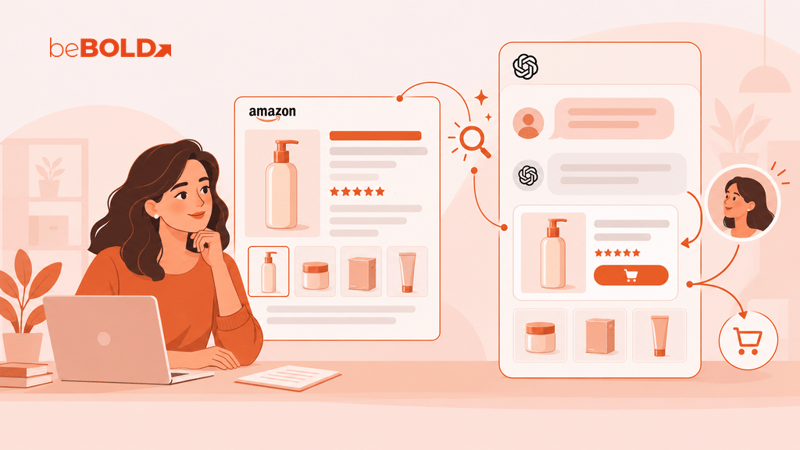
Amazon ChatGPT Ads is a U.S. pilot that lets selected advertisers extend campaigns into ChatGPT through Amazon Ads. Announced September 10, 2026, the partnership creates a conversational advertising opportunity. Sellers should verify access, permitted products, destinations, costs, and attribution before testing. Amazon’s announcement does not provide a general-release date.
Amazon Opens a New Advertising Route Through ChatGPT
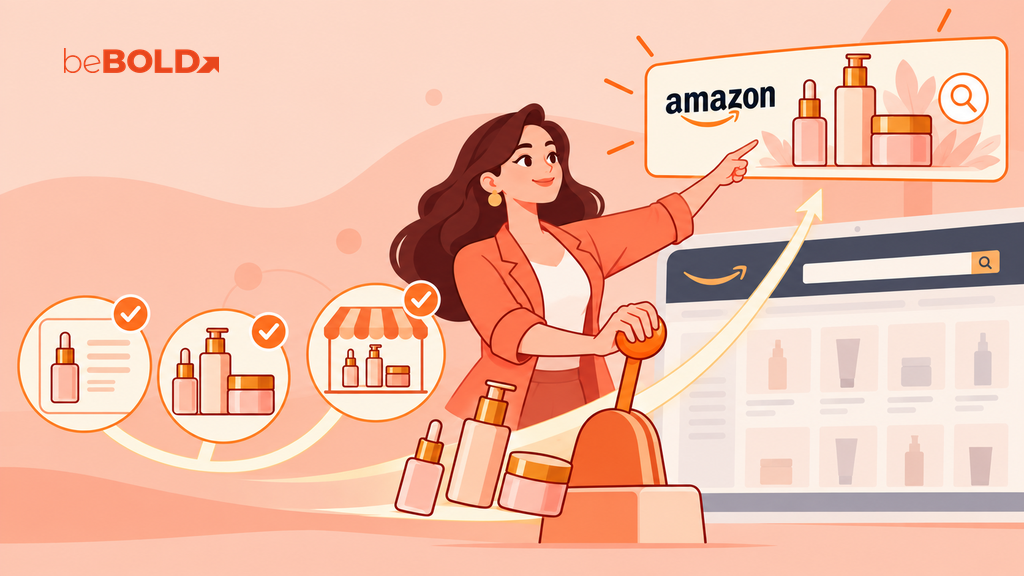
Amazon’s partnership with OpenAI allows advertisers to reach people as they explore options and compare choices in ChatGPT. Delta Vacations is among the pilot participants, showing that the arrangement also serves businesses outside Amazon’s retail catalog.
The integration is initially offered as a managed service through Amazon DSP, Amazon’s demand-side platform. Amazon helps set up and optimize campaigns; OpenAI controls ad delivery. Reported buying options include cost per click (CPC) and cost per thousand impressions (CPM).
For sellers evaluating Amazon ads on OpenAI, the immediate question is whether their account and products can participate. The published announcement does not establish automatic enrollment for sellers or a universal campaign-import process.
Discovery Can Start Before a Shopper Searches Amazon
At beBOLD Digital, we see the strategic opportunity in reaching shoppers while their product preferences are still taking shape. Consider this hypothetical request: “Help me find a lightweight foundation with a natural finish, under $35, for humid weather.”
The shopper has expressed several purchase criteria without naming a brand. A relevant sponsored placement could introduce a product before that shopper builds a shortlist or searches Amazon. This is an opportunity to earn consideration, not evidence that the pilot already improves conversion rates.
OpenAI says its ad system considers conversational context, landing pages, ad copy, targeting selections, and bids. It also states that paid placements cannot influence the answers ChatGPT generates.
That distinction matters when planning Amazon Ads on ChatGPT. Paid visibility, organic AI recommendations, and Amazon search rankings are separate outcomes. Our guide to how products appear in ChatGPT provides context for evaluating product discovery beyond paid placements. A brand should measure each separately rather than treating every appearance as equivalent discovery.
Beauty, Health, and Wellness Need Different Preparation
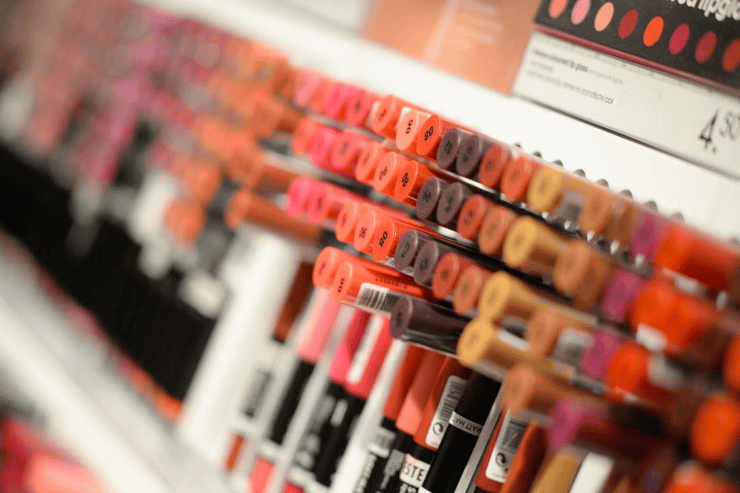
Our view is that beauty brands have a useful starting point where products can answer specific cosmetic preferences. Our analysis of ChatGPT beauty recommendations explores how consideration can develop before shoppers reach Amazon. Health and wellness brands need an additional eligibility review because product claims and conversation context can change what is permitted.
The following are preparation examples, not confirmed targeting categories or placement guarantees.
|
Brand or product type |
Preparation priority |
Question to resolve before testing |
|
Makeup |
Clarify shade, finish, coverage, price, and supported wear claims |
Does the advertised variant match the destination page? |
|
Skin and body care |
Verify ingredients, fragrance information, usage, and claim support |
Does the message describe a cosmetic benefit or make a health claim? |
|
Supplements and ingestible wellness |
Assemble product details and substantiation for proposed claims |
Is the specific product and creative eligible? |
|
Fitness and wellness accessories |
Explain materials, dimensions, intended use, and practical benefits |
Can the product be promoted without unsupported therapeutic claims? |
OpenAI says ads cannot appear near sensitive topics such as personal health. Some regulated advertisers may qualify under strict criteria, but that does not permit placement beside sensitive health conversations. Supplement brands should not assume that a shopper discussing symptoms creates an available advertising opportunity.
For all three sectors, catalog accuracy is a commercial priority. Beauty teams can use our Amazon beauty listing optimization guide to structure their content review. An ad promising a particular size, formulation, or benefit needs a destination that confirms it. Ambiguous variants and inconsistent claims can undermine the purchase decision after the click.
How to Prepare for the Amazon DSP Pilot
For brands asking how to connect Amazon ads to ChatGPT, the reported launch route is Amazon DSP’s managed service. Start by asking your Amazon Ads representative about participation. Do not assume that linking a Seller Central account or enabling an existing Sponsored Products campaign activates this inventory.
1. Confirm access and the campaign terms
Request confirmation of account eligibility, category approval, minimum commitments, management fees, supported formats, and landing-page options. Ask which targeting and reporting capabilities are available specifically for this integration.
Do not carry assumptions about other Amazon DSP inventory into the pilot. The sources reviewed do not establish that every Amazon audience or measurement feature transfers to ChatGPT.
2. Choose a small, commercially ready product set
Prioritize products with clear differentiation, reliable inventory, accurate listings, and enough contribution margin to fund acquisition. For a beauty brand, checking Amazon retail readiness helps identify products worth supporting with traffic. One well-defined product need can produce a more interpretable test than promoting the entire catalog.
Before launch, check variant mapping, pricing, images, ingredients, sizes, usage instructions, and claim consistency across the feed, creative, and destination.
3. Build creative around a specific buying decision
Explain who the product suits, the relevant benefit, and the evidence behind it. A foundation campaign might emphasize finish and coverage; a fitness accessory might explain portability and dimensions.
Avoid adding medical implications to ordinary product copy. For health and wellness products, confirm eligibility before investing in creative production.
4. Agree on measurement before spending
Ask whether the setup supports Amazon purchase attribution, product-level conversions, new-to-brand reporting, or Amazon Marketing Cloud analysis. These capabilities are not established by the launch announcement.
Our Amazon Attribution guide explains the broader role of measuring off-Amazon marketing; it does not confirm compatibility with this pilot. If sales tracking is available, document attribution windows and how conversions are counted across campaigns. If it is unavailable, classify the exercise as an engagement test and cap spending accordingly.
5. Set a profitability threshold and a comparison
Evaluate contribution after product costs, marketplace fees, fulfillment, expected returns, and advertising. A low CPC is useful only if the resulting traffic supports the campaign’s business objective.
Where feasible, use a suitable comparison group or a test design that accounts for promotions and seasonality. Strong attributed ROAS alone cannot establish whether the campaign created additional purchases.
Important Considerations Before Moving Budget
-
Available reach is smaller than ChatGPT’s total audience. OpenAI’s documentation identifies Free and Go as ad-supported plans; several paid plans remain ad-free. Advertisers receive aggregate reporting rather than private conversations.
-
A paid placement does not establish catalog or checkout integration. Amazon’s announcement does not confirm unrestricted catalog access, in-chat Amazon checkout, or universal support for Amazon product-page destinations.
-
Discovery and purchase may happen in different sessions. A shopper could encounter a ChatGPT ad and later buy through an Amazon search. That hypothetical journey explains why brands should examine total business impact alongside individual platform reports.
-
The pilot does not justify an automatic reduction in Amazon PPC. Our recommendation is to protect campaigns meeting their commercial objectives while allocating a bounded learning budget to the new channel, where eligible.
Prepare the Product and the Measurement Together
We see this partnership as another step toward Amazon advertising reaching customers throughout their decision process, including conversations outside the marketplace. Its value for sellers will depend on whether that access produces additional, profitable demand.
For beauty, health, and wellness brands, preparation should connect product accuracy, appropriate claims, persuasive creative, and measurable outcomes. Expanding distribution before those foundations are ready can make a campaign harder to evaluate and scale.
Talk with beBOLD Digital about aligning your Amazon DSP advertising strategy and catalog readiness so your brand can assess new discovery opportunities with a clear commercial plan.
Frequently Asked Questions
When did Amazon announce its ChatGPT ads integration?
Amazon announced the partnership on September 10, 2026. Select U.S. advertisers were already testing it. The announcement does not specify a general-release date.
Can every Amazon seller connect campaigns to ChatGPT?
The announcement does not establish access for every seller. The reported initial route is a managed-service pilot through Amazon DSP. Ask an Amazon Ads representative about account eligibility and onboarding.
Will Amazon ChatGPT Ads improve organic product recommendations?
Buying a placement does not purchase influence over ChatGPT’s answers. OpenAI states that advertising and generated responses operate separately. The partnership also announces no change to Amazon organic rankings.
Can health and wellness brands advertise?
Eligibility depends on the product, category, and creative. OpenAI allows some regulated advertisers under strict criteria, while excluding ads near sensitive personal-health conversations. Brands should obtain product-specific confirmation before planning a campaign.
Sources


Comments